Key Points
- Seizure of suspect vehicles: Bromley Council has impounded two additional Ford Transit tipper trucks suspected of involvement in waste crime.
- Location details: The enforcement actions were carried out on Old Maidstone Road in Sidcup and Barnfield Road in St Mary Cray.
- Six-month destruction toll: Eleven vehicles previously linked to illegal dumping activities have been crushed by local authorities within the last six months.
- Legal framework: Confiscations and crushing procedures are conducted under environmental protection powers targeting unregistered waste carriers.
- Ongoing enforcement: Local authorities continue to urge residents to verify waste disposal licences to curb illegal dumping across the borough.
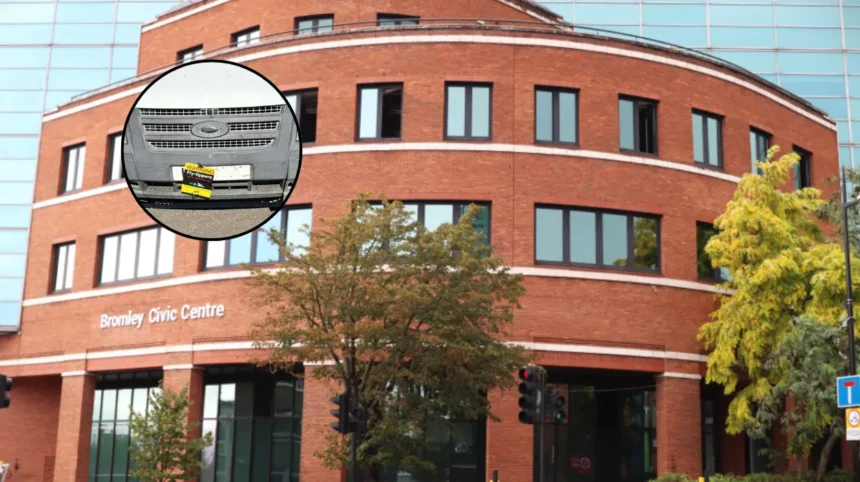
Bromley (South London News) October 13, 2026 – Two Ford Transit tipper trucks suspected of involvement in illegal waste dumping have been seized by Bromley Council as part of an enforcement crackdown on fly-tipping across the borough. The confiscations took place on Old Maidstone Road in Sidcup and Barnfield Road in St Mary Cray, bringing the total number of vehicles crushed or impounded by the local authority over the past six months to thirteen. Eleven of those vehicles have already been destroyed following formal legal proceedings.
Why Were the Ford Transit Tipper Trucks Confiscated in Bromley?
The operations were initiated after local enforcement officers identified the two Ford Transit tippers during targeted patrols in areas identified as fly-tipping hotspots. Municipal authorities confirmed that the vehicles matched visual evidence and reports linked to recent illegal waste deposits on public land.
Under the provisions of the Control of Pollution (Amendment) Act 1989 and the Environmental Protection Act 1990, local councils retain statutory authority to seize and impound vehicles if there is reasonable suspicion that they have been used in waste offences, or if the registered owner fails to produce valid waste carrier documentation.
When an impounded vehicle is taken into council custody, a legal notice is served. If the owner fails to come forward with legitimate proof of ownership, valid vehicle tax, insurance, and an Environmental Agency waste carrier registration within the prescribed statutory timeframe, the council holds the legal power to dispose of or crush the vehicle.
How Does Bromley Council Process Seized Waste Vehicles?
Following the initial seizure on Old Maidstone Road and Barnfield Road, the two trucks were towed to a secure council storage yard pending further investigation. Over the past half-year, eleven similar commercial vehicles linked to waste crime have undergone the full legal process, concluding in their destruction at accredited vehicle recycling facilities.
Crushing vehicles serves a dual purpose for municipal authorities: it permanently removes equipment used in illegal activities from the road and acts as a financial deterrent against unregistered waste collection businesses.
Municipal officers emphasized that waste crime places a heavy operational and financial burden on local public services. The costs associated with clearing fly-tipped debris, securing evidence, towing vehicles, and carrying out destruction processes are managed through municipal budgets aimed at maintaining public spaces.
Background of Waste Crime Enforcement in Bromley
Fly-tipping remains a persistent challenge for suburban boroughs across Greater London, particularly in areas bordering rural or semi-rural green belt land such as Sidcup and St Mary Cray. Industrial waste, construction materials, household junk, and hazardous waste are frequently dumped by unlicensed operators offering cheap disposal services online or door-to-door.
Bromley Council has progressively tightened its enforcement policies over recent years by integrating public CCTV monitoring, mobile surveillance units, and community reporting channels. The borough operates a strict zero-tolerance approach toward illegal dumping, utilizing financial penalties, court prosecutions, and vehicle forfeiture to deter offenders.
Under national environmental legislation, householders and businesses hold a statutory “duty of care” to ensure that their rubbish is handed over exclusively to registered waste carriers. If a resident pays an unlicensed operator who subsequently fly-tips the material, the original householder can also face prosecution or fixed penalty notices.
Prediction: How Will This Development Affect Local Residents and Tradespeople?
This latest series of seizures and vehicle destructions is expected to directly impact two primary groups: local residents and small commercial businesses within the borough of Bromley and surrounding areas.
Impact on Local Residents
For residents, sustained enforcement activity is likely to result in cleaner public highways, parks, and residential streets, particularly in known dumping corridors like Sidcup and St Mary Cray. However, the council’s aggressive stance also heightens the risk for homeowners. Residents seeking quick rubbish removals must exercise greater caution; using unverified traders found on social media platforms could result in fines if the waste is traced back to them following an enforcement action.
Impact on Tradespeople and Waste Carriers
For legitimate tradespeople, builders, and registered waste disposal companies, stricter enforcement levels the playing field by eliminating rogue traders who undercut market prices by avoiding legal tipping fees at commercial waste transfer stations. Conversely, unregistered operators face significantly heightened operational costs and financial risks, as the loss of a commercial vehicle like a Ford Transit tipper represents a major disruption to illegal operations. In the longer term, this strategy is expected to push more waste management activity into legal, traceable channels across South East London.