Key Points
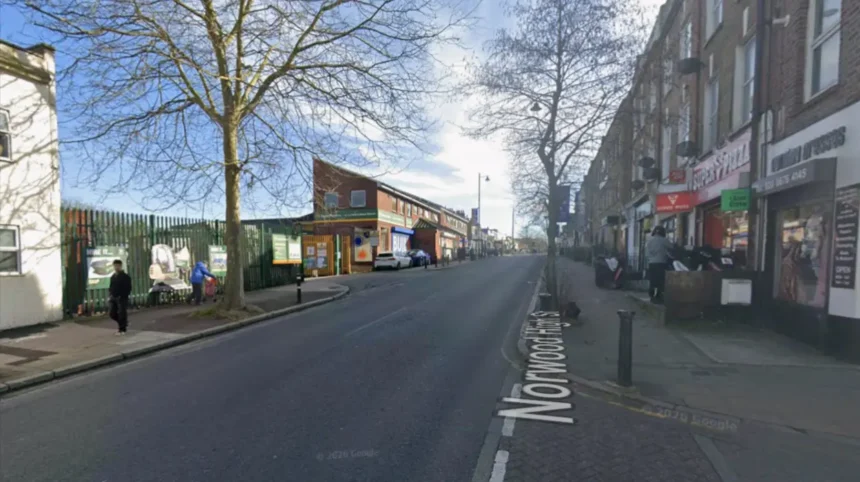
- Emergency services have responded to an ongoing incident on Norwood High Street in West Norwood, south London.
- Norwood High Street is fully blocked in both directions between Gipsy Road and Rothschild Street.
- Queueing traffic is building significantly through the affected area as drivers face delays.
- London Bus route 432 has been placed on diversion to avoid the affected stretch of road.
- Local authorities are advising motorists to seek alternative routes whilst response teams manage the situation.
West Norwood (South London News) October 14, 2026 — Motorists and commuters across south London are experiencing substantial travel disruption this afternoon following an emergency services incident that has resulted in the total closure of a key thoroughfare in West Norwood. Norwood High Street remains completely blocked in both directions between the junctions of Gipsy Road and Rothschild Street whilst emergency crews attend to the scene. The sudden closure of the arterial passage has caused localized traffic queues to build steadily across the surrounding street network, with local public transport networks, specifically Transport for London’s bus route 432, forced onto emergency diversions to maintain transit services around the blocked area.
- Key Points
- What lead to the closure on Norwood High Street?
- How are public transport services and local drivers affected?
- What steps should commuters and residents take next?
- Background of Norwood High Street infrastructure developments
- Prediction: How will this development affect local commuters and residents?
What lead to the closure on Norwood High Street?
The full closure was implemented following an emergency response that required the immediate securing of Norwood High Street. Traffic monitoring systems and emergency reports confirmed that the highway became impassable between Gipsy Road and Rothschild Street early this afternoon.
As reported by local traffic update services, emergency services arrived at the scene to manage the primary incident, immediately establishing a cordoned perimeter to allow response crews to operate safely. The closure affects both northbound and southbound traffic lanes, effectively severing a frequently used connection through West Norwood. Vehicles traveling toward the area are experiencing notable delays as traffic backlogs spill into adjacent residential and arterial routes.
How are public transport services and local drivers affected?
The emergency closure has had a direct impact on south London’s public transport network, with TfL confirming route modifications to keep passengers moving. Bus route 432, which routinely navigates Norwood High Street between Brixton and Anerley, is currently operating on an alternate route to bypass the blocked stretch.
Transport for London’s operational alerts indicate that bus stops located along the closed section between Gipsy Road and Rothschild Street will not be served for the duration of the incident response. Passengers intending to use route 432 are advised to access services at temporary designated stops along the diversionary route or plan for additional journey time. Local motorists attempting to navigate through West Norwood are encountering growing congestion along connected corridors such as Knights Hill, Christchurch Road, and Norwood Road as traffic seeks alternative detours around the scene.
What steps should commuters and residents take next?
Metropolitan emergency services and transport coordinators recommend that drivers avoid the immediate vicinity of Norwood High Street for the remainder of the afternoon if possible. Travel advisory units suggest using secondary arterial routes further east or west to bypass the bottleneck in West Norwood entirely.
Local response teams remain on site to handle the underlying emergency, clear any resulting hazards, and conduct necessary investigations before reopening the carriageway. Transport authorities have noted that the road will remain closed in both directions until emergency operations conclude and safety checks confirm the highway is clear for regular vehicular traffic.
Background of Norwood High Street infrastructure developments
Norwood High Street serves as a vital commercial and transport artery within the London Borough of Lambeth, connecting residential neighborhoods, local businesses, and transport hubs around West Norwood station. Over recent years, the thoroughfare has frequently experienced heightened congestion and operational disruptions due to its physical layout and high traffic volumes.
As a mixed-use residential and commercial road, Norwood High Street carries a high volume of daily local traffic, delivery vehicles, and key London bus lines. Due to narrow carriage capacity and multiple intersecting side streets, emergency closures on this specific section—particularly between Gipsy Road and Rothschild Street—routinely ripple through neighboring road networks, impacting traffic flow across south London. Local council planning and transport authorities have periodically reviewed road management, bus prioritization schemes, and safety measures along the corridor to mitigate traffic bottlenecks during scheduled public works and unforeseen emergency incidents.
Prediction: How will this development affect local commuters and residents?
In the short term, the emergency closure on Norwood High Street is expected to create extended travel times and localized gridlock throughout West Norwood and surrounding south London neighborhoods during the evening peak travel period.
For local commuters reliant on personal vehicles or the 432 bus service, the disruption will likely add significant delays to afternoon and evening journeys. Nearby residential roads surrounding Gipsy Road, Crown Dale, and Knights Hill are expected to experience higher-than-normal traffic volumes as vehicles bypass the closed zone, potentially leading to secondary congestion points across Lambeth.
For local business owners along Norwood High Street, prolonged road closures during business hours may lead to temporary reductions in footfall and delivery delays. Once emergency crews conclude their operations and clear the carriageway, traffic flow is anticipated to normalize; however, residual delays across the broader south London network will likely persist until the evening traffic volume subsides.