Key Points
- A two-day targeted enforcement operation at Brixton tube station resulted in 15 arrests.
- The joint initiative brought together local policing teams, specialist officers, and transport partners to combat crime in Lambeth.
- Officers deployed both plain-clothes and uniformed tactics to disrupt illegal activity across the London Underground network.
- Recovered items included stolen mobile phones, property linked to a residential burglary, suspected Class A drugs, and a flick knife.
- Sixty-six per cent of those arrested lived outside the borough of Lambeth, indicating criminals are using public transport to travel into the area.
- Offence charges span grievous bodily harm, robbery, drug possession, assault on emergency workers, handling stolen goods, fraud, and court order breaches.
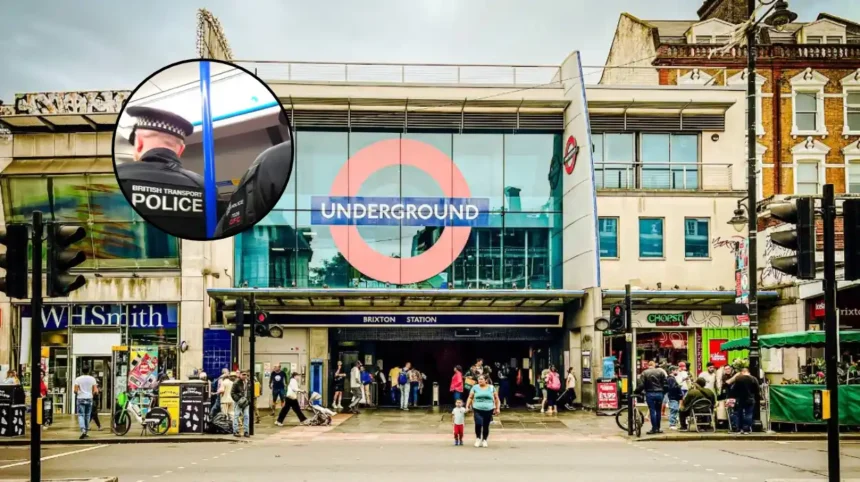
Brixton (South London News) October 17, 2026 – Authorities enacted two days of targeted enforcement activity at Brixton tube station earlier this week to tackle criminality affecting the local community and the wider Lambeth area. The coordinated operation brought together local neighbourhood policing teams, specialist Metropolitan Police officers, and transport partners to focus on key criminal offences across the transport hub.
- Key Points
- What specific items and evidence were recovered by officers during the raids?
- What range of offences were the fifteen arrested individuals held for?
- What did police findings reveal about where offenders reside?
- Background of the Brixton targeted enforcement initiative
- How will this development affect local residents, commuters, and businesses?
Officers operated in both high-visibility uniforms and plain clothes to monitor, detect, and disrupt individuals travelling through the London Underground network who were suspected of involvement in serious criminal offences. The primary targets of the operation were individuals associated with robbery, weapon possession, drug distribution, handling stolen property, and those wanted on outstanding arrest warrants.
According to statements released by police officials, officers successfully disrupted multiple criminal activities over the 48-hour period, leading to the detention of fifteen suspects and the recovery of various illegal goods and stolen items.
What specific items and evidence were recovered by officers during the raids?
During the course of the targeted deployments, law enforcement officers seized a range of illicit goods and recovered stolen property belonging to victims across London. As detailed in official statements provided by police representatives, the physical seizures and recoveries included:
- Four mobile phones were seized from an individual suspected of handling stolen goods. Investigators confirmed that one of these devices had been stolen during a theft in the Victoria area earlier that same day.
- Property connected directly to a recent residential burglary was located and secured by attending officers.
- A flick knife alongside a quantity of suspected Class A drugs were confiscated from a single suspect during a stop-and-search intervention.
- An iPhone, which had been reported stolen in Borough Market the previous day, was successfully recovered. Officers contacted the rightful owner and reunited them with the stolen device.
Police spokespersons noted that the outcome of these seizures demonstrated the efficacy of real-time operational tactics on the public transport network.
What range of offences were the fifteen arrested individuals held for?
The fifteen individuals detained during the two-day initiative were taken into custody on suspicion of a wide variety of criminal activities. Police confirmed that those arrested were linked to the following specific charges and outstanding legal matters:
- Possession of offensive weapons, including sharp edge implements.
- Robbery and handling stolen goods.
- Possession and suspected supply of Class A drugs.
- Fraud-related offences and criminal damage.
- Grievous bodily harm (GBH).
- Assaulting an emergency worker during the execution of their duty.
- Breaches of existing court orders and formal recall to prison for outstanding matters.
Police officers stated that the arrests cleared multiple active investigations and addressed several persistent criminal threats operating in and around the transport hub.
What did police findings reveal about where offenders reside?
A central finding highlighted by police officers following the operation was the demographic distribution of those taken into custody. Law enforcement data revealed that 66 per cent of the individuals arrested during the two-day push were not residents of the borough of Lambeth.
Police representatives emphasized that this statistical finding underscores a broader pattern in urban crime, demonstrating how individuals utilize London’s expansive transport network to travel from outer boroughs into Brixton to commit criminal offences and anti-social behaviour.
Spokespersons for the police force stated that deployments of this nature highlight the clear value of intelligence-led policing and multi-agency partnership working. Officials maintained that targeting high-volume transit points allows law enforcement to disrupt criminal pipelines, identify repeat offenders, and ensure Brixton remains a safe environment for local residents, business owners, and daily commuters. Authorities reiterated that community intelligence remains vital to directing resources effectively and urged anyone with information regarding crime or anti-social behaviour in the area to report it directly to the police.
Background of the Brixton targeted enforcement initiative
Brixton tube station serves as one of the busiest transport hubs in South London, acting as the southern terminus of the Victoria line and serving tens of thousands of commuters, locals, and visitors every day. Due to its high footfall and direct connectivity to Central London, major transit nodes like Brixton have historically faced challenges related to opportunistic crime, phone snatching, street robbery, and illicit drug trading.
In recent years, transport hubs across London have seen an increase in joint operations between the Metropolitan Police Service, the British Transport Police (BTP), and Transport for London (TfL). These collaborative efforts aim to reduce transport-related crime and restrict the mobility of criminal networks. The strategy relies heavily on intelligence gathering, closed-circuit television (CCTV) monitoring, and mixing plain-clothes surveillance with high-visibility patrols to deter opportunistic offenders. The emphasis on cross-borough movement highlights how transport corridors are frequently monitored by authorities to prevent criminals from using rail infrastructure to conduct illicit activities across local borough boundaries.
How will this development affect local residents, commuters, and businesses?
The outcomes of this targeted enforcement operation carry several direct implications for various groups across the local community:
For Local Residents and Commuters
Residents and daily transport users are likely to experience an increased sense of safety and visibility across the local transport infrastructure. The removal of weapons, drugs, and active offenders from circulation reduces the immediate risk of violent crime, muggings, and phone thefts in the direct vicinity of the station. However, the revelation that two-thirds of arrested individuals travelled from outside Lambeth indicates that long-term safety will depend on sustained, ongoing policing interventions rather than one-off operations.
For Local Businesses
Business owners operating around Brixton station and along the high street stand to benefit from reduced anti-social behaviour and property crime. High-visibility policing deters shoplifting, street-level drug dealing, and violent disruptions that can discourage footfall and commercial activity. Continued police focus on transport hubs helps foster a safer environment for night-time economy workers and evening visitors.
For Regional Criminal Networks
For individuals using public transport networks to travel between boroughs for criminal purposes, these intelligence-led operations signal heightened oversight on the London Underground network. Continued use of mixed plain-clothes and uniformed deployments increases the unpredictability of police enforcement, making the transit network a riskier conduit for carrying illicit goods or stolen property.