Key Points
- Sudden Water Depletion: Carshalton Ponds experienced a sharp and unexpected drop in water levels overnight on 16 October.
- Official Statement: Sutton Council confirmed it has not yet identified the precise cause behind the sudden drainage event.
- Specialist Intervention: Local authorities are engaging specialist advisors and environmental experts to investigate the structural and geological mechanisms involved.
- Community Concerns: Local residents and environmental advocacy groups have highlighted risks to native wildlife, recurring structural leakage, and regional drought restrictions.
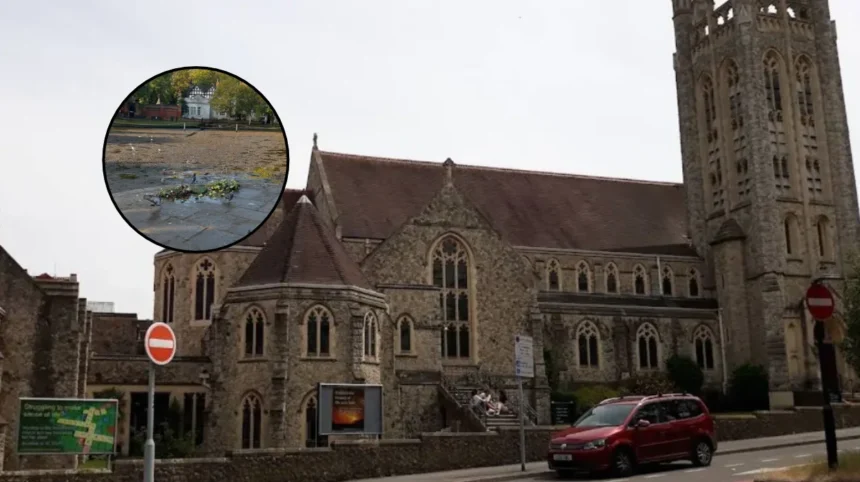
Sutton Council (South London News) October 22, 2026 – Local authorities in the London Borough of Sutton have formally acknowledged that they remain unable to clarify the factors that caused the historic Carshalton Ponds to drain unexpectedly overnight on 16 October. The dramatic decrease in water levels exposed substantial sections of the pond bed, prompting immediate alarm among nearby residents, local conservation advocates, and council representatives.
- Key Points
- Why did Carshalton Ponds experience a sudden loss of water overnight?
- How are local authorities and environmental experts addressing the drainage incident?
- What ecological and structural factors contribute to recurring water loss at Carshalton Ponds?
- How does the drainage event impact local wildlife and community amenities?
- Background of the particular development
- Prediction: How this development can affect the local community and environment
In response to the incident, Sutton Council confirmed that technical officers are currently seeking specialist hydraulic and environmental advice to establish how the water was lost so rapidly. The situation has intensified ongoing debates regarding chronic infrastructural leakage, the stability of local chalk aquifers, seasonal precipitation shortages, and the long-term ecological protection of local bird species and aquatic life.
Why did Carshalton Ponds experience a sudden loss of water overnight?
Municipal authorities confirmed that water levels across the interconnected pond system plunged dramatically within a span of hours between the evening of 15 October and the morning of 16 October.
Field inspectors dispatched to the site observed exposed mudflats and shallow channels where deep standing water normally sits. The sudden nature of the drainage has led engineering teams to explore multiple hypotheses, including potential fractures in the lining, underground bed failure, or anomalies in the localized groundwater table that feeds the River Wandle catchments.
According to statements issued by municipal representatives, official surveys have not pinpointed a singular point of structural failure. Consequently, external consultants specializing in hydrology and civil engineering have been commissioned to evaluate structural integrity, subterranean drainage pathways, and potential sluice gate operations.
How are local authorities and environmental experts addressing the drainage incident?
Sutton Council outlined its immediate steps toward investigating the incident and stabilizing the local ecosystem. Municipal officers are coordinating efforts alongside environmental bodies to monitor residual water depths and assess immediate risks to fish populations and waterfowl.
Engineers are conducting comprehensive surveys of the structural perimeter, culverts, and bed composition. The council noted that establishing an accurate diagnosis is essential before any large-scale remedial works or artificial refilling measures can be safely executed. Specialists are also monitoring nearby stream feeds to determine whether upstream diversions or natural subterranean siphon effects played a role in the drainage.
What ecological and structural factors contribute to recurring water loss at Carshalton Ponds?
The loss of water on 16 October is not an isolated event in the history of Carshalton Ponds. The body of water sits atop permeable chalk strata characteristic of the North Downs geology, making the site naturally susceptible to fluctuations in groundwater pressure and chalk aquifer levels.
Historical records indicate that the ponds rely heavily on natural chalk springs alongside artificial retaining structures. During periods of low regional rainfall or prolonged drought conditions, the surrounding water table lowers, reducing natural inflow. When structural leaks, silt accumulation, or fractures occur in the artificial lining of the upper and lower ponds, water can rapidly filter down into the underlying chalk geology.
Environmental groups have repeatedly drawn attention to the vulnerability of the site, noting that urban development, modified surface drainage, and variable rainfall patterns exacerbate water retention challenges.
How does the drainage event impact local wildlife and community amenities?
The rapid retreat of water poses immediate environmental hazards for resident bird species, including swans, ducks, and moorhens, as well as native fish species and aquatic invertebrates. Reduced water volume decreases oxygen levels in the remaining pools, heightening ecological stress.
For the local community, Carshalton Ponds forms a central cultural and aesthetic landscape within the historic village centre. Residents and local heritage organizations have expressed deep concern over the visual desolation of the site and the potential long-term disruption to local biodiversity. Community representatives have urged the council to establish permanent mitigation strategies rather than temporary patches once the immediate cause is resolved.
Background of the particular development
Carshalton Ponds consist of two main bodies of water—Upper Pond and Lower Pond—located in the heart of Carshalton Village within the London Borough of Sutton. fed historically by natural springs emanating from the North Downs chalk beds, the ponds serve as a key headwater source for the River Wandle.
Over decades, the site has required municipal intervention to preserve its water levels due to shifting hydrogeological conditions and the aging of artificial retaining walls. Previous maintenance projects have addressed lining degradation, silt buildup, and structural seepage. However, balancing natural spring flows, artificial water retention, and variable weather patterns has remained an ongoing management challenge for Sutton Council and environmental agencies responsible for urban watercourses in Greater London.
Prediction: How this development can affect the local community and environment
This development is likely to have direct consequences for local residents, conservation groups, and municipal policymakers in the London Borough of Sutton.
In the immediate term, residents and visitors will experience reduced amenity value and disrupted heritage landscapes as investigations and remedial works take place. Local wildlife enthusiasts and environmental volunteers may need to coordinate with council authorities to support wildlife monitoring or fish rescue operations if water levels remain depleted.
In the long term, this incident is expected to compel Sutton Council to re-allocate capital infrastructure budgets toward permanent hydraulic restoration and advanced monitoring systems. Local taxpayers and community stakeholders will likely see heightened public scrutiny around municipal water management, increased calls for structural upgrades to urban ponds, and tighter alignment between local planning policy and regional climate resilience strategies.