Key Points
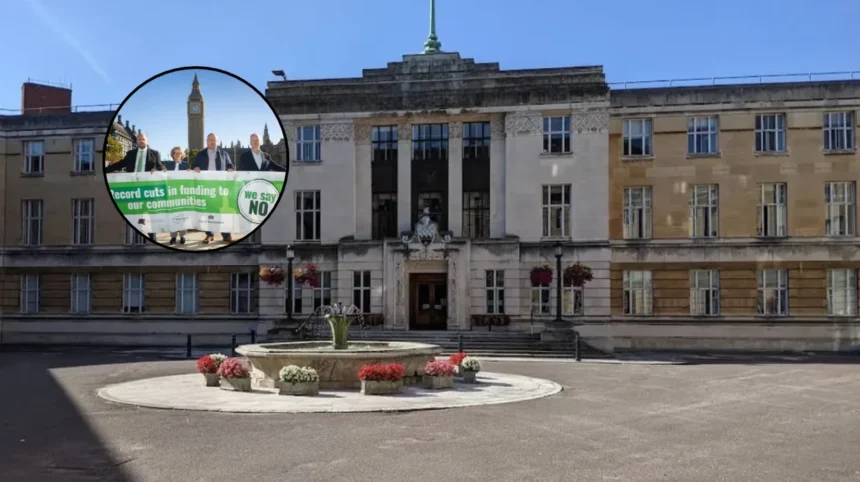
- Wandsworth Council, alongside Westminster, Kensington & Chelsea, and Richmond Councils, has formally submitted proposals under the Sustainable Communities Act to challenge central Government funding cuts.
- The projected reductions in Government funding could reduce Wandsworth’s annual budget by £84 million by 2029, representing a 40 per cent reduction.
- The magnitude of the £84 million annual deficit exceeds Wandsworth Council’s entire budget for local parks, public libraries, leisure centres, refuse collection, and street cleaning combined.
- Local authorities warn that without a reversal of central funding policies, local residents face either severe reductions in public services or significant increases in Council Tax to cover the shortfall.
Wandsworth (South London News) October 22, 2026 – Wandsworth Council, in coordination with three neighboring London local authorities, has launched a formal challenge against central Government funding cuts that threaten local public services and raise the prospect of substantial Council Tax increases.
How will Government funding cuts impact Wandsworth and neighbouring councils?
As reported by local government correspondents at Wandsworth Council Press Office, Wandsworth, Westminster, Kensington & Chelsea, and Richmond Councils have formally submitted a joint legislative proposal under the Sustainable Communities Act, requesting an immediate policy rethink from ministers.
Under current central allocation projections, Wandsworth Council faces a financial reduction of £84 million per year by 2029. This cut represents a 40 per cent reduction in central revenue support and grant allocations over the specified multi-year settlement window.
To illustrate the scale of the deficit, local officials highlighted that £84 million exceeds the total combined annual expenditure spent on maintaining local parks, operating public libraries, funding leisure centres, managing domestic refuse collection, and carrying out routine street cleaning across the borough.
Why are local authorities invoking the Sustainable Communities Act?
The decision by the four London boroughs to utilise the Sustainable Communities Act represents a formal statutory channel designed to allow local authorities to petition central departments when national policy directly damages local social or economic sustainability.
Without intervention or adjustment from central decision-makers, municipal leadership warns that local authorities will be forced to implement severe structural measures. These measures include cutting discretionary community infrastructure or implementing significant Council Tax increases to maintain essential, legally mandated public services such as adult social care and children’s services.
What is the background of this funding development?
The statutory submission under the Sustainable Communities Act follows prolonged debate between local authorities and central government over local revenue distribution frameworks.
Over recent funding settlement cycles, local authorities across Greater London have faced shifting statutory responsibilities alongside changes to core grant allocations from central departments. While demand and operational costs for statutory services—most notably adult social care, children’s services, and temporary emergency accommodation—have escalated, core funding streams from central sources have not matched local authority inflation.
In response to projected structural deficits, councils across the capital have increasingly relied on internal budget reallocations and local tax options. The coalition formed by Wandsworth, Westminster, Kensington & Chelsea, and Richmond reflects a growing joint initiative among London local authorities to formally challenge central allocation formulas before severe service reductions or tax hikes become unavoidable.
What is the prediction for local residents and local taxpayers?
This policy dispute will directly affect local council taxpayers, service users, and households situated across Wandsworth and the partner boroughs of Westminster, Kensington & Chelsea, and Richmond.
If the central Government declines to amend its funding trajectory before the 2029 financial horizon, the four local authorities will be forced to make significant fiscal adjustments:
- Higher Household Taxation: Council Tax rates will likely see significant above-inflation increases as local authorities attempt to cover the £84 million financial gap through local revenue generation.
- Reduction in Essential Civic Services: Non-statutory public amenities, including library operating hours, park maintenance standards, community leisure facilities, and street maintenance cycles, will face direct cutbacks or budget reductions.
- Restructuring of Local Provision: Councils may be compelled to consolidate municipal services or introduce new end-user fees for civic facilities to preserve core statutory social care budgets.