Key Points
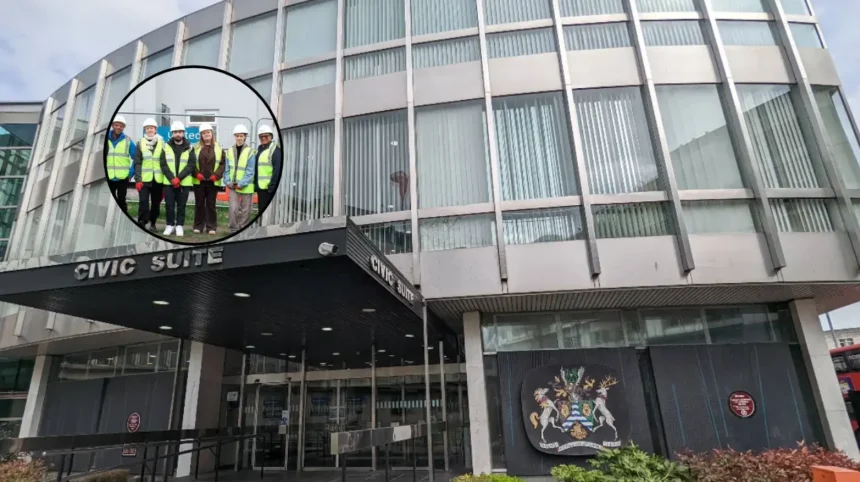
- Resident Engagement: Lewisham Council has officially trained six local residents as citizen scientists to examine the real-world performance and community experience of housing retrofit projects.
- Research Methodology: The team gathered qualitative and quantitative data through 44 telephone interviews and eight longer, face-to-face in-home interviews with local occupants.
- Project Scope: The research focuses on evaluating energy-efficiency improvements, such as insulation, modern ventilation systems, solar installations, and low-carbon heating across various social housing property types.
- Strategic Context: This initiative stems directly from the broader Lewisham Housing Retrofit Strategy and the local authority’s overarching Climate Emergency Action Plan.
- Community-Led Approach: The local authority aims to incorporate direct, lived resident feedback to refine future delivery stages and ensure retrofit works genuinely alleviate fuel poverty, damp, and high energy costs.
Lewisham (South London News) October 28, 2026 — As reported by Stephen Delahunty of Inside Housing, Lewisham Council has trained six local residents as citizen scientists to investigate the real-world impact of energy-efficiency retrofit works across its housing stock. Inside Housing
The pioneering initiative forms part of the local authority’s wider effort to assess how recent home upgrades perform in practice and to understand the everyday experiences of tenants living through major environmental adaptations.
According to the council, the newly established cohort of resident researchers conducted an extensive field study to gather authentic feedback from the local community. As reported by Stephen Delahunty of Inside Housing, the landlord stated that “their research included 44 telephone interviews and eight longer face-to-face interviews with residents in their homes”.
This peer-led methodology was designed to establish an honest dialogue between the local authority and its tenants, bypassing traditional corporate feedback channels to gain deeper insights into how retrofitted properties perform regarding warmth, indoor air quality, and overall livability.
How Does The Citizen Science Initiative Support Lewisham Council’s Retrofit Strategy?
The deployment of citizen scientists is directly aligned with the goals set out in the Lewisham Housing Retrofit Strategy and the council’s broader Climate Emergency Action Plan. The council has been actively delivering energy-efficiency upgrades across its housing portfolio, supported by grant allocations such as the government’s Social Housing Decarbonisation Fund (now continuing under the Warm Homes scheme framework).
The retrofitting measures being rolled out across Lewisham cover a wide spectrum of property types:
- Wall and Floor Insulation: Cavity wall insulation, external wall insulation (EWI), internal wall insulation (IWI), and underfloor insulation.
- Clean Energy Systems: Solar photovoltaic (PV) panels and air source heat pumps (ASHP).
- Ventilation and Windows: Controlled Mechanical Ventilation with Heat Recovery (MVHR) systems, improved airflow management, and double- or triple-glazed window upgrades.
The main objective of these physical upgrades is to drastically reduce carbon emissions, cut energy consumption, and protect vulnerable householders from escalating utility costs and severe fuel poverty. However, as local authorities across the United Kingdom encounter technical challenges during large-scale residential decarbonisation, Lewisham Council is using citizen science to ensure that capital investments translate into genuine improvements in quality of life for its residents.
What Issues Were Resident Researchers Tasked To Evaluate?
The resident researchers were specifically instructed to look beyond technical specifications and focus on human outcomes. Major housing retrofit programs can cause temporary disruption during construction and require tenants to adapt to new heating and ventilation technologies.
Through their 44 telephone consultations and eight detailed in-home interviews, the citizen scientists sought to evaluate key operational areas:
- Thermal Comfort and Energy Costs: Whether residents experienced noticeability warmer homes during cold spells and whether their household bills dropped as anticipated.
- Damp and Ventilation Performance: Assessing whether new insulation and controlled ventilation successfully eliminated chronic condensation and black mould.
- Usability of New Technology: How easily tenants adjusted to operating modern equipment such as air source heat pumps or altered ventilation controls.
- Customer Journey: Gathering tenant perspectives on the communication, installation phase, and support provided by contractors and Resident Liaison Officers during construction.
By utilizing trained local peers rather than external corporate auditors, the council created a comfortable environment where residents could express their honest thoughts regarding their post-retrofit living conditions.
Background Of Retrofit Work Developments
Over the past several years, UK local authorities and social housing providers have faced growing pressure to decarbonize the nation’s aging residential buildings, which remain a major source of greenhouse gas emissions. In response, central government initiatives like the Social Housing Decarbonisation Fund (SHDF) were introduced to help social landlords raise energy efficiency ratings to Energy Performance Certificate (EPC) Band C or higher.
However, early sector-wide retrofit schemes across the UK frequently revealed a gap between modelled energy performance and actual post-occupancy results. Issues such as unintended draughts, improper usage of modern heating systems, or insufficient ventilation led to problems with indoor dampness or tenant dissatisfaction.
Lewisham Council established its Housing Retrofit Strategy specifically to address these challenges. The council has emphasized targeting its hardest-to-heat properties first, including solid wall homes, pre-war estates, and hard-to-treat blocks of flats. Recognizing that technical delivery alone is insufficient, the local authority partnered with community groups—such as South East London Community Energy (SELCE)—and introduced citizen science initiatives to monitor post-installation outcomes and build long-term trust with local communities.
Prediction: How This Development Can Affect Local Residents And Social Housing Providers
The recruitment and deployment of citizen scientists by Lewisham Council is expected to have notable effects on both local tenants and the wider social housing sector:
- For Social Housing Tenants: Residents in Lewisham are likely to experience better retrofit outcomes in future phases of the council’s housing works. Lived feedback gathered by citizen scientists will help identify operational flaws early, such as difficult system controls or persistent cold spots. This directly informs future contractor training and tenant engagement, ensuring residents receive clearer guidance on managing their upgraded homes efficiently to maximize energy savings and prevent mould.
- For Lewisham Council: Collecting direct, peer-verified resident data provides the council with high-quality evidence on how its capital investments are performing. This evidence base will assist the local authority when applying for future central government decarbonisation grants, demonstrating that its funding allocations yield measurable social and environmental benefits.
- For the Broader UK Housing Sector: If successful, Lewisham’s community-led evaluation model could serve as a practical blueprint for other local authorities and housing associations across the UK. As social landlords face strict decarbonisation targets, adopting citizen science approaches can help bridge the gap between technical retrofitting and long-term tenant satisfaction.