Key Points
- Wandsworth Council plans to increase average total council tax bills by 94% starting April 2027, marking a potential record single-year increase in England since 1993.
- Over 10,000 people have signed an online petition titled “Don’t Double Our Council Tax”, organised by Wandsworth Labour.
- Local authority leadership attributes the steep rise to anticipated central government funding cuts of £84 million annually by 2029 following the Fair Funding Review.
- Despite identifying £79 million in potential annual savings, the council cites soaring inflation and pre-existing financial pressures as the key drivers of the deficit.
- Former Labour council leader Simon Hogg condemned the decision, whilst Deputy Council Leader Peter Graham insisted the increase remains essential unless central government intervenes.
- Public backlash mirrors historic local tax disputes, including the 1990 anti-Poll Tax demonstrations in Glasgow.
- A definitive decision regarding the proposal will be reached during a final council vote scheduled for March 2027.
Wandsworth (South London News) October 31, 2026 – A 94% increase in council tax is not the sort of news residents expect to find on their doormats. Yet for thousands of households in Wandsworth, the nightmare of an almost doubled annual bill could soon become a reality, raising serious questions about who should bear the cost of Britain’s increasingly strained local authorities. For a borough that had long prided itself on maintaining some of the lowest council tax rates across the country, the proposed increase comes as a complete shock. Wandsworth Council plans to raise the average total council tax bill by 94% from April 2027, making it potentially the largest single-year increase in England since council tax was originally introduced in 1993.
- Key Points
- Why Has the Proposed 94% Wandsworth Council Tax Hike Sparked Immediate Backlash?
- How Does Wandsworth Council Defend the Record Financial Demand on Households?
- Could the Financial Strain Be Mitigated by Phasing the Increase Over Time?
- Background of the Particular Development
- Prediction: How This Development Can Affect Wandsworth Residents and Ratepayers
Why Has the Proposed 94% Wandsworth Council Tax Hike Sparked Immediate Backlash?
The announcement has unsurprisingly received considerable backlash across the South West London borough. Community opposition quickly gathered momentum online through a public campaign created by local political representatives. An online petition, organised by Wandsworth Labour under the banner “Don’t Double Our Council Tax”, has already secured over 10,000 signatures from concerned ratepayers.
Elected representatives have openly clashed over the speed and severity of the proposed measures during recent council assemblies. Former Labour council leader Simon Hogg has been extremely vocal in his opposition to the financial plans. During a tense council meeting, Simon Hogg declared:
“Wandsworth Conservatives have decided to double your council tax. It’s outrageous.”
How Does Wandsworth Council Defend the Record Financial Demand on Households?
However, the council maintains the argument that the increase represents a stark financial necessity rather than a discretionary choice. The local authority argues that structural changes to the Government’s Fair Funding Review will result in an £84 million annual reduction in government grant funding by 2029.
Although the council has successfully identified £79 million in potential annual efficiency savings through its internal spending review, civic leaders claim that rising inflation alongside existing financial pressures will still leave a severe funding gap. Defending the council’s position, Deputy Council Leader Peter Graham argued that “Council tax will need to rise unless the Government thinks again,” explicitly placing responsibility on central government policies rather than town hall management.
Could the Financial Strain Be Mitigated by Phasing the Increase Over Time?
Local residents and community advocates have raised critical questions regarding the implementation schedule of the substantial uplift. Members of the public have questioned why the increase cannot be phased over a longer period, which would allow struggling households more time to adjust their domestic budgets.
In response to these concerns, the council management argues that spreading out the rise over multiple consecutive years would force greater reliance on its financial reserves, thereby risking leaving the local authority dangerously vulnerable to unexpected economic shocks.
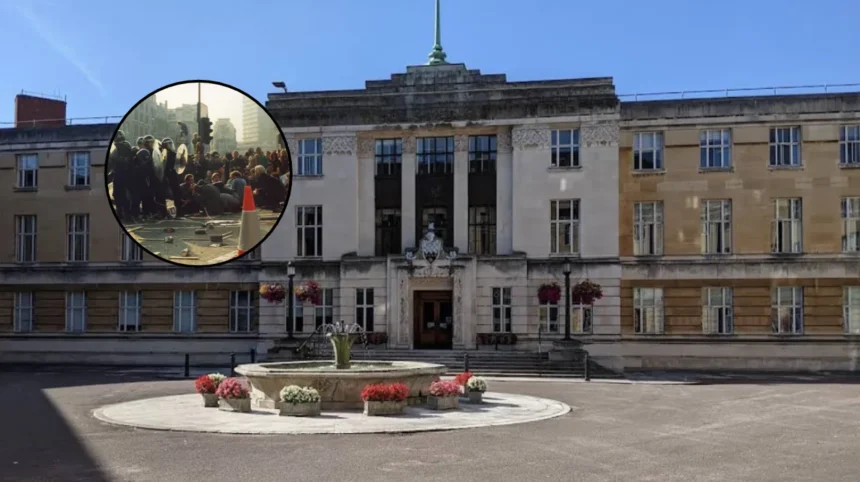
The ongoing controversy also bears a distinct similarity to one of Britain’s largest historic tax protests: the 1990 demonstrations against Margaret Thatcher’s Community Charge, commonly remembered as the Poll Tax. On 31 March 1990, approximately 40,000 people took to the streets of Glasgow in a mostly peaceful demonstration, chanting “We’re not paying the Poll Tax.” The deeply unpopular levy was eventually abolished in 1993 and replaced by the current council tax system. Although Wandsworth’s proposed increase differs in its administrative framework, both controversies raise fundamental questions regarding how far a local authority or central government can increase the financial burden on ordinary households before public opposition becomes impossible to ignore.
The proposal will ultimately be decided by a final vote scheduled for March 2027. While the council continues to challenge the government’s funding settlement and thousands continue to sign petition forms, Wandsworth residents face an uncomfortable reality: a local council bill that could double before the year concludes.
Background of the Particular Development
The current fiscal friction within Wandsworth Council represents a significant departure from the borough’s long-standing administrative reputation. For several decades, Wandsworth was widely recognized across Greater London for maintaining exceptionally low council tax charges relative to neighboring authorities. This low-tax status was historically sustained through localized outsourcing, prudent reserve management, and favorable central government funding allocations.
However, systemic changes to how central government redistributes funding across English local authorities have fundamentally altered town hall finance models. The introduction of the Fair Funding Review aimed to reallocate resources based on updated demographic data and localized social care demands across England. For urban authorities that previously benefited from specific block grant arrangements, the recalibration threatens substantial net losses in annual operating revenues.
Simultaneously, local councils across the United Kingdom have faced compounding expenditure demands driven by sustained inflation, heightened social care obligations, and elevated operational costs for public services. Local government financial frameworks limit options for council revenue generation, leaving council tax adjustments and emergency financial reserves as the primary mechanisms to balance annual balance sheets under statutory requirements.
Prediction: How This Development Can Affect Wandsworth Residents and Ratepayers
If the 94% council tax increase is formally ratified in March 2027, the impact on Wandsworth residents will be immediate and widespread across various income brackets:
- Direct Household Budget Impact: Household expenses will experience a sudden upward shift starting in April 2027. For families already navigating broader economic inflation and energy costs, doubling the local tax obligation will reduce disposable income, forcing cutbacks on non-essential consumer spending.
- Pressure on Vulnerable Groups: Low-income households, fixed-income pensioners, and single-occupant properties will face heightened risk of council tax arrears. Despite existing council tax reduction schemes, the sheer scale of the 94% hike could push near-threshold households into unexpected financial hardship.
- Housing Market and Rental Dynamics: Property owners and private landlords may attempt to factor elevated local tax liabilities into broader housing costs. Prospective homebuyers in South West London may increasingly factor local authority tax rates into property search criteria, altering Wandsworth’s historical advantage over neighboring London boroughs.
- Civic and Political Engagement: High levels of public participation, as evidenced by the 10,000-signature petition, suggest sustained political pressure leading up to the March 2027 vote. Local community groups and trade union representatives are likely to escalate organized responses, potentially influencing local voter turnouts and municipal policy debates in subsequent election cycles.