Key Points
- AVF Developments has submitted a proposal to amend the Section 106 legal agreement for its Purpose-Built Student Accommodation (PBSA) development at 141 Woolwich Road in east Greenwich.
- The developer is seeking to drop the previously agreed 35 per cent on-site affordable student housing provision, which equates to 67 affordable student beds.
- In place of the on-site provision, AVF Developments is offering Greenwich Council a commuted sum of £1,216,782 as a payment in lieu.
- The developer is also requesting the complete removal of a late-stage review mechanism that was intended to reassess financial viability and affordable housing contributions at a later phase of construction.
- Four key financial and operational factors have been cited to justify the amendments: elevated interest rates, a decline in international student numbers, mandatory design adjustments to satisfy new BS 9991:2024 fire safety standards, and rising operational costs that have cumulatively reduced the scheme’s Gross Development Value (GDV).
Greenwich (South London News) November 3, 2026 — In a newly submitted planning modification request regarding the former Speedy Hire site at 141 Woolwich Road, AVF Developments is seeking to eliminate its obligation to deliver on-site affordable student housing in favour of a financial contribution, November 3, 2026.
- Key Points
- What Are the Proposed Changes to the Greenwich Student Accommodation Scheme?
- Why Is the Developer Seeking to Remove On-Site Affordable Rooms?
- How Have Broader Macroeconomic Conditions Impacted the Project’s Viability?
- What Role Do Fire Safety Regulations and Operating Costs Play in the Revision?
- Background of the Woolwich Road Development
- How Could This Development Affect Local Residents and Students in Greenwich?
What Are the Proposed Changes to the Greenwich Student Accommodation Scheme?
Under the terms of the original Section 106 agreement formalised earlier this year, the developer committed to providing 35 per cent affordable student accommodation on-site within the multi-block scheme located on Woolwich Road in east Greenwich. This allocation represented 67 affordable student beds out of the total student accommodation capacity approved for the former industrial plot.
However, under the newly revised planning application lodged with the local planning authority, AVF Developments proposes to discharge its requirement to construct those 67 affordable rooms directly within the development. Instead, the firm has offered a cash-in-lieu payment totalling £1,216,782, which would be directed to the Royal Borough of Greenwich to support off-site housing initiatives or municipal housing funds.
In addition to replacing the on-site affordable housing allocation with a monetary sum, the developer’s application requests the formal removal of the late-stage viability review mechanism. This clause was originally incorporated into the planning permission to allow the local authority to re-evaluate the project’s profitability near completion and potentially secure additional affordable housing contributions if financial conditions improved.
Why Is the Developer Seeking to Remove On-Site Affordable Rooms?
To substantiate the request for altering the Section 106 covenants, the developer’s planning submissions outline four primary economic and structural justifications that have altered the underlying financial viability of the Woolwich Road project since the initial agreement was signed.
How Have Broader Macroeconomic Conditions Impacted the Project’s Viability?
The first dynamic identified in the planning documents relates to macroeconomic pressures affecting development capital. The planning submission highlights that elevated central interest rates over recent years have substantially raised development funding expenses and increased investor borrowing costs, altering the capital stack required to execute large-scale residential and student infrastructure projects.
The second primary factor cited is a shifting demographic landscape within the higher education sector. According to the planning documentation, a decline in overseas student enrolments across United Kingdom higher education institutions has reduced general demand for Purpose-Built Student Accommodation. This drop in international recruitment has moderated projected rental growth rates and led nearby universities to recalibrate their long-term expansion plans, directly impacting predicted yield models for the site.
What Role Do Fire Safety Regulations and Operating Costs Play in the Revision?
The third justification centres on mandatory building and design adjustments required to align the scheme with updated safety standards, specifically BS 9991:2024 fire safety requirements for residential and multi-occupancy structures. Integrating these enhanced safety measures into the architecture has introduced significant additional construction expenditure while simultaneously reducing the site’s overall usable floor space, thereby lowering its total Gross Development Value (GDV).
Finally, the developer points to sustained inflationary increases in ongoing operational and management expenses. The accumulation of higher material costs, labor rates, and facilities management fees has eroded initial profitability targets, rendering the full delivery of on-site affordable student beds financially unviable under the existing Section 106 framework.
Background of the Woolwich Road Development
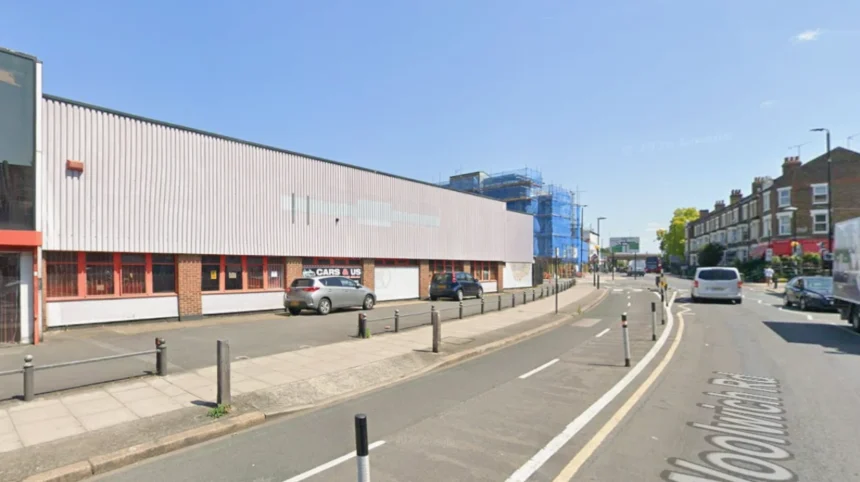
The site at 141 Woolwich Road in east Greenwich previously functioned as a commercial branch for Speedy Hire, an equipment and tool rental firm, before being earmarked for urban regeneration. Situated in a mixed-use corridor in east Greenwich, the location was identified as a suitable site to address growing demands for specialized student housing near tertiary education hubs across east and south-east London.
Following initial planning rounds, the scheme received outline authorization subject to a Section 106 legal agreement—a standard planning mechanism under UK planning law designed to ensure developers contribute positively to local infrastructure, community facilities, and affordable housing stock. In the original agreement finalised earlier this year, Greenwich Council secured a commitment for 35 per cent on-site affordable student housing, calculated as 67 units, along with standard clawback and review mechanisms designed to protect public interest if the site’s market value appreciated during construction. The submission of the current modification application represents a formal effort by the developer to renegotiate these obligations prior to the completion of the construction phase.
How Could This Development Affect Local Residents and Students in Greenwich?
If approved by the local planning authority, this development modification stands to directly impact two main groups: local students seeking low-cost accommodation and the broader Greenwich residential community.
For university students in the borough, the removal of 67 dedicated on-site affordable beds reduces the direct supply of price-capped, purpose-built living spaces in east London. Students who would have qualified for discounted rents on Woolwich Road may instead need to seek lower-cost options in the private rented sector, where rental market pressures remain elevated, or look further afield from their educational campuses.
For local residents and the Greenwich Borough Council, accepting a commuted sum of £1,216,782 provides the municipal authority with direct financial capital that could theoretically be deployed toward broader municipal housing funds or off-site residential initiatives. However, the loss of on-site affordable delivery, coupled with the requested removal of the late-stage viability review, removes the guarantee that affordable housing units will be generated directly within this specific regeneration footprint, while eliminating the opportunity for the council to capture potential future upside if economic conditions improve during the construction timeline.