Key Points
- Bilal Jhetam, 43, of Blackhorse Road, Walthamstow, pleaded guilty to harassment causing fear of violence and sending an indecent or offensive message.
- Bromley Magistrates’ Court heard that Jhetam sent abusive and threatening text messages to a woman in Abbey Wood between 11 September and 13 September.
- The court imposed a geographic ban preventing Jhetam from entering south London or crossing the River Thames into the region.
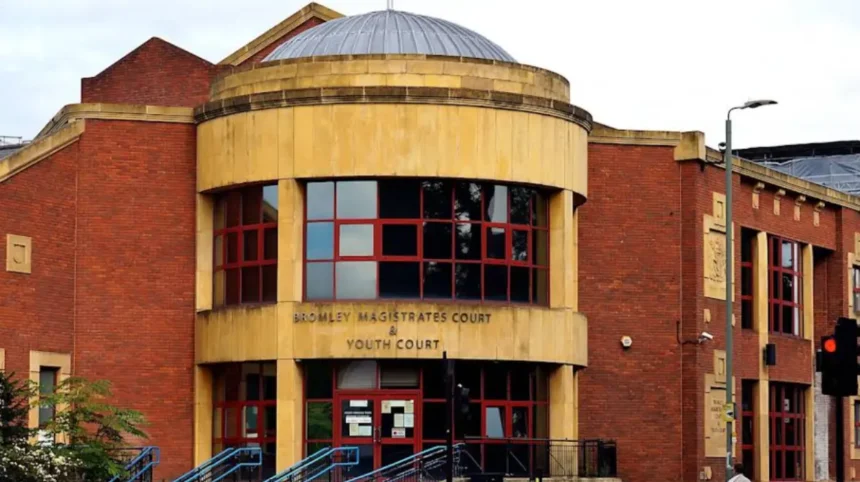
Abbey Wood (South London News) September 6, 2024 – A 43-year-old man from north-east London has been legally barred from entering south London and prohibited from crossing the River Thames after pleading guilty to charges of harassment and sending threatening messages to an Abbey Wood resident.
- Key Points
- What Were the Specific Charges Admitted by Bilal Jhetam at Bromley Magistrates’ Court?
- What Geographic Restrictions and Restraining Orders Were Imposed by the Bench?
- Background of the Particular Development
- Prediction: How Will This Development Affect the Local Community and Public Safety Monitoring?
Bilal Jhetam, residing at Blackhorse Road in Walthamstow, formally entered guilty pleas at Bromley Magistrates’ Court to two summary offences: harassment causing fear of violence, and sending an indecent, obscene, or menacing message via a public electronic communications network.
What Were the Specific Charges Admitted by Bilal Jhetam at Bromley Magistrates’ Court?
Court records show that between 11 September and 13 September, Jhetam engaged in a targeted sequence of electronic communications directed at a woman residing in the Abbey Wood area. The prosecution detailed how Jhetam transmitted multiple text messages containing explicit threats and abusive content across the three-day period, causing the victim to fear for her personal safety.
Following his arrest by the Metropolitan Police Service, Jhetam was charged under the Protection from Harassment Act 1997 and the Communications Act 2003. Appearing before the bench at Bromley Magistrates’ Court, Jhetam admitted full legal culpability for both counts.
What Geographic Restrictions and Restraining Orders Were Imposed by the Bench?
In response to the severity of the threats and to prevent further contact, magistrates passed a sentence incorporating strict geographic boundaries. Under the conditions imposed by the court, Jhetam is prohibited from entering any portion of south London, establishing the River Thames as a physical boundary line he is legally forbidden to cross southwards.
The court order explicitly restricts Jhetam from accessing the London Borough of Greenwich, within which Abbey Wood is located, alongside adjacent south London boroughs. Breach of these court-mandated conditions constitutes a criminal offence under UK law, carrying penalties including immediate custody.
Background of the Particular Development
Geographic exclusion orders and Thames-boundary prohibitions represent specialized sentencing powers utilized by Magistrates’ Courts and the Crown Court under UK harassment and stalking legislation. The legal framework provided by the Protection from Harassment Act 1997 allows courts to issue Restraining Orders upon conviction (or acquittal where deemed necessary) to protect victims from further conduct causing alarm, distress, or fear of violence.
Using natural geographical landmarks—such as the River Thames in Greater London—serves as an enforceable boundary for policing teams. Because crossing points over the Thames are concentrated around specific bridges, tunnels, and public transit links, monitoring compliance across river boundaries allows law enforcement authorities to detect and act upon potential breaches rapidly.
Prediction: How Will This Development Affect the Local Community and Public Safety Monitoring?
This judicial outcome directly impacts local communities across south London, particularly residents in Abbey Wood and surrounding Greenwich neighborhoods.
- Victim and Local Community Security: The exclusion zone provides immediate legal protection to the individual involved while offering reassurance to the Abbey Wood community that swift judicial action is taken against electronic harassment and domestic threats.
- Law Enforcement Enforcement: Metropolitan Police officers within the South East Basic Command Unit (BCU)—which covers Greenwich, Bexley, and Lewisham—will be mandated to arrest Jhetam immediately should he be identified south of the Thames. Automatic Number Plate Recognition (ANPR) and public transport monitoring across Thames crossings will assist in enforcing the ban.
- Precedent for Digital and Physical Harassment Cases: The implementation of a clear natural boundary line (the Thames) sets an operational template for future harassment rulings within Greater London, demonstrating how magistrates can leverage city geography to construct strict exclusion perimeters.