Key Points
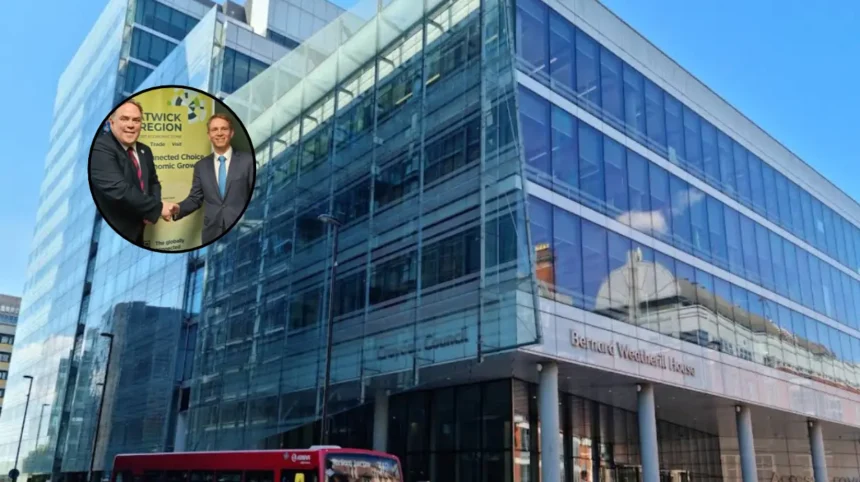
- The Executive Mayor of Croydon, Jason Perry, and London Gatwick Chief Executive, Pierre-Hugues Schmit, have sent a joint letter to the Chancellor of the Exchequer urging the Government to resolve the longstanding rail bottleneck around East Croydon.
- The joint appeal follows the recent approval of London Gatwick’s privately funded, multi-billion-pound Northern Runway programme, which is projected to create around 14,000 jobs and generate an additional £1bn in annual economic benefits.
- Every rail service operating between London and Gatwick travels through East Croydon, making it a critical pinch point where delays can rapidly disrupt the wider Brighton Main Line and Thameslink network.
- East Croydon handles more trains daily than all the intercity operators serving Euston, King’s Cross and St Pancras combined.
- Previous economic modelling indicates that resolving the Croydon rail bottleneck could unlock approximately £5.1bn in economic value over a 20-year period.
- Both leaders addressed the issue at the Invest in Croydon conference on 12 November, emphasising that reliable transport infrastructure is essential to support housing delivery, tourism and private investment across London, the South East and beyond.
- Mayor Perry has previously raised the matter with the Secretary of State for Transport, and Croydon Council is prepared to collaborate with the Government, Network Rail, London Gatwick and regional partners to deliver a practical solution.
Croydon (South London News) November 12, 2026 – The Executive Mayor of Croydon and the Chief Executive of London Gatwick have formally urged the Government to tackle the longstanding rail bottleneck around East Croydon, warning that infrastructure constraints could limit billions of pounds in economic growth following the approval of the airport’s Northern Runway expansion.
- Key Points
- Why Are Croydon Council and London Gatwick Demanding Rail Investment at East Croydon?
- What Did Mayor Jason Perry and CEO Pierre-Hugues Schmit Say About the Bottleneck?
- What Happened at the Invest in Croydon Conference on 12 November?
- Background: What Is the History and Economic Value of the East Croydon Rail Corridor?
- Prediction: How Could Resolving the Bottleneck Affect Commuters, Businesses and Regional Residents?
Why Are Croydon Council and London Gatwick Demanding Rail Investment at East Croydon?
Executive Mayor Jason Perry and London Gatwick Chief Executive Pierre-Hugues Schmit have written a joint letter to the Chancellor of the Exchequer to highlight the vital role played by the Brighton Main Line and Thameslink network. According to the two leaders, this rail corridor connects communities, businesses, airports and investment opportunities across the country.
Their intervention comes directly after the green light was given for London Gatwick’s Northern Runway programme. The airport is committing more than £2bn of private funding to the scheme, which represents Britain’s first major runway expansion in a generation. The programme is forecast to create approximately 14,000 jobs, generate an extra £1bn in economic benefits each year, and strengthen the United Kingdom’s international connectivity.
Mayor Perry and Mr Schmit argue that because every rail service between London and Gatwick passes through East Croydon, failures or congestion at this specific pinch point quickly ripple across the broader rail network. Delays at the station impact services along the entire Brighton Main Line, the Thameslink route and connecting lines further afield. Unless rail capacity is upgraded alongside the airport’s expansion, the leaders warn that infrastructure bottlenecks could restrict housing delivery, tourism and private investment across a significant portion of the country.
How Busy Is East Croydon Station Compared to Major London Termini?
East Croydon is currently one of the busiest railway stations in the United Kingdom. As highlighted in the joint representation to the Treasury, the station handles more trains every single day than all of the intercity rail operators serving London Euston, King’s Cross and St Pancras combined.
Beyond connecting central London with Gatwick Airport, the corridor serves as a major north-south artery. It links Brighton and the south coast with Gatwick, London, Luton, Bedford, Peterborough and Cambridge. Consequently, the route connects two major international airports, the capital’s employment market, key centres of innovation and several of the nation’s largest planned investment zones.
What Did Mayor Jason Perry and CEO Pierre-Hugues Schmit Say About the Bottleneck?
Speaking on the necessity of aligning public transport upgrades with private capital, Executive Mayor Jason Perry stated:
“Croydon sits at the heart of a rail corridor connecting communities, businesses and two major airports. Yet a bottleneck here holds back opportunities far beyond our borough.”
Mayor Perry emphasised the scale of the private commitment already secured for the region, stating:
“Gatwick is investing more than £2bn of private funding in its Northern Runway programme, Britain’s first major runway expansion in a generation.”
He further outlined the local and regional stakes involved in upgrading the line, adding:
“We need the railway to support that investment, giving people reliable journeys and businesses the confidence to grow. The return would be felt in jobs, new homes and stronger local economies along the line.”
Detailing the political strategy to secure Treasury backing, Mayor Perry said:
“Working with Pierre-Hugues Schmit and the London Gatwick team, we are taking that case directly to the Chancellor. We will continue bringing together local authority leaders up and down the rail line to press for action. Addressing this bottleneck would improve daily life for our residents and help turn the Government’s aspirations for growth into investment and opportunity.”
London Gatwick Chief Executive Pierre-Hugues Schmit echoed the urgency of addressing the capacity limits at East Croydon. Mr Schmit stated:
“Our Northern Runway programme is a major opportunity for the UK, creating around 14,000 jobs and contributing an additional £1bn to the regional economy every year.”
Highlighting the dependence of airport growth on surface access, Mr Schmit said:
“Reliable, convenient and affordable public transport is central to our growth and to ensuring that its benefits reach businesses and communities across the region. Addressing the Croydon bottleneck would strengthen a vital connection between Gatwick, London and the wider country.”
Mr Schmit concluded by underscoring the collaborative approach taken with local government, stating:
“We are pleased to be working with Mayor Perry and Croydon Council to make this shared case to Government. By planning rail capacity alongside the private investment already committed, we can help secure the greatest possible economic benefit for the UK.”
What Happened at the Invest in Croydon Conference on 12 November?
The push for enhanced rail infrastructure formed a central theme at the Invest in Croydon conference held on 12 November, where both Mayor Perry and Mr Schmit delivered keynote speeches. The event was designed to showcase Croydon’s status as a prime destination for commercial and residential investment in London.
During the conference, speakers reinforced the argument that dependable transport links are a prerequisite for attracting private capital, supporting existing enterprises and generating new employment. Prior to the joint letter to the Chancellor, Mayor Perry had already raised the East Croydon capacity issue with the Secretary of State for Transport. Croydon Council has confirmed it is ready to work alongside the Government, Network Rail, London Gatwick and regional partners across the Thameslink corridor to formulate a practical and deliverable engineering solution.
Background: What Is the History and Economic Value of the East Croydon Rail Corridor?
The rail network converging at East Croydon has long been recognised by transport planners as one of the most complex and congested sections of railway in Britain. Because trains from the south coast, Gatwick Airport and regional commuter towns merge at junctions around Croydon before splitting towards London Victoria, London Bridge and the Thameslink core, minor operational issues frequently cause severe knock-on delays.
Previous economic modelling conducted on the corridor suggested that resolving the Croydon bottleneck could unlock around £5.1bn in economic value over a 20-year timeframe. With the recent approval of London Gatwick’s £2bn Northern Runway programme and wider planned developments along the Brighton Main Line and Thameslink routes, local leaders and transport stakeholders indicate that the projected economic return of unblocking the junction is now likely to be substantially higher than earlier estimates.
Prediction: How Could Resolving the Bottleneck Affect Commuters, Businesses and Regional Residents?
If the Government responds to the joint appeal by funding and delivering capacity upgrades around East Croydon, daily commuters and air travellers using the Brighton Main Line and Thameslink services could experience noticeably more reliable journeys and fewer cascading delays across the South East and East of England.
For businesses and property developers operating between Brighton, Croydon, central London and Cambridge, removing the rail pinch point would provide the infrastructure certainty required to accelerate housing delivery and commercial investment. Conversely, if the bottleneck remains unaddressed while London Gatwick expands its flight capacity via the Northern Runway, the existing rail corridor may face heightened congestion, potentially limiting the regional distribution of the projected 14,000 new jobs and £1bn in annual economic benefits.