Key Points
- Former Transport for London (TfL) board member and safety panel chair Michael Liebreich has claimed that the authority’s failure to curb bus-related fatalities demonstrates it has not learned the lessons of the 2016 Croydon tram crash.
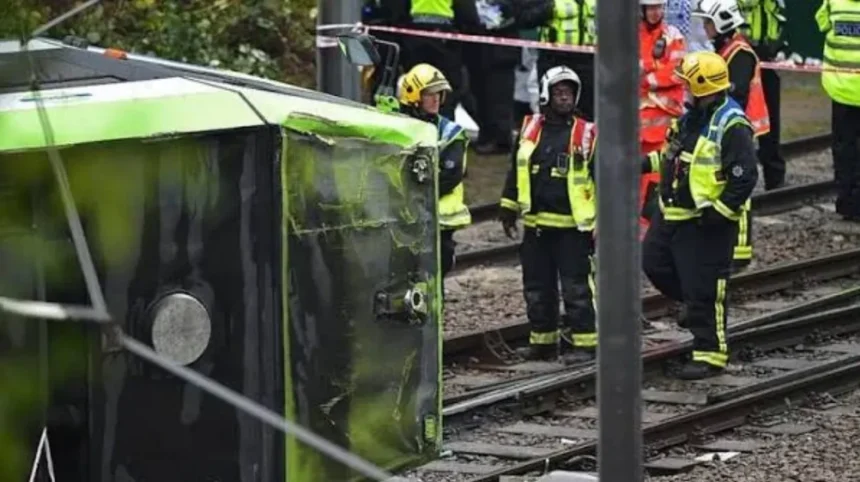
- Monday, November 9 marked the 10-year anniversary of the Sandilands derailment, which killed seven passengers and injured 62 others after driver Alfred Dorris experienced a suspected episode of microsleeping and failed to slow the tram from 50mph to 12mph.
- Michael Liebreich, who served on the TfL board from 2012 to 2018 and was tasked with overseeing investigations into the tragedy, alleged that the same lack of transparency exposed after the tram disaster is undermining TfL’s promise to eliminate bus deaths by 2030.
- He criticised the handling of a fatigue management audit following the crash, describing the failure to inform him about the audit as a “feeble cover up” and stating that management had been under investigation for potential gross corporate manslaughter.
- In September, agenda papers presented to TfL’s safety panel revealed that transport bosses had quietly admitted the Mayor of London’s pledge to end bus deaths by 2030 was impossible, with the wider target for ending all public transport deaths pushed to 2041.
- A TfL spokesperson responded by stating that the authority worked closely with the Rail Accident Investigation Branch (RAIB) to introduce a new safety regime and remains committed to supporting those affected and ensuring such a tragedy can never happen again.
Croydon (South London News) November 12, 2026 – Transport for London’s failure to reduce bus-related deaths shows it has not learned lessons from the Croydon tram crash, its former safety panel chair has claimed.
- Key Points
- Why does Michael Liebreich believe TfL has failed to learn from the Croydon tram crash?
- What concerns have been raised about the Croydon tram crash investigation process?
- How does the tram disaster connect to TfL’s 2030 bus death target?
- How has Transport for London responded to the criticism?
- Background
- Prediction
Former Transport for London board member Michael Liebreich, who chaired the authority’s safety panel during his tenure between 2012 and 2018, alleged that the same lack of transparency exposed in the aftermath of the Croydon disaster is preventing TfL from fulfilling its pledge to end bus fatalities by 2030.
Why does Michael Liebreich believe TfL has failed to learn from the Croydon tram crash?
As reported by Agenda Editor Luke Donnelly of MyLondon, Michael Liebreich directly linked the cultural and transparency issues he encountered while scrutinising the 2016 tram derailment to TfL’s ongoing inability to reduce fatal collisions on London’s bus network. Investigators into the Croydon crash discovered that the driver, Alfred Dorris, had likely lost awareness due to a brief episode of microsleeping, leaving him too slow to react when the speed limit dropped sharply from 50mph to 12mph on a sharp bend near Sandilands tunnel.
Following the derailment, Mr Liebreich was tasked with overseeing the internal and external investigations into the tragedy. However, he was not informed about a crucial fatigue management audit conducted in the wake of the incident, an omission he later characterised as a “feeble cover up” that would have materially assisted his oversight probe. Speaking to Luke Donnelly of MyLondon regarding the handling of that audit, Michael Liebreich stated:
“You cannot cancel an audit. Management were under investigation for potential gross corporate manslaughter. This never happens anywhere, that’s the whole point of an audit.”
What concerns have been raised about the Croydon tram crash investigation process?
In his assessment of how the Sandilands disaster was examined, Mr Liebreich pointed to gaps in who was called to provide testimony and how safety systems were scrutinised. As reported by Luke Donnelly of MyLondon, Michael Liebreich remarked on the individuals responsible for designing the operational framework, stating:
“They built the system together, but were never even called to give evidence.”
Previously, Mr Liebreich had also raised alarms at City Hall alongside then-Deputy Mayor for Transport Heidi Alexander regarding senior-level “complacency” and why a 2017 TfL audit into tram driver fatigue was not immediately passed to the government’s Rail Accident Investigation Branch (RAIB). While Ms Alexander maintained at a London Assembly transport committee meeting that the first draft of the audit had not been watered down and that new procedures ensured reports would be shared as a matter of course, Mr Liebreich warned that institutional resistance to transparency persisted.
How does the tram disaster connect to TfL’s 2030 bus death target?
The renewed scrutiny on the 10th anniversary of the Sandilands crash follows disclosures regarding TfL’s flagship road safety strategy. In September 2026, Luke Donnelly of MyLondon revealed that TfL had quietly admitted in agenda papers presented to its safety panel that Mayor Sadiq Khan’s pledge to end bus deaths by 2030 was impossible to achieve.
Despite five separate bus safety plans and strategies launched since 2016 under the Mayor’s ‘Vision Zero’ programme, fatalities involving London buses have not fallen at the rate required to meet the 2030 deadline. TfL has subsequently pushed its target for eliminating all public transport deaths back to 2041, prompting Mr Liebreich to argue that the same systemic opacity around driver fatigue, working conditions, and accountability seen after Croydon continues to hinder meaningful progress on bus safety.
How has Transport for London responded to the criticism?
Transport for London rejected the suggestion that it had failed to absorb the lessons of the 2016 disaster, pointing to structural reforms implemented alongside national rail regulators over the past decade. Responding to Luke Donnelly of MyLondon, a TfL spokesperson said the authority worked closely with the Rail Accident Investigation Branch to introduce a new safety regime following the derailment. The TfL spokesperson added:
“We remain committed to supporting those affected and to doing everything possible to ensure a tragedy like this can never happen again.”
Background
On the morning of November 9, 2016, a two-carriage Bombardier CR4000 tram operating on the Tramlink network derailed and overturned on a sharp curve approaching the Sandilands junction in Croydon, south London. Seven passengers—Dane Chinnery, Philip Seary, Dorota Rynkiewicz, Robert Huxley, Mark Smith, Philip Logan, and Donald Collett—lost their lives, while 62 others suffered injuries, many of them life-changing.
The Rail Accident Investigation Branch concluded that the tram entered the 12mph curve at approximately 45mph because the driver, Alfred Dorris, had fallen into a microsleep. In response to the RAIB’s 15 recommendations, TfL and operator FirstGroup introduced physical and technological upgrades across the tram network, including enhanced speed signage, chevrons, a physical barrier, automatic braking systems to prevent overspeeding, and infra-red driver fatigue detection technology. Both TfL and Tram Operations Limited were later fined millions of pounds after pleading guilty to health and safety offences, while Mr Dorris was cleared of failing to take reasonable care at work following a trial at the Old Bailey in 2023. Simultaneously, TfL launched its Vision Zero strategy, which originally pledged to eliminate all deaths and serious injuries on London’s transport network by 2041, with an interim milestone of zero deaths in or by a London bus by 2030.
Prediction
The public intervention by TfL’s former safety chair on the 10-year anniversary of the Sandilands tragedy is likely to intensify political, regulatory, and industrial pressure on both Transport for London and City Hall. For London bus passengers, pedestrians, and cyclists, the acknowledgement that the 2030 zero-bus-death target will be missed—combined with ongoing questions over transparency—may heighten public concern over street-level safety and prompt renewed demands for independent oversight of bus operator contracts. For London bus drivers and trade unions such as Unite, Mr Liebreich’s focus on fatigue audits and systemic accountability is expected to strengthen calls for stricter limits on shift patterns, improved rest facilities, and greater scrutiny of working conditions across private bus operators contracted by TfL. Meanwhile, senior TfL executives and the Mayor of London will likely face increased questioning from the London Assembly Transport Committee over how safety data and internal audits are governed, potentially forcing greater public disclosure of bus collision investigations and driver fatigue monitoring in the lead-up to the revised 2041 Vision Zero deadline.