Lambeth is one of London’s strongest boroughs for urban photography because its streets combine Thames waterfronts, landmark architecture, historic terraces, railway infrastructure, public squares, modern regeneration and culturally significant neighbourhoods. The borough has more than 2,000 statutory listed buildings, 62 conservation areas and around 2,500 listed buildings identified in recent planning documents.
- Why is Lambeth one of the best London boroughs for urban photography?
- What are the best places for Thames-side urban photography in Lambeth?
- Where can you photograph modern architecture in South Bank and Waterloo?
- What makes Lambeth Palace a strong photography location?
- Where are the best historic streets for architectural photography in Kennington?
- Is Brixton good for street and urban photography?
- Why is Windrush Square important for photography in Brixton?
- Where can photographers find strong railway and street compositions in Brixton?
- What are the best photography locations around Vauxhall and Albert Embankment?
- Which conservation areas in Lambeth are best for architectural photography?
- What are the best quieter places for urban photography in Lambeth?
- What types of urban photography work best in Lambeth?
- When is the best time to photograph Lambeth’s urban landscape?
- What should photographers know about professional photography in Lambeth?
- How can visitors plan an urban photography route through Lambeth?
- Why does Lambeth remain important for future urban photography?
Its visual character changes significantly from north to south. Waterloo and South Bank provide large-scale modern architecture and river views. Lambeth Palace and Kennington provide medieval and Georgian heritage. Brixton adds markets, murals, railway arches and multicultural public spaces. Vauxhall and Albert Embankment combine historic landmarks with contemporary development.
For photographers, this range creates opportunities for architectural photography, street photography, cityscape photography, documentary photography and evening photography without leaving the borough.
Why is Lambeth one of the best London boroughs for urban photography?
Lambeth offers exceptional urban photography because it combines the River Thames, major landmarks, historic streets, modern architecture, conservation areas, public squares and culturally distinctive neighbourhoods within one central London borough. This creates varied photographic subjects across relatively short distances.
Lambeth occupies a strategic position on the south side of central London. Its northern edge follows the River Thames, while neighbourhoods including Waterloo, Vauxhall, Kennington, Brixton, Clapham, Streatham and Herne Hill extend southwards.
The council identifies Lambeth as an inner London borough with approximately two miles of river frontage between South Bank and Vauxhall. It also highlights major urban centres such as Brixton and Streatham and large open spaces such as Brockwell Park.
The architectural range is particularly important. Lambeth contains conservation areas representing different periods of development, including Waterloo, South Bank, Kennington, Brixton, Clapham and Lambeth Palace.
This gives photographers several distinct visual categories. Riverfront locations provide wide compositions. Historic neighbourhoods provide façades and streetscapes. Transport infrastructure provides strong geometric lines. Public squares provide people-centred compositions. Modern developments provide glass, concrete and steel structures.
The borough also contains protected historic buildings. Lambeth Council states that its listed buildings range from small heritage structures such as post boxes and water troughs to major landmarks such as the Royal Festival Hall and Georgian terraces in Kennington.
For visitors, this concentration makes Lambeth particularly suitable for walking-based photography.
What are the best places for Thames-side urban photography in Lambeth?
The best Thames-side photography locations include Albert Embankment, Lambeth Bridge, South Bank and the riverside around Waterloo because they provide architectural landmarks, bridges, reflections, pedestrian movement and direct views towards Westminster and central London.
The River Thames provides the strongest continuous photographic backdrop in northern Lambeth. The riverside connects several visually different areas, allowing photographers to move between historic architecture and contemporary city development.
Albert Embankment
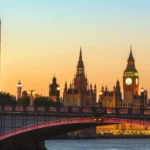
Albert Embankment is one of the most useful locations for broad city compositions. Film Lambeth specifically identifies views of Big Ben, the Palace of Westminster and London buses from the riverside.
The embankment works particularly well for compositions containing several layers. The river forms the foreground. Westminster landmarks sit across the water. Bridges, buses, pedestrians and modern buildings provide intermediate visual elements.
Albert Embankment Gardens adds smaller-scale compositions. The gardens form a chain of open spaces running between Vauxhall and Waterloo and are open 24 hours a day.
The location therefore supports both wide cityscape images and detailed street photographs.
Lambeth Bridge
Lambeth Bridge provides a strong architectural frame between Lambeth and Westminster. Its structure, river traffic and views towards the Palace of Westminster create several photographic directions.
The bridge is especially useful for geometric compositions because its repeated structural elements create leading lines. The surrounding riverside also provides opportunities to photograph movement between the bridge, river and surrounding buildings.
South Bank
South Bank is the borough’s major modern architectural photography zone. Lambeth Council describes its conservation area as a nationally important collection of twentieth-century buildings along the south bank of the Thames.
The Royal Festival Hall is particularly important. Historic England lists it as Grade I and records its construction between 1949 and 1951 as part of the Festival of Britain.
Waterloo Bridge provides another major architectural subject. Historic England lists it at Grade II* and identifies it as a 1939–1945 bridge designed by Sir Giles Gilbert Scott.
These locations are useful for photographers interested in post-war architecture, brutalist and modernist forms, bridges, riverside public space and urban movement.
As you explore the modern South Bank landscape, you are crossing land shaped by major historical change. Read the full to understand its origins.

Where can you photograph modern architecture in South Bank and Waterloo?
South Bank and Waterloo provide Lambeth’s strongest concentration of modern urban architecture, with the Royal Festival Hall, Waterloo Bridge, National Theatre surroundings, County Hall and large public spaces creating strong geometric, structural and riverside compositions.
The South Bank Conservation Area was first designated in 1982. Lambeth Council states that its principal architectural character comes from twentieth-century buildings, with the Royal Festival Hall serving as a central element of the Festival of Britain site.
Waterloo offers a different architectural character. Its conservation area was designated in 1981 and contains more than a century of development around Cornwall Road, Stamford Street and Waterloo Road. The area combines terraces with large commercial buildings.
This contrast is valuable for urban photography.
The South Bank area works well for large structures and open compositions. Waterloo works better for street-level architectural details, façades, signs, road layouts and interactions between older and newer buildings.
Waterloo Bridge is also a particularly useful subject because its listed status recognises both its architectural interest and its role within the South Bank townscape.
Photographers interested in architectural details can focus on concrete surfaces, windows, balconies, columns, bridges, staircases and repeating structural patterns.
What makes Lambeth Palace a strong photography location?
Lambeth Palace provides a distinctive historic contrast to Lambeth’s modern riverside architecture, with medieval buildings, brick walls, historic towers, gardens and views towards Westminster creating detailed architectural compositions within a compact riverside setting.
Lambeth Palace is the official London residence of the Archbishop of Canterbury. Its architectural history extends back to the medieval period.
Historic England lists Lambeth Palace as Grade I. The surviving complex includes the fifteenth-century Lollard’s Tower, the fifteenth-century undercroft associated with the chapel and the seventeenth-century Great Hall.
The palace gardens cover approximately 2.5 hectares. Historic England records the site’s relationship with the Thames and notes that the clock tower of the Palace of Westminster dominates views across the river.
For urban photography, the location is useful because it provides historical texture within a central London setting.
Brickwork, towers, walls, gates and surrounding streets provide detailed compositions. The nearby riverside adds another visual layer.
Photography access depends on the specific area and activity. Professional filming and photography on Lambeth Council land or public roads is managed through Film Lambeth, so commercial shoots require appropriate arrangements.
Where are the best historic streets for architectural photography in Kennington?
Kennington is one of Lambeth’s strongest areas for historic architectural photography because its conservation area contains late-eighteenth-century and nineteenth-century terraces, the Duchy of Cornwall Estate, historic squares and detailed brick and stucco façades.
The Kennington Conservation Area was first designated in 1968 and has been extended several times. Lambeth Council describes it as an area characterised by smart terraced housing developed from the late eighteenth century onwards.
The architectural details are particularly useful for close-up photography.
Kennington contains stucco façades, sash windows, porticos, bay windows, brick detailing and varied rooflines. The conservation statement documents different architectural phases, including Neo-Classical, Italianate, Venetian Gothic, Victorian and Edwardian development.
Cleaver Square is particularly useful for compositions based on symmetry and repeated façades. Kennington Park Road and Kennington Road provide longer streetscapes.
Kennington Green also provides a strong relationship between open space and architecture. Lambeth planning material identifies views from Kennington Park Road towards the green, with listed buildings and historic structures forming the background.
The area suits photographers who want London architecture without the scale and visual density of central Westminster.
Is Brixton good for street and urban photography?
Brixton is one of Lambeth’s strongest street photography destinations because it combines historic commercial architecture, railway viaducts, markets, murals, public squares, cultural landmarks and active pedestrian streets within a compact town centre.
Brixton’s visual identity developed through transport, commerce and migration. Its historic commercial streets contain buildings from the nineteenth century, while railway infrastructure continues to define parts of the town centre.
Lambeth’s Brixton Conservation Area statement records that commercial properties, department stores and community buildings expanded along Brixton Road from the 1870s. It also identifies the former Bon Marché department store, dating from 1876, as Britain’s first purpose-built department store.
The same historical development created Brixton’s market environment. Street trading began on Atlantic Road in the 1870s and expanded towards Brixton Station Road, Popes Road and Brixton Road.
This history remains visible in the urban fabric.
Railway arches, shopfronts, signs, narrow streets, market structures and public spaces create strong street-photography subjects. The combination of historic buildings and contemporary businesses also creates visual contrasts.
Brixton is particularly suitable for photographers looking for documentary-style urban images rather than conventional landmark photographs.

Why is Windrush Square important for photography in Brixton?
Windrush Square is a major Brixton photography location because its open public space connects architecture, monuments, trees, cultural institutions and modern public-realm design with an important story about post-war migration and British multicultural history.
Windrush Square sits at the centre of Brixton. Lambeth Council states that its name commemorates the arrival of the MV Empire Windrush at Tilbury on 22 June 1948 with 492 migrants.
The square originally consisted of Windrush Square and Tate Library Gardens. The two spaces were brought together as a central plaza, with the redevelopment completed in 2010.
The space contains several visually distinctive features. These include stepped landscapes, different surface materials, grass, lighting, seating and a mature London Plane tree.
The square also contains the African and Caribbean War Memorial and the Cherry Groce Memorial Pavilion. The latter was designed by architect Sir David Adjaye and installed in 2021.
The nearby Black Cultural Archives provides an additional cultural reference point.
For photography, Windrush Square works well for architectural compositions, public-space photography, documentary images and photographs that combine people with buildings and monuments.
Where can photographers find strong railway and street compositions in Brixton?
Brixton’s railway arches, station surroundings and commercial streets create strong urban compositions through repeating brick structures, pedestrian movement, shopfronts, signage, road junctions and changing building heights across the town centre.
Railway infrastructure is one of Brixton’s defining visual elements.
The nineteenth-century expansion of Brixton was closely connected with rail transport. Lambeth’s conservation documentation records how markets developed alongside railway arches and transport connections, helping Brixton become an important commercial centre.
The railway viaduct provides repeating arches and strong horizontal lines. These elements work particularly well for architectural photography because they create rhythm and depth.
Atlantic Road, Brixton Station Road and Popes Road provide additional street scenes. Photographers can combine architecture with commercial activity without needing to travel far between locations.
The area also contains contrasting architectural periods. Historic commercial buildings sit beside newer residential and commercial structures.
This creates opportunities for comparative compositions that show how Brixton has changed while retaining its historic street framework.
What are the best photography locations around Vauxhall and Albert Embankment?
Vauxhall and Albert Embankment are strong urban photography locations because regeneration has created a layered townscape where historic buildings, riverside infrastructure, residential towers, bridges, public spaces and contemporary architecture appear within the same visual field.
Vauxhall has undergone major redevelopment as part of the wider Vauxhall Nine Elms Battersea regeneration area.
Lambeth Council describes the Vauxhall and Albert Embankment area as part of a major central London regeneration zone extending from Lambeth Bridge towards Battersea Power Station.
This creates a changing architectural environment.
Photographers can capture relationships between older streets and new high-rise development. The contrast between brick buildings and glass façades provides clear visual separation.
Albert Embankment is particularly strong for riverside compositions. Film Lambeth identifies views containing the Thames, Westminster landmarks, bridges, pedestrians and the London skyline.
The area also supports evening photography because artificial lighting becomes an important part of the architectural scene.
For a shorter photography session, Albert Embankment offers a concentrated selection of subjects without requiring a long walk across the borough.
Which conservation areas in Lambeth are best for architectural photography?
Lambeth’s conservation areas provide some of its best architectural photography because they protect areas with distinctive historic character, including Georgian terraces, Victorian streets, public squares, churches and carefully planned residential neighbourhoods.
Lambeth Council maintains conservation-area profiles covering neighbourhoods including Brixton, Clapham, Kennington, Lambeth Palace, Waterloo, South Bank, Herne Hill and others.
Conservation-area status recognises areas of special architectural or historic interest where preserving or enhancing character and appearance is an important planning objective.
For photographers, this means that historic street patterns and building groups remain important components of Lambeth’s visual identity.
Clapham provides another strong example. Its streets contain historic residential architecture around Clapham Common and surrounding conservation areas.
St Mark’s conservation area is also notable for early nineteenth-century terraced housing and St Mark’s Church, which Lambeth Council identifies as its principal landmark.
The variety means architectural photographers can move from large institutional buildings to small residential details within the same borough.
What are the best quieter places for urban photography in Lambeth?
Quieter photography locations include Kennington’s residential streets, Cleaver Square, Albert Embankment Gardens, selected conservation areas and parts of Herne Hill because they offer architectural detail, greenery and public space without the constant intensity of central tourist locations.
Not every strong photography location in Lambeth is a major attraction.
Residential conservation areas provide controlled visual environments where façades, front gardens, street trees, railings and pavements create coherent compositions.
Cleaver Square is particularly useful because the surrounding architecture frames a central green space. Kennington’s historic streets also provide repeated architectural details.
Albert Embankment Gardens provides another quieter option. The council describes it as a chain of small open spaces along the Thames between Vauxhall and Waterloo.
These locations are suitable for photographers who want to concentrate on composition rather than crowds.
They are also practical for visitors with limited time. A short walk can produce images of architecture, streets, trees, river views and transport infrastructure without requiring a full-day itinerary.
What types of urban photography work best in Lambeth?
Lambeth supports architectural, street, documentary, cityscape, bridge, transport, night and environmental photography because its urban landscape contains historic buildings, public spaces, infrastructure, cultural districts, riverside views and modern developments.
Architectural photography works particularly well in South Bank, Waterloo and Kennington.
Street photography is especially suited to Brixton, Vauxhall and Waterloo.
Cityscape photography benefits from the Thames frontage, particularly around Albert Embankment and South Bank.
Bridge photography is strong around Lambeth Bridge and Waterloo Bridge.
Transport photography works around railway infrastructure in Brixton and the busy streets surrounding Waterloo.
Night photography becomes particularly effective around South Bank, Waterloo and Albert Embankment because architectural lighting, traffic and reflections introduce additional layers.
Environmental photography also works well because Lambeth combines built-up streets with parks and gardens.
The important point is to match the photography style to the location rather than treating every part of the borough as a conventional landmark destination.
When is the best time to photograph Lambeth’s urban landscape?
Early morning provides quieter streets and soft directional light, daytime provides active public spaces and stronger architectural detail, while evening provides illuminated buildings, traffic trails and reflections along the Thames and South Bank.
Timing affects the visual character of every Lambeth photography location.
Early morning is effective for Waterloo, South Bank and residential conservation areas because pedestrian activity is lower. Long shadows also reveal architectural texture.
Midday provides stronger visibility for architectural details and public-space photography. It is particularly useful in Brixton, where activity is an important part of the visual environment.
Late afternoon creates stronger side lighting on façades and bridges.
After sunset, South Bank and Albert Embankment become suitable for urban night photography. Reflections on the Thames add depth to riverside compositions.
Weather also affects the visual result. Overcast conditions provide even light for architecture. Clear conditions create stronger shadows. Wet pavements provide reflections around streets and transport areas.
What should photographers know about professional photography in Lambeth?
Professional photographers and commercial crews should check location requirements before shooting because Lambeth Council manages professional filming and photography on council land and public roads through Film Lambeth, with licensing and coordination requirements for professional work.
Casual photography for personal use is different from organised commercial photography.
Lambeth Council states that Film Lambeth manages filming and photography on council land and public roads and coordinates with relevant council departments and other organisations.
Photographers planning commercial shoots should therefore check the relevant requirements before arriving with professional equipment, crew members or production infrastructure.
Listed buildings also require care. Lambeth has more than 2,000 statutory listed buildings, and listed buildings are protected by law.
Photographers should avoid obstructing pavements, entrances, roads or private property. Tripods and larger equipment require particular awareness in busy pedestrian environments.
Respect for residents and businesses is especially important in residential conservation areas and active commercial streets.
Explore More Area Guide
Best Thames Sunset Spots in Lambeth, London
Best Places for an Evening Out in Lambeth
How can visitors plan an urban photography route through Lambeth?
A practical Lambeth photography route can begin at Waterloo and South Bank, continue along the Thames to Lambeth Palace and Albert Embankment, then move south through Kennington before finishing in Brixton for street, market and railway photography.
The route works because it follows Lambeth’s major geographic and architectural transitions.
Begin around Waterloo for modern architecture and large public spaces. Continue towards South Bank for the Royal Festival Hall, riverside architecture and Waterloo Bridge views.
Move east or south towards Lambeth Palace and the surrounding historic streets. Continue towards Albert Embankment for Thames views and Westminster landmarks.
Kennington then provides a clear change in scale. Historic terraces, squares and architectural details replace the large riverside skyline.
Finish in Brixton, where railway arches, commercial streets, Windrush Square and historic buildings create a more active urban environment.
The route can be shortened by focusing only on Waterloo and South Bank or expanded by adding Clapham, Herne Hill or Brockwell Park.
Why does Lambeth remain important for future urban photography?
Lambeth will remain important for urban photography because its historic architecture is protected alongside continuing regeneration, creating an evolving townscape where heritage buildings, new development, public spaces, transport infrastructure and Thames views remain visually connected.
Urban photography depends on changing relationships between buildings, people and public space.
Lambeth has a substantial protected heritage base. Recent council planning documentation identifies 62 conservation areas, approximately 30 per cent of the borough, around 2,500 listed buildings, 17 Archaeological Priority Zones and eight Registered Parks and Gardens.
At the same time, regeneration continues around Vauxhall, Albert Embankment, Waterloo and other central locations.
This combination produces an evolving visual record.
Historic streets retain architectural character while new buildings alter skylines and streetscapes. Public spaces continue to change through improvements and redevelopment. Transport infrastructure remains an important part of everyday urban life.
For photographers, this means Lambeth is not defined by one landmark. Its strength comes from the relationship between many different urban environments.
From the Grade I Royal Festival Hall to Georgian terraces, from Windrush Square to the Thames, Lambeth provides a dense collection of photographic subjects within one London borough. Its architectural variety, cultural history and changing skyline make it a strong destination for both first-time visitors and photographers building a deeper visual record of London.
What are the best places for urban photography in Lambeth?
The best places include South Bank, Waterloo, Albert Embankment, Lambeth Bridge, Lambeth Palace, Kennington, Brixton and Vauxhall. These areas offer modern architecture, historic buildings, bridges, riverside views, markets and distinctive streets.