Key Points
- Bromley’s Astor Cinema was the town’s first purpose-built cinema, opening in 1911 as the Palais de Luxe Cinema with 470 seats.
- It operated continuously for over 60 years until the late 1970s, outlasting many rivals despite competition from larger venues like the Gaumont and Odeon.
- Located on Bromley High Street, just across from the site of the former Bromley Picturehouse, it played a key role in the area’s early 20th-century entertainment scene.
- The cinema underwent expansion around 1922-1923, increasing capacity to 881 seats and modernising its facade.
- It closed in the late 1970s amid declining audiences and urban changes, with the site later repurposed.
- The story highlights Bromley’s evolution from a market town to a suburban hub, marked by cinema booms in the 1930s.
- Nearby cinemas included the Gaumont (opened 1936, closed 1961) and Odeon, which faced their own closures and revivals.
- Recent context involves the Bromley Picturehouse closure in 2024, tying into High Street’s cinema heritage.
Bromley, Kent (South London News) April 4, 2026 – Bromley’s pioneering Astor Cinema, the town’s inaugural purpose-built venue for moving pictures, endured more than six decades of screenings before fading into history, as detailed in a retrospective by This is Local London. This single-screen gem on the High Street symbolised the dawn of cinematic entertainment in the area, opening amid rapid suburban growth and surviving waves of competition from grander “super cinemas”. Its legacy persists just across from the former Bromley Picturehouse site, underscoring a rich tapestry of film houses that shaped local culture from 1911 to the late 1970s.
- Key Points
- What Was Bromley’s First Purpose-Built Cinema?
- How Did the Astor Cinema Survive Over 60 Years?
- Where Exactly Was the Astor Cinema Located?
- Why Did the Astor Cinema Close?
- What Role Did Other Cinemas Play in Bromley’s History?
- When Did Key Milestones Occur in Bromley’s Cinema Timeline?
- How Has Bromley’s High Street Evolved with Cinema Changes?
- What Is the Legacy of Bromley’s Astor Cinema Today?
What Was Bromley’s First Purpose-Built Cinema?
The Astor Cinema holds the distinction of being Bromley’s first purpose-built cinema, a milestone in the town’s entertainment history. According to Cinema Treasures, it launched as the Palais de Luxe Cinema on 13 April 1911, boasting an initial seating capacity of 470 in a dedicated structure rather than a converted theatre.
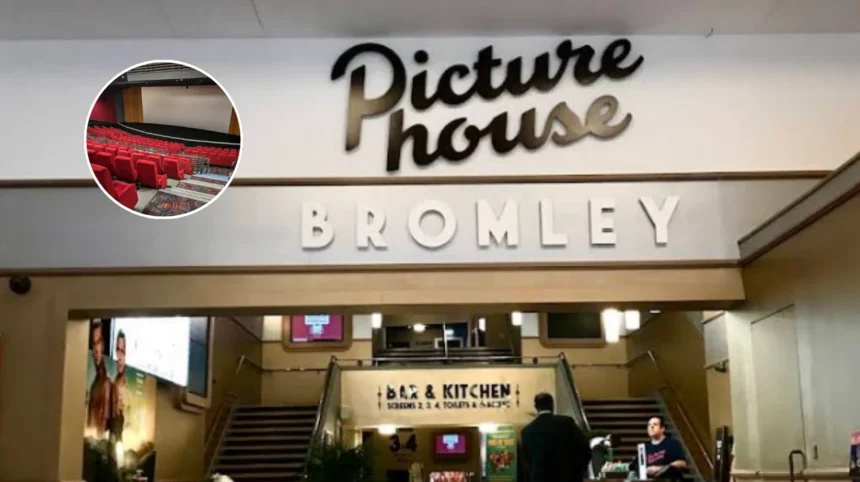
This marked a shift from earlier makeshift venues, with This is Local London noting its position on the High Street, directly opposite where the Bromley Picturehouse later stood until its 2024 closure.
As reported by Cinema Treasures contributors, the venue operated successfully through the early decades, adapting to post-war changes. By around 1922 or 1923, it expanded to accommodate 881 patrons and received a facade modernisation, reflecting growing demand as Bromley transitioned from market town to London suburb.
Bromley Civic Society records confirm that prior cinemas, like the 1909 converted theatre, paled in comparison, setting the stage for the Astor’s longevity.
How Did the Astor Cinema Survive Over 60 Years?
The Astor Cinema’s endurance stemmed from its prime location and adaptability amid fierce rivalry. This is Local London highlights that it “lasted 60 years,” operating until the late 1970s despite the 1930s arrival of opulent competitors like the Gaumont and Odeon.
Cinema Treasures details its continuous run from 1911, navigating World War II, post-war booms, and television’s rise, which felled many peers.
Bromley Civic Society explains the broader context:
“Bromley’s first cinema opened in 1909 in a converted theatre. But by the 1930s large scale development… created a demand for a much grander venue.”
The Astor, however, held firm as the Gaumont—designed by William E. Trent and opened in 1936 with a cafe, organ, and neon-lit tower—closed in 1961 after losing to the Odeon. Its smaller scale and community focus, including children’s matinees, sustained it longer, per local histories.
Where Exactly Was the Astor Cinema Located?
Nestled at the southern end of Bromley High Street, the Astor stood on a vibrant strip near Bromley South Railway Station. This is Local London specifies
“just across from where the former Bromley Picturehouse stood, this part of the High Street once played host to another cinema up until the late [1970s].”
Cinema Treasures pinpoints it in the south-east district of Greater London, today part of Bromley’s bustling civic heart.
The Gaumont occupied a nearby corner of High Street and Ravensbourne Road, on the site of a former music college and health centre, as noted by Bromley Civic Society. Bromley Council’s timeline corroborates the area’s cinema density:
“1936… Odeon and Gaumont cinemas open in Bromley.”
This clustering fueled competition but enriched High Street’s cultural life.
Why Did the Astor Cinema Close?
Declining footfall from home entertainment and suburban shifts sealed the Astor’s fate in the late 1970s. Cinema Treasures reports it as Bromley’s earliest purpose-built site, implying closure amid 1970s closures like the Embassy in Petts Wood (1973) and Odeon Penge (1976). This is Local London frames it as a survivor until “up until the late…,” overtaken by television and larger multiplexes.
Bromley Civic Society notes the Gaumont’s 1961 demise with films like “Circle of Deception,” after which it became a department store (later Habitat, then Dreams by 2022). The Astor likely followed suit, repurposed as retail evolved the High Street.
What Role Did Other Cinemas Play in Bromley’s History?
Bromley’s cinema landscape featured giants like the Gaumont and Odeon, which bookended the Astor’s era. As per Bromley Civic Society, the Gaumont, a 1930s “super cinema,” opened in 1936 with 1,492 seats (1,018 stalls, 474 circle), a tower sign, and Saturday kids’ clubs for sixpence. It closed on 18 February 1961, per Cinema Treasures.
The Odeon, part of Oscar Deutsch’s chain, thrived in the “Golden Age,” with Bromley Council noting its 1936 opening alongside Gaumont. Tincture of Museum blog details Picturehouse Bromley’s Art Deco revival in a 1936 George Coles building, restored for £4.5 million before closing 1 August 2024.
Picturehouse Cinemas Wikipedia confirms it became a six-screen venue in 2019 with bar and kitchen.
“So, Farewell Then Bromley Picturehouse” laments its legacy frontage restoration, including original rubber floors and Art Deco lights. These venues, per Retail Tech Innovation Hub, evolved from single-screens to multiscreen empires before recent shutdowns.
When Did Key Milestones Occur in Bromley’s Cinema Timeline?
Bromley’s film history unfolds across decades, as chronicled by Bromley Council: 1909 first cinema (converted); 1936 Gaumont, Odeon open; 1973 Embassy closes; 1976 Odeon Penge shuts. Cinema Treasures marks Astor/Palais de Luxe opening 13 April 1911, expansion 1922-1923, and Gaumont closure 1961.
Picturehouse Bromley closed 29 March 2018 as Empire, reopening June 2019 under Picturehouse before 2024 exit. Tincture of Museum notes its tie to Deutsch’s 1937 Leicester Square flagship.
How Has Bromley’s High Street Evolved with Cinema Changes?
High Street transformed from entertainment hub to retail zone. This is Local London ties Astor’s site to Picturehouse’s shadow. Gaumont became stores post-1961; Picturehouse’s 2024 closure echoes this, per Retail Tech.
Bromley Civic Society views cinemas as suburbia markers: “one of the many signs between the wars that Bromley was changing.” Council’s timeline lists 1977’s New Bromley Central Library and Churchill Theatre as successors.
What Is the Legacy of Bromley’s Astor Cinema Today?
The Astor endures in memory as Bromley’s cinematic pioneer, outlasting flashier rivals. Cinema Treasures celebrates it as “the first purpose built cinema to operate in the town of Bromley, Kent.” This is Local London revives its story, linking to Picturehouse’s recent farewell.