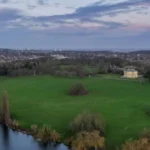
Bexley offers tourists historic houses, ancient woodlands, Victorian engineering marvels, riverside walks, and peaceful parks—all reachable by train from central London in 20–40 minutes, with free or low-cost entry at most sites.
- Why Should Tourists Visit Bexley Instead of Staying in Central London?
- What Historic Houses and Gardens Can Tourists Visit in Bexley?
- Hall Place and Gardens
- Danson House and Park
- Red House (National Trust)
- What Ancient Woodlands and Nature Reserves Exist in Bexley?
- Lesnes Abbey Woods
- Darenth Country Park
- Foots Cray Meadows
- What Victorian Industrial Heritage Sites Can Tourists See in Bexley?
- What Riverside Walks and Thames Path Routes Exist in Bexley?
- How Do Tourists Get to Bexley Attractions from Central London?
- What Activities Suit Digital Nomads and Business Travellers in Bexley?
- What Practical Information Do Tourists Need Before Visiting Bexley?
Why Should Tourists Visit Bexley Instead of Staying in Central London?
Bexley delivers authentic London heritage without crowds, with 7 major historic attractions, 1,200+ hectares of green space, free garden entry at Hall Place, and train access from London Bridge in 23 minutes, saving £15–25 per day on crowded tourist zones.
Central London attracts 27.7 million visitors annually, creating overcrowding at major landmarks. Bexley, a borough in south-east London covering 39 square kilometres, provides an alternative with historic houses, ancient woodlands, and Victorian industrial heritage. The borough contains 23 parks and open spaces, including 88 hectares of ancient woodland at Lesnes Abbey Woods.
Tourists save money while accessing high-quality experiences. Garden entry at Hall Place costs nothing. Red House charges £14 for adults with Gift Aid, compared to £30+ for major central London attractions. Danson Park remains open 24 hours, 365 days yearly, with free access.
Transport links support independent travel without a car. Erith Station sits 2 minutes from The Exchange, with trains from London Bridge and Waterloo. Abbey Wood Station now serves the Elizabeth line, cutting journey times. The Green Chain Walk connects Erith Riverside to Bostall Woods across 6.4km, offering Thames views and historic sites.
The borough combines heritage with nature. Darenth Country Park spans 250 acres, opened for Millennium celebrations in 2000. Foots Cray Meadows covers 97 hectares as a Local Nature Reserve with Green Flag Award status. These spaces provide walking, cycling, and wildlife observation without central London’s congestion charges or tube queue times.
Digital nomads and business travellers find work-friendly hubs. The Exchange at Erith offers community-owned spaces in a heritage building, with electric charging stations and step-free access. Local cafés at Hall Place’s Visitor Centre open from 9.30am–4.30pm daily.

What Historic Houses and Gardens Can Tourists Visit in Bexley?
Tourists visit Hall Place (13th-century house with free gardens open 9am–dusk), Danson House (Grade I Palladian villa with guided tours from £8 April–August), and Red House (William Morris’s 1859 Arts and Crafts home open May–October with pre-booked tours from £14).
Hall Place and Gardens
Hall Place records from the 13th century as one of the borough’s oldest houses. Sir John Champneys, a successful merchant and former Lord Mayor of London, once owned it as a country residence. The property includes historic glasshouses, a Visitor Centre, Stables Art Gallery, and Riverside Café.
The gardens open every day at 9am, closing at 10pm (April–September) or 4pm (October–March). Visitor Centre, café, and gallery open 9.30am–5pm daily, with free entry year-round. The historic house operates on pre-booked guided tours only—check the website for upcoming dates.
Contact details: Bourne Road, Bexley, DA5 1PQ. Telephone: 0203 045 4088. Email for enquiries: hallplaceenquiries@bexley.gov.uk. Private events sometimes close areas, so call ahead for long-distance travellers.
Danson House and Park
Danson House stands as a Grade I listed Palladian villa overlooking award-winning Danson Park. HM Queen Elizabeth II officially re-opened it in July 2005 after restoration. The house serves as Bexley’s official Register Office while remaining open to the public as a heritage attraction.
Tours run between April and August only. Open days occur 9.30am–10.30am with free entry to the principal floor. Guided tours cost £8 per person, payable by card only, departing at 12pm. Opening times span April–October, Sunday–Friday, 12–5pm (last admission 4.30pm).
Danson Park itself remains open 24/7 year-round, featuring a 17th-century watermill and 19th-century bandstand. Danson Park Adventures offers activities and courses for ages 8+ with any skill level. The park sits at 51 Danson Road, Bexleyheath, DA6 8HL.
Red House (National Trust)
Red House stands as the iconic Arts and Crafts home of William and Jane Morris, centre of the Pre-Raphaelite circle. Built in 1859, it represents key Victorian design heritage. The National Trust manages the property today.
Red House opens May–October for pre-booked guided tours running hourly from 11am–3pm, Thursday–Saturday only. Tickets release every Thursday up to two weeks in advance—booking essential. Adult tickets cost £14 with Gift Aid, £7 for children (5–17), under 5s free. Garden-only entry costs £2–2.50 for adults.
Address: Red House Lane, Bexleyheath, London, DA6 8JF. Telephone: 020 8303 6359. Email: red.house@nationaltrust.org.uk. National Art Pass holders receive free entry.
As you explore the modern site, you are crossing land with a deep heritage. Read about the full [Bexley Historic Houses and Their Origins] to understand its origins.
What Ancient Woodlands and Nature Reserves Exist in Bexley?
Tourists explore Lesnes Abbey Woods (88 hectares of ancient woodland with Grade II listed abbey ruins, 10 minutes from Abbey Wood Station), Darenth Country Park (250 acres opened 2000 with 45-minute circuit walks), and Foots Cray Meadows (97 hectares Local Nature Reserve with Capability Brown’s Five Arch Bridge).
Lesnes Abbey Woods
Lesnes Abbey Woods spans 88 hectares (217 acres) of ancient woodland, park, and ruined Grade II listed abbey. The site sits 10 minutes’ walk from Abbey Wood Station, making it highly accessible. Three main trails wind around the grounds, with bluebell and daffodil displays in season.
The abbey ruins form part of a beautiful extensive ancient woodland, creating a green oasis in south-east London. The Clearing at New Road, SE2 0AX hosts activities during the Urban Tree Festival (14 May 2026, 10am–2pm). Time-travelling walks occur 11am–12.30pm around 120 acres of ancient woodland.
Darenth Country Park
Darenth Country Park covers approximately 250 acres, opened for Millennium celebrations in 2000. The site retains links to its past through art, archaeology, and natural habitat regeneration. It formerly housed a large asylum/psychiatric hospital, with buildings demolished in 1995.
Opening hours run 8.30am until dusk daily. A manageable circuit walk takes about 45 minutes to complete. Vehicle access has one entrance at Gore Road roundabout, but footpaths connect from adjacent roads. Saxon burial grounds from the 5th century exist here, with 12 graves schedule as an Ancient Monument.
Artifacts including a spearhead, brooches, and glass bowl from the Saxon period found on-site now reside at the British Museum. A village of 300 new houses and Darent Valley Hospital now occupy portions of the former hospital site.
Foots Cray Meadows
Foots Cray Meadows covers 97 hectares (nearly 250 acres) as parkland and woodland, bordering Albany Park, Sidcup, Foots Cray, and North Cray. The River Cray runs through it in a north-easterly direction. It holds Local Nature Reserve status, Site of Metropolitan Importance for Nature Conservation, and Green Flag Award recognition.
Lancelot ‘Capability’ Brown designed the Five Arch Bridge and serpentine lake at North Cray Place (now part of Foots Cray Meadows) for Thomas Coventry. Brown’s scheme included smoothing and widening part of the River Cray to create a ribbon-like lake, with the Five Arch Bridge (Grade II listed), weir, and sluices.
Foots Cray Place itself was one of four country houses built in England in the 18th century to a design inspired by Palladio’s Villa Capra near Vicenza. Built in 1754 near Sidcup, it was demolished in 1950 after a 1949 fire. The stable block remains standing, while the grounds now serve as public parkland.
The London Loop (London Outer Orbital Path, the “M25 for walkers”) passes through Foots Cray Meadows from Old Bexley to Sidcup Place. Access exists from Rectory Lane and other points.
What Victorian Industrial Heritage Sites Can Tourists See in Bexley?
Tourists visit Crossness Pumping Station, a Grade I listed 19th-century sewage pumping station with four massive James Watt beam engines (one fully restored), open on Steaming Days, special events, and pre-booked tours throughout the year.
Crossness Pumping Station stands as a Grade I listed industrial heritage site representing Victorian engineering mastery. The station features four massive James Watt beam engines: one fully restored, one in restoration, and two in magnificent dilapidation.
The site restores part of its original high Victorian glory, attracting engineering heritage enthusiasts. It operates on Steaming Days (when engines run), special events, and pre-booked tours throughout the year. Public opening occurs year-round for guided tours and public open days.
Address: Bazalgette Way, Abbey Wood, London, SE2 9AQ. Telephone: +44 20 8311 3711. Check the Crossness Engines Trust website for specific Steaming Days and tour booking.
The pumping station forms part of Joseph Bazalgette’s revolutionary Victorian sewer network that transformed London’s public health in the 1860s. This engineering marvel sits alongside the Thames, connecting to broader London industrial heritage narratives.
What Riverside Walks and Thames Path Routes Exist in Bexley?
Tourists walk the Green Chain Walk (6.4km from Erith Riverside to Bostall Woods with Thames views), explore Erith Saltings (London’s last remaining salt marsh alongside the Thames), and visit the confluence of Rivers Darent and Thames—a remarkable natural meeting point.
The Green Chain Walk Section 2 runs 6.4km from Erith Riverside to Bostall Woods, taking approximately 2 hours 5 minutes. The route offers Thames views, historic sites, and green spaces with public toilets and water features available.
The Exchange at Erith sits close to the Thames Path and on the Green Chain Walk, with cycle racks available. Erith Saltings represents an area of salt marshes alongside the Thames, actually the last remaining such marsh on the river. A footpath runs alongside the water for exploration.
The confluence of Rivers Darent and Thames provides a remarkable natural spectacle. Multiple footpaths lead to this junction, where two rivers meet. Crayford Marshes form an expansive seasonal wetland alongside the River Darent, with pastureland divided by ditches and reeds.
The Ridgeway in Thamesmead offers a pleasant cycle route mixing urban and green spaces along the river. The path remains relatively flat, passing through parkland alongside the Thames. Long car-free bike trails along the south bank provide one of the best bike routes into London.
How Do Tourists Get to Bexley Attractions from Central London?
Tourists reach Bexley by train from London Bridge (23 minutes to Erith), Waterloo (28 minutes to Bexleyheath), or the Elizabeth line to Abbey Wood (21 minutes from Farringdon), with most attractions within 10 minutes’ walk of stations.
Erith Station connects to London Bridge and London Waterloo, continuing through to Dartford and Gravesend. The Exchange sits 2 minutes’ walk from Erith Station—exit, follow the road under the bridge, and walk past London South East College. Buses 229, 99, and 469 stop directly outside The Old Library.
Abbey Wood Station now serves the Elizabeth line, cutting journey times significantly. From Abbey Wood, Lesnes Abbey Woods remains 10 minutes’ walk away. Board a train at Abbey Wood to Gravesend, Dartford, or Eltham (6 minutes) to arrive at Erith Station.
Bexleyheath connects via the North Kent main line with rail access close to the M25. Public transport mode share remains higher in RB Greenwich and LB Bexley than neighbouring boroughs on the opposite river side, despite limited Tube and DLR coverage.
Parking options exist for drivers. The Exchange offers pay-for parking on Walnut Tree Road (free after 5.30pm and Sundays), plus free Morrisons parking for up to 2 hours (5 minutes’ walk). Electric charging stations sit on Walnut Tree Road. Blue badge parking exists directly outside The Exchange with step-free access via The Garden Room.
What Activities Suit Digital Nomads and Business Travellers in Bexley?
Digital nomads use The Exchange Erith (community-owned heritage space with Wi-Fi, lift access, and electric charging), Hall Place Café (open 9.30am–4.30pm daily), and Danson Park (24/7 open green space within 20 minutes of central London for downtime walks).
The Exchange operates as a community-owned organisation using Erith’s Old Library heritage to inspire new community-led programmes and activities. The building features a lift to all three floors with step-free access via The Garden Room. Cycle racks exist near The Garden Room entrance.
The Exchange hosts festivals including the Erith Made Festival (13 September, Saturdays) with Bexley Archives support. Riverside Gardens at Erith provide outdoor workspace options during warmer months.
Hall Place’s Visitor Centre includes a café open 9.30am–4.30pm daily (closed Christmas Eve, Christmas Day, Boxing Day, New Year’s Eve, and New Year’s Day). The Riverside Café provides riverside seating options. Stables Art Gallery offers cultural content during work breaks.
Danson Park’s 24/7 availability supports morning or evening walks between meetings. The park’s 17th-century watermill and 19th-century bandstand provide scenic backdrops for outdoor calls or reflection time. Danson Park Adventures offers courses for ages 8+, suggesting adult learning opportunities.
Extensive walking and cycling routes connect directly to iconic spots including Greenwich, Bluewater, and the Thames Barrier, allowing exploration during downtime. These routes support active breaks between remote work sessions.

What Practical Information Do Tourists Need Before Visiting Bexley?
Tourists need to know that most gardens open 9am–dusk daily, historic houses require pre-booked guided tours, tickets release 2 weeks in advance for Red House, and calling ahead prevents disappointment during private events.
Opening Times Summary:
Key Practical Points:
- Call Hall Place (0203 045 4088) before travelling long distances due to private event closures
- Red House tickets release every Thursday up to two weeks in advance—booking essential
- The historic house at Hall Place operates pre-booked guided tours only—check the website for dates
- Visitor Centre and café close Christmas Eve through New Year’s Day
- Danson House guided tours accept card payment only (£8 per person)
- Crossness Pumping Station requires tour booking—contact to confirm specific opening hours
Parking and Accessibility:
- The Exchange: Blue badge parking directly outside, step-free access via Garden Room, lift to all floors
- Hall Place: No specific parking details—use public transport or check website
- Danson Park: Onsite and nearby parking available, cafe on-site
- Erith Station: Step-free access, Morrisons free parking 2 hours (5 minutes’ walk)
Cost Summary:
- Free: Hall Place gardens, Danson Park, Lesnes Abbey Woods, Darenth Country Park, Foots Cray Meadows
- £2–2.50: Red House garden-only entry
- £8: Danson House guided tour
- £14: Red House full entry (adult, Gift Aid)
Bexley provides authentic London heritage with significantly lower costs and crowds than central London. The borough’s 23 parks, 7 major historic attractions, and excellent rail connections make it ideal for tourists seeking depth over density.