Tourists can experience nature in Lambeth across 49 designated Sites of Importance for Nature Conservation, including major parks like Brockwell Park, Clapham Common, and Archbishop’s Park, plus hidden gardens, cemetery nature walks, and the Thames Path along the South Bank.
- What are the main parks where tourists can experience nature in Lambeth?
- Which hidden gardens and secret nature spots exist in Lambeth?
- Where can tourists find nature walks and trails in Lambeth?
- What wildlife and biodiversity can tourists observe in Lambeth’s nature spaces?
- When is the best time to visit Lambeth’s nature spaces?
- How do tourists access Lambeth’s nature spaces using public transport?
- What historical context shapes Lambeth’s nature spaces today?
- What facilities and activities support nature experiences in Lambeth?
- How does Lambeth protect and manage its nature conservation sites?
- What seasonal events and guided activities enhance nature visits in Lambeth?
Lambeth, a central London borough, offers diverse natural environments within an urban setting. The borough contains numerous SINCs, ranging from local to metropolitan importance, providing wildlife habitats and public access to green spaces. These spaces include Victorian parks, ancient commons, cemetery woodlands, and purpose-built nature gardens.
What are the main parks where tourists can experience nature in Lambeth?
Brockwell Park, Clapham Common, and Kennington Park serve as Lambeth’s flagship nature destinations, offering woodland walks, ponds, wildlife areas, and recreational facilities open year-round.
Brockwell Park opened to the public in 1892 after MP Thomas Bristowe led a campaign to secure the former Brockwell Hall estate. The 124-acre park features linked ponds—the only visible above-ground section of the River Effra, which flows into the Thames near Vauxhall Bridge. Formal recreational facilities coexist with open parkland, woodland areas, and an Old English Garden. The park holds Local Nature Reserve status and SINC designation for biodiversity importance.
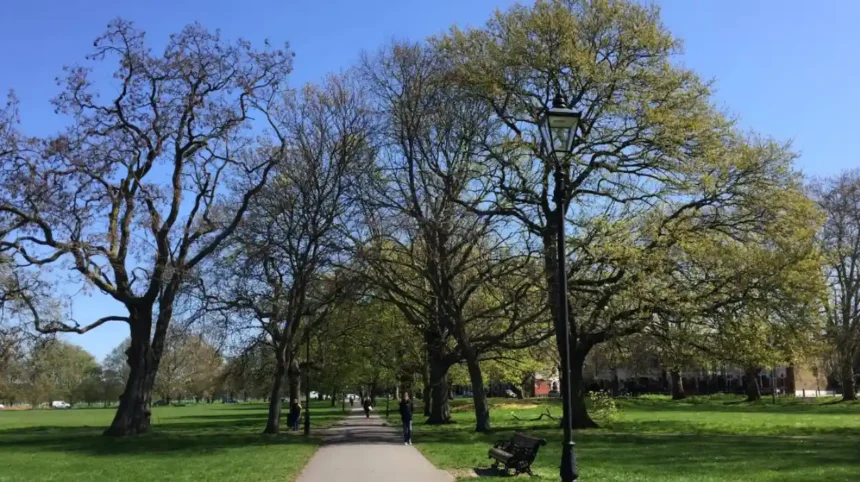
Clapham Common spans over 85 hectares, making it one of London’s largest and oldest public open spaces. The Common holds dual designation as both a Borough SINC and a Local Nature Reserve for Lambeth and Wandsworth. It functions as one of six LNRs in Lambeth, recognised for wildlife conservation and public access to nature. The site remains open 24 hours daily, though facilities such as toilets and cafés operate limited hours.
Kennington Park, the largest park in North Lambeth, originated as a common where Chartists held a mass rally in 1848 before delivering their charter to Parliament. The park features a nature trail project, adventure playgrounds, and sports facilities including tennis, basketball, and all-weather football pitches. Two fenced dog exercise areas and designated dog-free zones accommodate varied user needs. Park rangers maintain the site, which opens at 7.30am daily and closes approximately 15 minutes before sunset.
Norwood Park sits on one of Lambeth’s highest points, offering panoramic views across South London. The park contains a fenced wildlife pond, a tree-lined Country Walk, and extensive native hedges supporting local biodiversity. Facilities include a community garden, café, outdoor gym, and skateboard park. The site remains open 24 hours daily.
Ruskin Park, an Edwardian-era park between Camberwell, Brixton, and Herne Hill, retains many original heritage features. The park includes a central ornamental pond, a separate wildlife area with pond and orchard, and a wooden bandstand. A community garden and diverse tree populations—young and mature specimens—enhance the site’s ecological value. Opening times run from 7am to 15 minutes before sunset.
Which hidden gardens and secret nature spots exist in Lambeth?
Archbishop’s Park, Vauxhall Park’s lavender garden, and Palace Road Nature Garden provide intimate, lesser-known nature experiences with community orchards, wildlife ponds, and seasonal planting accessible year-round.
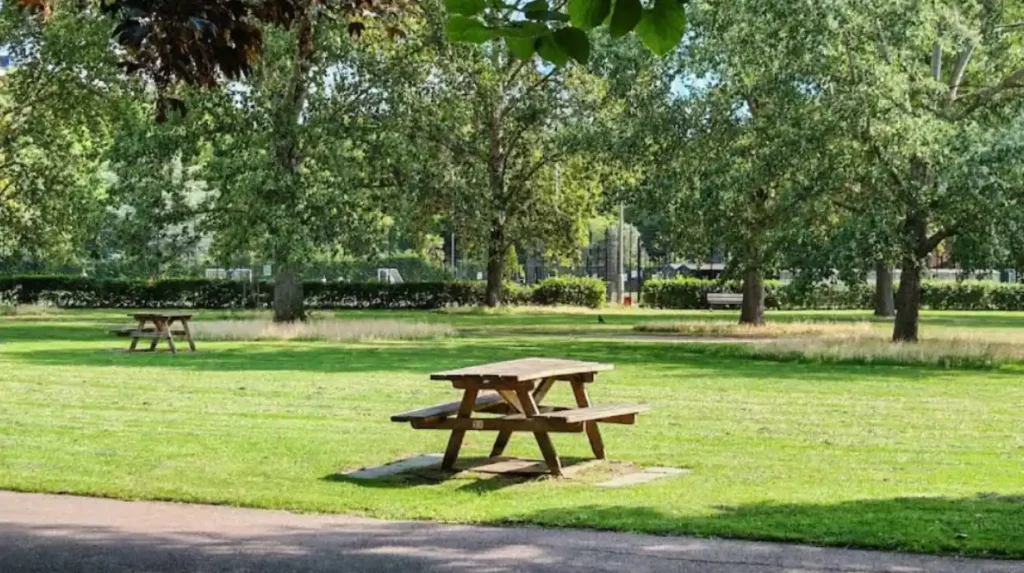
Archbishop’s Park occupies 3.93 hectares in Waterloo, opened to the public in 1901. The land formerly formed part of Lambeth Palace grounds, the London residence of the Archbishops of Canterbury since the 13th century. Archbishop Archibald Campbell Tait opened approximately 9 acres of palace gardens in 1869 for the benefit of London’s poor, establishing Lambeth Palace Field. A permanent public park was proposed in 1898 by Lt-Col Charles Ford and campaigned for by the Metropolitan Public Gardens Association, succeeding in 1900. The park features a community orchard established in 2010, an Octavia Hill memorial garden launched by botanist David Bellamy in 2005, and a fountain restored between 2006 and 2011 with mosaics by the London School of Mosaic. A statue symbolising human kindness, sculpted by Jessica Wetherly, was installed in 2016. The park holds SINC designation as a Local Wildlife Site and won both Green Flag Award and London in Bloom Park of the Year recognition.
Vauxhall Park contains a famous lavender garden created in 2003 to mark the centenary of the Vauxhall Motor Company. The garden occupies the former bowling green and produces an annual lavender harvest. Fanny Rollo Wilkinson, one of Britain’s first female landscape architects, originally laid out the Victorian park, which retains many features including a playground, fountain, and model village by Edgar Wilson. A 2020 redesign renewed the children’s play area and created the Fawcett Sensory Garden alongside restored historic vistas. The park holds SINC designation and operates with standard Lambeth opening hours.
Palace Road Nature Garden, created by Lambeth Council in the 1980s, contains woodland, scrub, and meadow grassland habitats. The site features what may be Lambeth’s best wildlife pond, supporting local biodiversity. The garden holds Borough-grade SINC status and offers free public access throughout the site.
Rush Common forms a linear green corridor along Brixton Hill, comprising four main sections maintained as public open space. The Brixton Orchard, created through partnership between We Are Brixton Village and Market Row, Brixton BID, and Urban Growth London, contains 35 fruit trees and hundreds of edible hedges. The Rush Common Woodland Walk offers a tree-covered path with children’s playground and wildlife-friendly planting. Pencil Park, managed by Endymion Road residents, and a meadow grassland area adjacent to Roupell Park Estate complete the corridor. Rush Common holds Local SINC designation and Green Flag Award status, remaining open 24 hours daily.
The Brixton Hill Green Corridor, historically known as Rush Common, spans nearly five hectares as a Local SINC. The corridor includes Rush Common North, chiefly amenity grassland under closed canopy with mature plane, lime, hawthorn, false-acacia, ash, yew, evergreen oak, and horse-chestnut trees. False-acacias produce showy white flowers in June. Wildflowers include daisy, yarrow, dove’s-foot crane’s-bill, and the locally uncommon stork’s-bill on bare sandy soil. Autumn fungi appear on dead logs left as wildlife habitat.
Where can tourists find nature walks and trails in Lambeth?
Lambeth offers guided nature walks through Streatham Cemetery, the Great North Woods heritage trail, and the Thames Path along the South Bank, with seasonal wildflower, bat, and tree identification walks available year-round.
Streatham Cemetery, opened in 1893, covers 40 acres of green space described as a precious green jewel at the heart of Planet Tooting. The Friends of Streatham Cemetery organise nature walks focusing on bats, plants, trees, and fungi, plus wildflower walks led by experts. The cemetery also hosts butterfly walks, tomb trails, and drawing sessions. Opening hours vary seasonally with extended summer hours and reduced winter hours.
The Great North Woods heritage walk explores locations once occupied by the historic woodland complex that covered much of South London. The guided route covers Streatham Common, Unigate Wood, West Norwood Cemetery, and hidden woodland pockets. Walks depart from the Rookery Café at the junction of Covington Way and Streatham Common South.
The Thames Path National Trail runs along Lambeth’s northern boundary, providing continuous riverside walking from Westminster to Greenwich. The South Bank section offers urban nature experiences with river views, planted verges, and accessible green corridors. Tourists can access the path from multiple points including Vauxhall, Waterloo, and Lambeth Bridge.
Lambeth Palace Gardens, Garden Museum, and St Mary’s Churchyard form a significant Borough-grade SINC. Lambeth Palace, constructed around 1200, features formal gardens landscaped by John Nash. The eastern grounds opened to local poor in the 19th century, becoming Archbishop’s Park in 1901. Access to Lambeth Palace Gardens and the Garden Museum operates at limited times, while St Mary’s Churchyard offers free public access.
What wildlife and biodiversity can tourists observe in Lambeth’s nature spaces?
Lambeth’s SINCs support diverse wildlife including birds, bats, fungi, wildflowers, and pond species, with designated Local Nature Reserves at Clapham Common and Streatham Cemetery providing protected habitats for observation.
Clapham Common holds dual designation as both Borough SINC and Local Nature Reserve, recognised for biodiversity importance alongside public access. The Common forms one of six LNRs in Lambeth and two in Wandsworth.
Streatham Cemetery supports bat populations, butterfly species, and diverse plant communities including wildflowers, trees, and fungi. Guided walks specifically target these groups, enabling tourists to observe seasonal wildlife patterns.
Brockwell Park’s linked ponds represent the only visible above-ground section of the River Effra, supporting aquatic wildlife. The park’s woodland and meadow areas provide habitat for birds and small mammals.
Rush Common North supports nesting birds through ivy-clad tree trunks and mature canopy cover. Common wildflowers include daisy, yarrow, and dove’s-foot crane’s-bill, with garden bluebells in spring. The locally uncommon stork’s-bill appears on bare sandy soil. Autumn fungi colonise dead logs retained as wildlife habitat.
Palace Road Nature Garden’s wildlife pond ranks among Lambeth’s best for aquatic biodiversity. Woodland, scrub, and meadow grassland habitats support varied species assemblages.
Norwood Park’s fenced wildlife pond and extensive native hedges provide habitat for local fauna. The park’s Country Walk and tree-lined paths support bird populations and small mammals.
When is the best time to visit Lambeth’s nature spaces?
Lambeth’s parks operate year-round with most open 24 hours or from 7am until 15 minutes before sunset; seasonal highlights include lavender harvest at Vauxhall Park in summer, wildflower walks at Streatham Cemetery in May, and fungi identification in autumn.
Clapham Common, Brockwell Park, Norwood Park, and Rush Common remain open 24 hours daily, though facilities such as toilets, cafés, and sports areas operate limited hours. Visitors should check facility times before arrival.
Archbishop’s Park, Vauxhall Park, Kennington Park, Ruskin Park, and Holmewood Gardens follow standard Lambeth opening times from early morning until 15 minutes before sunset.
Streatham Cemetery operates seasonal hours with extended summer hours and reduced winter hours. The cemetery closes on Christmas Day and weekends for office services.
Vauxhall Park’s lavender garden reaches peak bloom in summer, with annual harvest activities. The garden’s recreation marked the Vauxhall Motor Company centenary.
Streatham Cemetery’s wildflower walks occur in May. Bat, butterfly, and plant walks run throughout the growing season. Autumn provides optimal conditions for fungi identification walks.
Brockwell Park’s false-acacia trees produce showy white flowers in June. Rush Common’s spring bluebells and autumn fungi offer seasonal interest.
How do tourists access Lambeth’s nature spaces using public transport?
Lambeth’s nature spaces connect to London’s public transport network via Underground stations including Waterloo, Vauxhall, and Brixton, Overground stations, and numerous bus routes, with most parks within 10 minutes’ walk of stations.
Archbishop’s Park in Waterloo lies within walking distance of Waterloo, Westminster, Vauxhall, and Lambeth North stations. The Garden Museum, adjacent to Lambeth Palace, sits 10 minutes’ walk from Vauxhall, Westminster, Waterloo, and Lambeth North.
Clapham Common serves south Lambeth, accessible via Clapham Common, Clapham South, and Balham Underground stations, plus Clapham High Street Overground.
Brockwell Park in Herne Hill connects to Herne Hill Overground and Brixton Underground, with bus routes serving Brixton Hill.
Streatham Cemetery receives bus services along Garratt Lane, with Tooting Broadway services providing alternative access.
Rush Common and Brixton Orchard on Brixton Hill link to Brixton Underground and multiple bus routes along the A23 corridor.
Kennington Park sits within walking distance of Kennington and Oval Underground stations.
Vauxhall Park lies adjacent to Vauxhall Station, serving Underground, Overground, and National Rail services.
Norwood Park in West Norwood connects via West Norwood and Norwood Junction Overground stations.
Ruskin Park, between Camberwell, Brixton, and Herne Hill, accesses via Brixton, Herne Hill, and Denmark Hill bus routes.
Palace Road Nature Garden near Lambeth Palace is accessible on foot from Vauxhall, Waterloo, and Lambeth North.
Explore More Area Guide
How Can Visitors Experience the Real Lewisham: Authentic South London Guide
Best Self-Guided Walking Tours in Lewisham: Heritage, Parks, and Hidden Gems
What historical context shapes Lambeth’s nature spaces today?
Lambeth’s parks originated from 19th-century public health campaigns, with Brockwell Park secured in 1892, Archbishop’s Park opened in 1901, and Vauxhall Park laid out by Fanny Rollo Wilkinson, reflecting Victorian-era priorities for urban green space access.
Brockwell Park’s establishment followed parliamentary legislation led by MP Thomas Bristowe, who negotiated purchase of the Brockwell estate and raised funds from local authorities and community contributions. Lord Rosebery formally opened the park on 6 June 1892, declaring it preserved for ever as an open space. Bristowe collapsed and died of a heart attack on Brockwell Hall steps immediately after the ceremony. The Lambeth Vestry purchased an additional 3.5 acres in 1895 for Arlingford Road access, and the London County Council acquired the remaining 43 acres in 1901, opening it in 1903.
Archbishop’s Park originated when Archbishop Archibald Campbell Tait, concerned about London’s poor welfare, opened approximately 9 acres of Lambeth Palace gardens in 1869. The land, formerly owned by the Bishop of Carlisle and incorporated into Lambeth Palace in the 13th century, became known as Lambeth Palace Field. Public use continued after Tait’s 1882 death without permanent rights until Lt-Col Charles Ford proposed a permanent park in 1898. The Metropolitan Public Gardens Association campaigned successfully in 1900, and the park opened in 1901 with lawns, playground, and sports fields surrounded by boundary trees.
Vauxhall Park’s design by Fanny Rollo Wilkinson represented early female leadership in British landscape architecture. The park retains original Victorian features including playground, fountain, and Edgar Wilson’s model village, restored and reopened in 2001. The lavender garden, created in 2003, commemorated the Vauxhall Motor Company centenary.
The Garden Museum, founded in 1977 by Rosemary and John Nicholson, rescued the abandoned St Mary-at-Lambeth Church from demolition. The church houses the tomb of John Tradescant, Britain’s first great gardener and plant hunter, whose courtyard garden reflects his life and spirit. The museum reopened in 2017 after an 18-month redevelopment funded by National Lottery players.
Lambeth Palace Gardens, landscaped by John Nash, date to the 13th century when the first buildings constructed around 1200. Edward the Confessor gave the Manor of Lambeth to his sister, Countess Goda, in 1062; she built the first of five churches on the site. The eastern grounds opened to local poor in the 19th century, becoming Archbishop’s Park in 1901.
As you explore the modern site, you are crossing land with a deep heritage. Read about the full history of Lambeth Palace and its gardens to understand its origins.
What facilities and activities support nature experiences in Lambeth?
Lambeth’s nature spaces provide bookable sports facilities, community gardens, outdoor gyms, cafés, playgrounds, and wildlife ponds, with many parks offering 24-hour access and ranger services for visitor support.
Clapham Common offers bookable sports facilities including tennis courts, basketball courts, outdoor gyms, and skateparks. Some facilities require pre-booking through Lambeth Council’s facility booking system. Non-bookable facilities include skateboarding areas and BMX tracks.
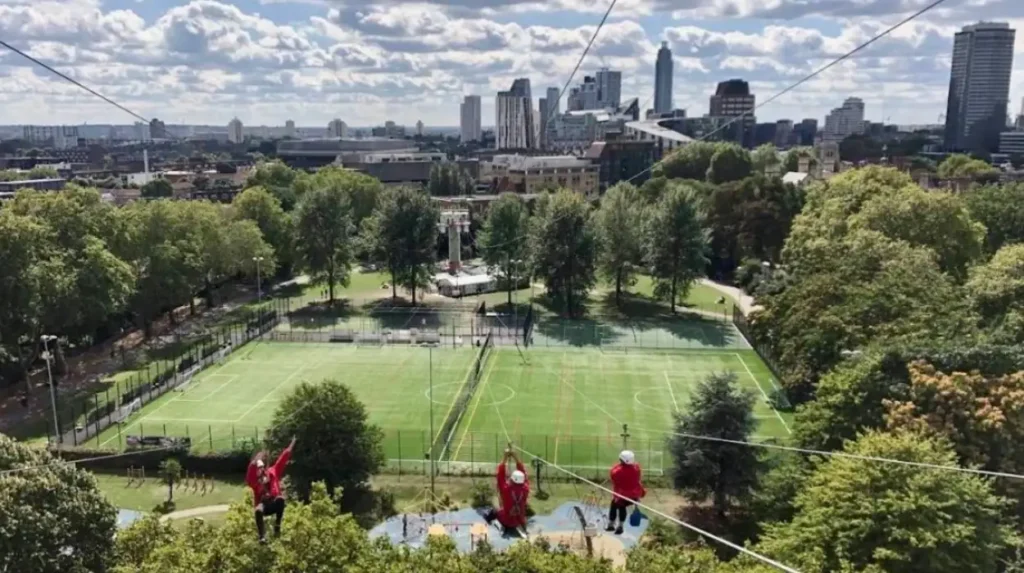
Archbishop’s Park contains two 7-a-side and three 5-a-side football pitches, one multi-use sports area for tennis and netball, two tennis courts, and three cricket nets. A zip wire operated each summer from 2017 to 2019. The park features a community orchard, Octavia Hill memorial garden, and restored fountain.
Brockwell Park houses a popular café in the restored 200-year-old Brockwell Hall, a Regency lodge on the park heights. A miniature railway opened in 2003. The park includes a large lido, one of few remaining outdoor swimming pools in London.
Kennington Park features adventure playgrounds, including the Charlie Chaplin Adventure Playground for disabled children, plus a One O’Clock Club. Sports facilities include tennis, basketball, netball, skateboarding, fitness trail, and all-weather floodlit Astroturf for football and hockey. Kennington Community Cricket operates on the extension. Tai Chi sessions occur every Thursday afternoon.
Norwood Park contains a large wet play area, children’s playground, outdoor gym, multi-use games court, skateboard park, toilets, community garden, and café. The park’s wildlife pond and Country Walk support nature observation.
Vauxhall Park provides a children’s playground, One O’Clock Club, nursery, multi-use games area, two tennis courts, chess tables, park café, and two fenced dog areas. The 2020 redesign added the Fawcett Sensory Garden.
Ruskin Park offers a children’s playground, sports pitches, seasonal paddling pool, refreshment kiosk, outdoor gym, and toilets. A wooden bandstand, central ornamental pond, community garden, wildlife area with pond and orchard, and diverse tree populations enhance visitor experience.
Rush Common sections include the Brixton Orchard with 35 fruit trees and edible hedges, Woodland Walk with playground and seating, and Pencil Park managed by residents.
Lambeth Parks Department manages all sites, with park rangers providing on-site support.
How does Lambeth protect and manage its nature conservation sites?
Lambeth designates 49 Sites of Importance for Nature Conservation at local, borough, and metropolitan grades, with six Local Nature Reserves including Clapham Common and Streatham Cemetery, all managed under Lambeth Council’s biodiversity strategy.
Local authorities in London designate SINCs to recognise biodiversity importance and enable public access to nature. Lambeth’s SINCs range from local importance to metropolitan significance. A revised SINC list provides current designations.
Clapham Common holds both Borough SINC and Local Nature Reserve status, one of six LNRs in Lambeth and two in Wandsworth. LNR designation recognises the Common’s importance for wildlife and public access across both boroughs.
Streatham Cemetery functions as a Local Nature Reserve, supporting bat, butterfly, plant, tree, and fungi populations. The Friends of Streatham Cemetery manage conservation activities including beekeeping, wildflower walks, and habitat maintenance.
Brockwell Park, Rush Common, and Archbishop’s Park all hold Local SINC designations, recognising their biodiversity value alongside recreational use. Rush Common and Archbishop’s Park also hold Green Flag Award status, acknowledging clean, safe, welcoming management.
Palace Road Nature Garden holds Borough-grade SINC status, with woodland, scrub, and meadow grassland habitats supporting Lambeth’s best wildlife pond. The Brixton Hill Green Corridor, including Rush Common North, holds Local SINC designation.
Lambeth Council’s biodiversity strategy outlines preservation measures for all SINCs, including habitat management, public engagement, and wildlife monitoring. Park rangers enforce site protections and assist visitors with nature observation.
The Garden Museum’s Archive of Garden Design, opened in 2019, preserves working records of 20th- and 21st-century British garden designers, writers, and photographers. This archive supports research into garden history and conservation practices.
What seasonal events and guided activities enhance nature visits in Lambeth?
Lambeth Council and community groups host free guided walks including wildflower identification in May, bat walks in summer, fungi walks in autumn, and Great North Woods heritage tours, with booking required for cemetery walks and seasonal events.
Streatham Cemetery’s Friends group organises wildflower walks led by experts in May, plus bat, plant, tree, and fungi walks throughout the year. Butterfly walks, tomb trails, and drawing sessions occur regularly. Open Days and beekeeping activities support conservation education. Booking proves essential for guided cemetery walks.
The Great North Woods heritage walk explores former woodland locations across Streatham Common, Unigate Wood, West Norwood Cemetery, and hidden woodland pockets. Walks depart from the Rookery Café and require booking via email.
Lambeth Heritage Festival coordinates multiple nature walks, including the People of Streatham Cemetery Walk and Trees, Woodlands and Landscapes routes. These walks connect natural and historical narratives across Lambeth’s green spaces.
Vauxhall Park’s lavender harvest occurs annually in summer, marking the garden’s creation for the Vauxhall Motor Company centenary.
Brockwell Park’s false-acacia trees flower in June, providing seasonal interest. Rush Common’s spring bluebells and autumn fungi offer timed natural displays.
Archbishop’s Park’s community orchard and Octavia Hill garden support seasonal fruit harvesting and educational activities managed by the Friends of Archbishops Park.
Kennington Park’s nature trail project, developed with schools and community groups, highlights environmental awareness and local biodiversity.
Lambeth Parks Department coordinates all council-run events, while community groups such as Friends of Streatham Cemetery and Friends of Kennington Park manage volunteer-led activities.
Tourists visiting Lambeth access diverse nature experiences across designated conservation sites, from Victorian parks to hidden gardens, cemetery woodlands, and riverside paths. The borough’s green spaces support year-round wildlife observation, seasonal events, and guided activities that connect visitors with Lambeth’s ecological and historical heritage.
What are the best parks for nature in Lambeth?
The best parks for experiencing nature in Lambeth are Brockwell Park, Clapham Common, Kennington Park, Norwood Park, and Ruskin Park. These parks feature woodland areas, ponds, meadows, wildlife habitats, walking paths, cafés, and recreational facilities, making them suitable for both relaxation and nature observation.