Key Points
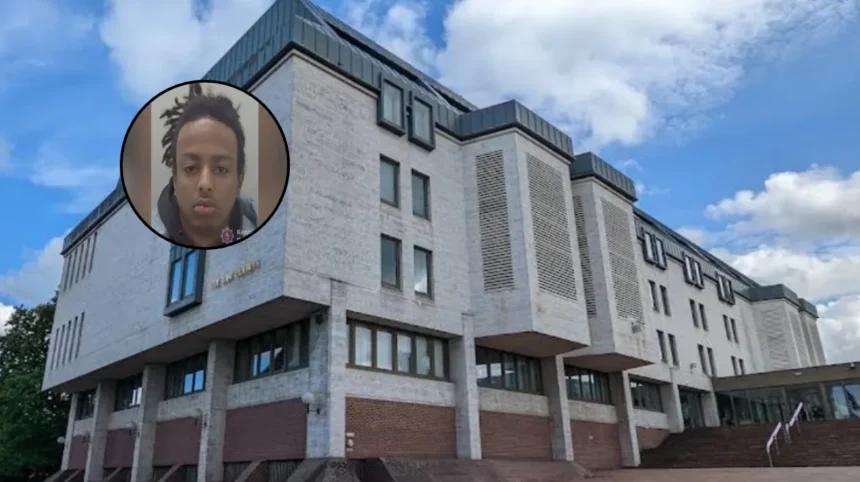
- Conviction Secured: Nineteen-year-old Musa Salih, an Eritrean national residing in Greenford, west London, has been found guilty of murder at Maidstone Crown Court.
- The Incident: Salih stabbed 19-year-old Harley Purdue eight times in a communal basement on Thorold Road, Chatham, Medway, at around 3am on 2 December 2025.
- The Motive: Investigators established that Salih lured Mr Purdue to the basement with the intention of trapping him in a toilet to steal money from his bedroom.
- Intervention and Escape: When Mr Purdue resisted, Salih launched a fatal knife attack; he also attempted to injure Mr Purdue’s girlfriend when she intervened before fleeing the Medway region.
- Arrest and AI Search: Police arrested Salih later that same day in Lewisham, south-east London, and discovered phone records showing he had consulted an artificial intelligence application for legal advice and news updates regarding the fatal attack.
- Sentencing Scheduled: Following the verdict on 15 October 2026, Salih remains in custody and is set to be sentenced at Maidstone Crown Court on 4 November 2026.
Chatham (South London News) October 15, 2026 – A 19-year-old west London man has been convicted of murder after luring a teenager into a residential communal basement in Chatham and inflicting eight fatal stab wounds during an attempted robbery. Musa Salih, an Eritrean national of Launceston Road, Greenford, was found guilty by a jury at Maidstone Crown Court following a trial in which he denied murdering 19-year-old Harley Purdue. The fatal attack occurred at approximately 3am on 2 December 2025 at a property situated on Thorold Road in Chatham, Kent. Investigators revealed that Salih attempted to trap Mr Purdue inside a basement toilet before robbing his bedroom, leading to a violent altercation when the victim resisted. Following a police search spanning Kent and London, law enforcement officers arrested Salih in Lewisham, south-east London, later that afternoon.
- Key Points
- How Was the Fatal Basement Attack Executed in Chatham?
- What Occurred When the Victim’s Girlfriend Intervened?
- How Was Musa Salih Tracked Down and Arrested in Lewisham?
- What Statements Were Issued by Investigating Officers and the Court?
- Background of the Particular Development
- Prediction: How This Development Can Affect Law Enforcement, Legal Professionals, and the Digital Technology Sector
How Was the Fatal Basement Attack Executed in Chatham?
As reported by legal reporters covering Maidstone Crown Court, the prosecution detailed how Musa Salih devised a plan to ambush Harley Purdue in the early hours of 2 December 2025. The court heard that Salih intentionally lured Mr Purdue down into the communal basement of the Thorold Road property in Chatham under false pretences. Salih’s objective was to lock Mr Purdue inside a basement toilet cubicle, allowing him unhindered access to go upstairs and steal money from the victim’s bedroom.
However, the planned robbery escalated into extreme violence when Mr Purdue realised what was happening and actively resisted being trapped in the cubicle. During the ensuing confrontation, Salih produced a knife and repeatedly struck Mr Purdue, inflicting eight separate stab wounds.
What Occurred When the Victim’s Girlfriend Intervened?
According to statements released by Kent Police, the violent struggle in the basement drew the attention of Harley Purdue’s girlfriend, who was inside the building at the time. Upon hearing the disturbance, she rushed to the basement area and attempted to pull Salih away from the victim to save Mr Purdue’s life.
Detectives noted that Salih turned his aggression toward the young woman, attempting to injure her with the blade before breaking free and escaping from the premises. Salih fled the immediate scene and rapidly evacuated the Medway area in an attempt to evade law enforcement authorities. Emergency services were summoned to the Thorold Road residence shortly after 3am, but despite medical efforts, Mr Purdue succumbed to his knife injuries.
How Was Musa Salih Tracked Down and Arrested in Lewisham?
As detailed by local news outlets covering the Metropolitan Police and Kent Police joint efforts, a swift regional manhunt was initiated immediately following the 3am stabbing. Tracing the suspect’s movement patterns away from Kent and into Greater London, officers located and apprehended Salih later that same day in Lewisham, south-east London.
Following his arrest, digital forensic specialists conducted an extensive examination of Salih’s mobile phone. The investigation uncovered evidence that, in the hours immediately following the murder and prior to his arrest, Salih had actively used an artificial intelligence application on his device to ask for legal advice and search for real-time news updates concerning the Chatham attack.
What Statements Were Issued by Investigating Officers and the Court?
As recorded in the official briefing from Kent Police, Detective Sergeant Alastair Worton commented on the conclusion of the trial, stating:
“Salih’s plan to steal Mr Purdue’s money in the middle of the night, whilst armed with a knife, resulted in the death of a young man and left his family mourning the loss of a loved one.”
Despite the evidence assembled by investigators, Salih maintained his innocence throughout proceedings and denied the charge of murder. However, after deliberating on the evidence presented at Maidstone Crown Court, the jury returned a guilty verdict. Salih was remanded in custody by the presiding judge and is scheduled to be formally sentenced at Maidstone Crown Court on Wednesday, 4 November 2026.
Background of the Particular Development
This conviction highlights the ongoing focus on cross-border policing operations between the Metropolitan Police Service and regional forces such as Kent Police. Incidents where suspects travel between Greater London boroughs and the Home Counties pose distinct operational challenges, requiring dynamic digital tracking, real-time intelligence sharing, and rapid coordination to prevent suspects from absconding.
Furthermore, the case reflects a rising pattern in modern criminal investigations where digital evidence from mobile devices—specifically interaction logs with artificial intelligence tools, search engines, and communication applications—plays a decisive role in establishing post-offence conduct, intent, and consciousness of guilt. Forensic analysis of digital footprints routinely forms a core component of prosecution files in major crime trials across England and Wales.
Prediction: How This Development Can Affect Law Enforcement, Legal Professionals, and the Digital Technology Sector
This verdict and its associated evidentiary findings are expected to influence several key areas within the legal and criminal justice frameworks:
- For Law Enforcement and Digital Forensics Teams: The reliance on AI query logs in this conviction will likely accelerate training and investment in advanced mobile device triage tools. Police forces across the United Kingdom are expected to standardise protocols for auditing third-party application usage, specifically seeking interaction logs with conversational AI platforms during early-stage homicide investigations.
- For Legal Professionals and Court Proceedings: Defense attorneys and prosecutors will increasingly encounter digital trace evidence involving AI applications. Precedent set by cases of this nature will reinforce the admissibility of AI interaction records to demonstrate a defendant’s state of mind and actions immediately following an offence.
- For AI Developers and Technology Companies: The exposure of suspects utilizing consumer AI platforms for legal counsel following serious crimes will heighten scrutiny around platform safety filters. Technology developers may face regulatory pressure to refine automated flags or reporting mechanisms when users prompt applications with queries regarding active violent incidents or evasion of law enforcement.