Key Points
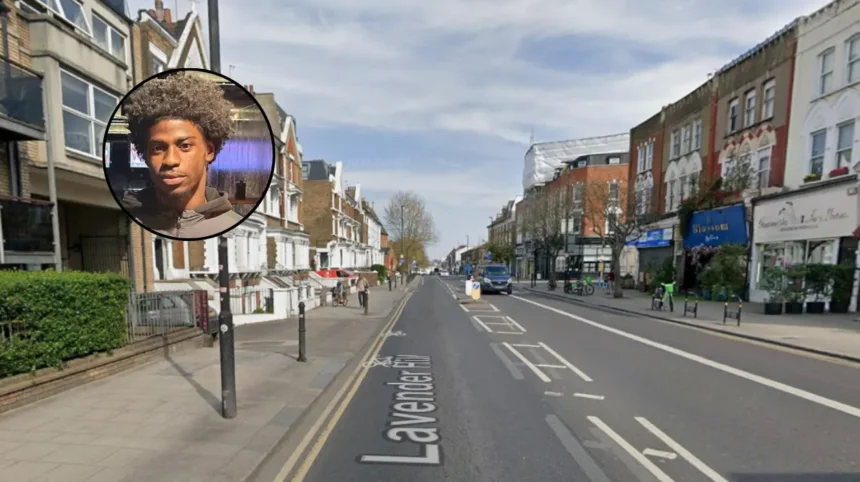
- A 19-year-old, Rinneau Perrineau (known as Ren), was fatally stabbed in Lavender Hill, south-west London, on 21 October 2025.
- Muhammed Cabdiqaadir, 25, of Wandsworth, denies murder and also denies possession of a bladed weapon.
- The Old Bailey heard the fatal stabbing followed an altercation at Thirsty Camel Food and Wine shop; the prosecution says the victim struck the defendant’s car with a windbreaker.
- CCTV footage showed Cabdiqaadir holding a knife while the victim was not armed, according to the prosecution.
- Perrineau died in hospital on 24 October 2025; Cabdiqaadir was arrested on 25 October and charged on 26 October.
- A second man was arrested on suspicion of murder on 24 October and later released on bail; the investigation remains ongoing.
- Police described the incident as isolated and appealed for witnesses in Beauchamp Road between 15:20 and 15:30 on 21 October.
Lavender (South London News) July 21, 2026 –A court has heard that a teenager was stabbed to death after a dispute that began at a food and wine shop in south-west London. According to proceedings at the Old Bailey, 19-year-old Rinneau Perrineau—known to family and friends as Ren—was attacked in Lavender Hill, Wandsworth, on the afternoon of 21 October 2025. He was treated at the scene for stab wounds before being taken to St George’s Hospital, where he died three days later on 24 October.
- How did the altercation begin and what led to the stabbing?
- What does the prosecution say about self-defence and the knife?
- When was the suspect arrested and charged?
- What have police said about the incident and the appeal for witnesses?
- Who was Rinneau Perrineau and what support is his family receiving?
- What court proceedings have taken place so far?
- Background of the development
- Prediction: How this development could affect local residents and young people
Muhammed Cabdiqaadir, 25, of Hope Street, Wandsworth, is accused of murdering Mr Perrineau. He has pleaded not guilty to murder and also denies a charge of possession of a bladed weapon. The trial is ongoing.
How did the altercation begin and what led to the stabbing?
As reported by the BBC’s court correspondent, prosecutor Brian O’Neill KC told the jury that Cabdiqaadir arrived at Thirsty Camel Food and Wine store around 3:05pm on the day of the incident. Mr Perrineau entered the shop approximately seven minutes later and spoke to the shopkeeper about buying an iPhone.
The shop employee then observed an argument involving Cabdiqaadir, Mr Perrineau, and another man identified in court as Nijab Rage, which concluded when the group left the shop five minutes later.
The court heard that after the three men left the store, Mr Perrineau struck Cabdiqaadir’s car with a windbreaker displayed at a nearby shop, following a further dispute. Prosecutors say the defendant then stabbed the teenager.
What does the prosecution say about self-defence and the knife?
During his initial court appearance, Cabdiqaadir claimed the killing was in self-defence. However, the prosecution contends that the CCTV evidence contradicts this. As reported by the BBC, Mr O’Neill told the jury:
“The prosecution contends that you can be certain he was not acting in self-defence, as it is evident from the CCTV footage that Mr Cabdiqaadir was the one wielding a knife, while Rinneau Perrineau was not.”
When police arrived at the scene, they asked Mr Perrineau about his injuries. He replied, “I don’t know, I think a knife,” according to the account given in court. He was then transported to St George’s Hospital, where he died on 24 October.
When was the suspect arrested and charged?
Cabdiqaadir was arrested on Saturday, 25 October 2025, and charged with murder on Sunday, 26 October. He was due to appear in custody at Wimbledon Magistrates’ Court on 27 October, the Metropolitan Police said. He also faces a charge of possession of a bladed object.
A second man, aged 23, was arrested on suspicion of murder on Friday, 24 October, but has since been released on bail, police said. The investigation into the circumstances surrounding the death continues.
What have police said about the incident and the appeal for witnesses?
Following the attack, the Metropolitan Police launched a murder investigation and described the stabbing as an isolated incident. Officers attended Lavender Hill alongside the London Ambulance Service at 15:26 on 21 October after reports of a stabbing.
Detectives said they were making urgent enquiries and believed there were still witnesses to come forward. The force specifically urged anyone who was in Beauchamp Road between 15:20 and 15:30 on the afternoon of 21 October to contact police on 101, quoting crime reference 4781/21OCT, or to speak to Crimestoppers anonymously on 0800 555 111. Local patrols were stepped up around the scene in the days after the attack.
Who was Rinneau Perrineau and what support is his family receiving?
Rinneau Perrineau, 19, was known as Ren by his family and friends, the Metropolitan Police said when confirming his death.
He was treated at the scene for stab wounds before being taken to hospital, where his condition deteriorated and he died on 24 October. His family are being supported by specially trained officers, the force added.
What court proceedings have taken place so far?
The Old Bailey heard detailed accounts of the timeline and the altercation during the trial. Earlier, a plea and trial preparation hearing in the case was listed at the Old Bailey, with Cabdiqaadir charged with the murder of 19-year-old Rinneau Perrineau after he was fatally stabbed in Wandsworth. He has entered not guilty pleas to murder and to possession of a bladed weapon.
Background of the development
The fatal stabbing in Lavender Hill is part of a broader pattern of knife-related violence that has prompted repeated police appeals for witnesses and community cooperation in south London. Wandsworth Police have previously highlighted the importance of public information in fast-moving homicide investigations, particularly where CCTV and shopkeeper testimony form key parts of the evidence.
In this case, the prosecution’s reliance on CCTV—to show who was holding a knife and to reconstruct movements before and after the attack—reflects the increasing use of digital evidence in knife crime trials.
The sequence of events—an argument inside a small retail premises, followed by a confrontation outside and a fatal assault—has been the focus of detailed reconstruction in court.
Police have maintained that the incident was isolated, a classification often used when there is no immediate indication of group retaliation or wider gang involvement.
Nonetheless, the presence of a second arrest early in the investigation, with one suspect later bailed, underscores the complexity of establishing individual roles in such incidents.
The defendant’s assertion of self-defence, contrasted with the prosecution’s reading of CCTV, sets up a central dispute for the jury to resolve.
Prediction: How this development could affect local residents and young people
If Cabdiqaadir is convicted, the case is likely to reinforce existing concerns among Lavender Hill and wider Wandsworth residents about spontaneous knife violence linked to everyday disputes.
For local shopkeepers and young people who frequent corner shops and off-licences, the details—an argument in a food and wine store escalating to a fatal stabbing—may heighten anxiety about the potential for minor conflicts to turn deadly.
For the community, a conviction could also strengthen calls for more visible policing around retail hotspots and improved youth engagement to defuse tensions before they escalate.
For young men in particular, the trial’s focus on CCTV evidence and the rejection of a self-defence claim where a knife was present may influence how disputes are perceived and handled:
if court proceedings underline that carrying or producing a blade in a confrontation will be treated decisively, it could deter some from arming themselves in future arguments.
Conversely, if the outcome is contested or results in acquittal, it may fuel ongoing debate about the adequacy of current interventions and the perceived risks of everyday interactions in local high streets.