Key Points
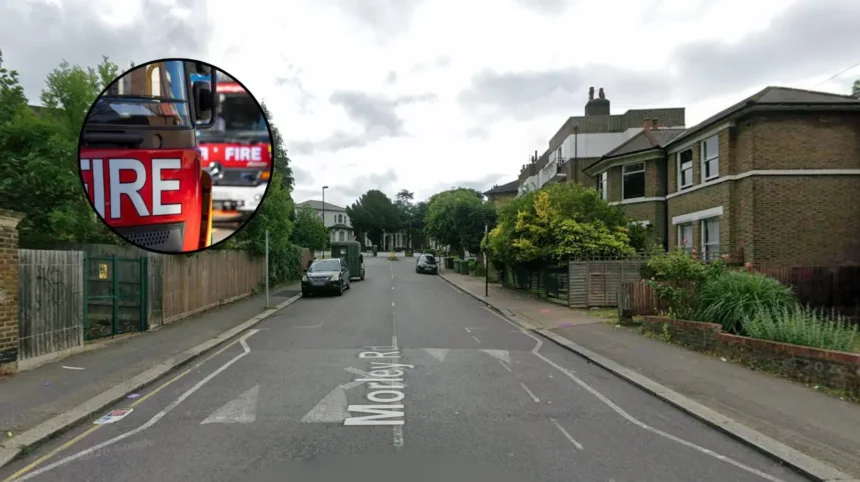
- Incident Location & Date: A trackside fire ignited along the railway lines near Morley Road in Lewisham on the evening of Sunday, 9 August.
- Cause of Blaze: Sparks originating from a passing train set fire to dry vegetation along the embankment, which then spread to adjacent residential property.
- Damage Reported: A garden shed, wooden fence panels, and outdoor garden furniture suffered fire damage.
- Emergency Response: London Fire Brigade (LFB) dispatched 4 fire engines and approximately 25 firefighters from Forest Hill, Dockhead, East Greenwich, and Peckham fire stations.
- Public Alerts: The LFB Control Office received 22 emergency calls regarding the outbreak.
- Timeline: The initial call came in at 8:26 pm, and the incident was brought under control by 9:48 pm.
Lewisham (South London News) August 10, 2026 — A trackside fire damaged garden property after igniting from sparks caused by a passing train in Lewisham on the evening of Sunday, 9 August.
As reported by official updates from the London Fire Brigade (LFB), emergency control operators received the first of 22 emergency calls at 8:26 pm. Firefighting crews were immediately dispatched to the railway line near Morley Road following reports of smoke and flames visible along the tracks.
A total of four fire engines and around 25 firefighters were mobilized to the scene. Crews attending the incident were drawn from four nearby stations: Forest Hill, Dockhead, East Greenwich, and Peckham. Upon arrival, firefighters discovered that sparks from a passing train had ignited dry grass and trackside vegetation. The fire subsequently crossed the railway boundary, affecting an adjacent residential property where a shed, fence panels, and garden furniture were damaged.
Firefighters worked to contain the trackside flames and prevent further spread into neighbouring domestic properties. The London Fire Brigade confirmed that the blaze was brought fully under control by 9:48 pm. No injuries or casualties were reported as a result of the incident.
Following the dampening down operations, an LFB spokesperson highlighted the elevated hazard posed by dry weather conditions. As stated by the London Fire Brigade in their official incident record,
“In these dry conditions, it only takes a spark to start a grass fire and they can spread rapidly, quickly threatening homes, workplaces and the environment”.
The fire service issued preventative guidance to local residents living close to open ground or rail corridors. The LFB advised homeowners to keep lawns cut short below 7cm, remove dead leaves and dry debris from gutters, and position wooden sheds or garden furniture away from property borders where possible. Additionally, residents were urged to consider creating a fire break of two to three metres around garden margins to reduce fuel source continuity.
What Is the Background to Trackside Vegetation Fires Along UK Rail Corridors?
Trackside vegetation fires represent a recurring seasonal challenge for rail infrastructure managers and emergency services across the United Kingdom, particularly during hot or dry spells.
Railway corridors often feature dense vegetation, including tall grass, brambles, and scrub, along embankments. During extended periods of warm weather, this plant matter dries out significantly, rendering it highly combustible. Sparks capable of triggering fires along these corridors can stem from several sources, including mechanical friction from train braking systems, hot particle discharge from freight locomotives, overhead line equipment incidents, or contact between wheelsets and dry track rails.
Network Rail, the body responsible for managing Britain’s railway infrastructure, maintains regular vegetation management schedules designed to clear trees and cut back scrub along the lineside. However, with thousands of miles of track running directly adjacent to residential properties across Greater London, the proximity of trackside boundaries to private gardens creates a continuous point of exposure when grass fires break out.
The London Fire Brigade routinely monitors trackside incidents during summer periods, regularly issuing safety warnings regarding outdoor combustible hazards to mitigate risk to urban housing developments that border railway embankments.
Explore More Lewisham Fire News
South London Hospital Fire: 15 Patients Rescued Lewisham 2026
Catford Nursery Fire: 60 Firefighters Battle Rushey Green Blaze
How Might This Development Affect Local Residents, Commuters, and Rail Infrastructure Operators?
The incident near Morley Road highlights several immediate and longer-term implications for local stakeholders:
- Adjacent Property Owners: Homeowners with boundaries directly abutting railway lines face increased risk of property damage during periods of dry weather. The event underscores the need for residents along rail corridors to maintain defensive space, cut back overhanging vegetation, and reconsider placing combustible structures like wooden sheds or timber fencing directly along trackside boundary lines.
- Rail Commuters and Passengers: Trackside fires frequently require speed restrictions, line closures, or power isolation to allow emergency services safe access to the tracks. While fire crews managed to contain the Morley Road blaze within an hour and twenty minutes, similar incidents can lead to sudden train delays, cancellations, and severe disruption across South East London transport links.
- Network Rail and Maintenance Contractors: This event reinforces operational pressure on Network Rail to intensify trackside clearance and lineside vegetation management. Infrastructure managers may face increased scrutiny regarding the frequency of clearance schedules along urban embankments, as well as additional monitoring of rolling stock to minimize mechanical sparking during dry weather warnings.