If you have damp or mould in your home in Southwark, you report it through a dedicated Damp and Mould Team using an online form, email, phone, or website chat, then attend a home visit where officers identify the cause and arrange repairs.services.
- What is damp and mould in housing and why must Southwark tenants report it?
- How do you report damp and mould to Southwark Council as a tenant?
- What information do you need to provide when reporting damp and mould?
- What happens after you report damp and mould to Southwark Council?
- How quickly will Southwark Council respond to a damp and mould report?
- What should you do if Southwark Council does not respond or fix damp and mould?
- How does reporting damp and mould differ for private renters in Southwark?
- What support is available for tenants with health problems linked to damp and mould?
- How can Southwark tenants help prevent damp and mould after repairs are completed?
- Why is reporting damp and mould important for Southwark’s housing standards and legal compliance?
What is damp and mould in housing and why must Southwark tenants report it?
Damp and mould are moisture problems in buildings that create health risks and property damage. Southwark Council now requires tenants to report any damp or mould so officers can inspect homes, find the cause, and fix serious cases quickly, especially for vulnerable residents.
Damp is excess moisture in walls, ceilings, floors or furniture, often caused by leaks, poor ventilation, inadequate heating or structural defects. Mould is a type of fungus that grows on damp surfaces and releases spores that can trigger breathing problems, allergies and infections.
In Southwark Council homes, persistent damp and mould can breach the landlord’s duty to provide safe housing and may fall under new national standards such as Awaab’s Law, which sets strict timescales for social landlords to fix serious conditions like damp and mould. Reporting allows the council to act, prevent long-term damage, and protect tenants’ health.
How do you report damp and mould to Southwark Council as a tenant?
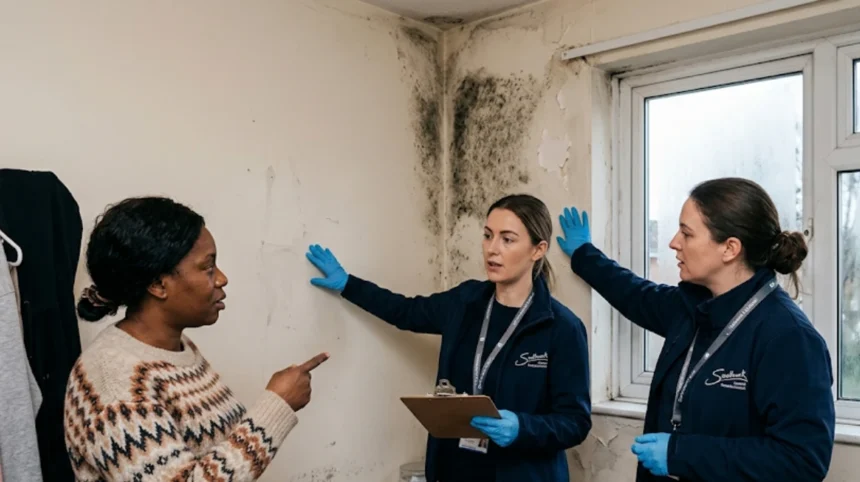
You report damp and mould to Southwark Council by using the council’s online form, emailing dampandmould@southwark.gov.uk, calling 0207 525 2600 (option 1, then option 5), or using the “Let’s Chat” button on the damp and mould page. After reporting, a technical officer visits your home to inspect and arrange repairs.
The council has created a specialist Damp and Mould Team that handles all reports of moisture problems in council homes. The team uses an in-house call centre to answer web forms, emails, phone calls and online chats, then sends a technical officer to your property to investigate the cause and raise repair works.
Tenants are explicitly asked to always tell the council when they notice damp or mould, rather than trying to clean it themselves or wait for it to worsen. Once contact is made, an officer will visit your home, usually the next working day for urgent cases, and will explain what help is available and when work can start.
What information do you need to provide when reporting damp and mould?
You must provide your address, property type, contact details, and a clear description of the damp or mould problem, including where it is located, how long it has been present, and any health effects. If possible, include photos or notes about leaks, ventilation issues or heating problems.
When reporting, the council needs enough detail to identify the property and understand the severity. Typical information includes:
- Full address and ward or neighbourhood if known
- Tenancy type (secure tenancy, intro tenancy, etc.)
- Name and contact number of the person reporting
- Rooms affected (living room, kitchen, bedroom, bathroom)
- Type of problem (black mould patches, water stains, condensation, leaking pipes)
- Duration of the issue (days, weeks, months)
- Any health symptoms (breathing difficulties, coughs, wheezing, skin irritation)
If you have evidence, attach photographs showing the extent of mould, water damage, or condensation. Notes about recent leaks, broken extractor fans, or lack of heating strengthen the report and help officers prioritise the case.
What happens after you report damp and mould to Southwark Council?
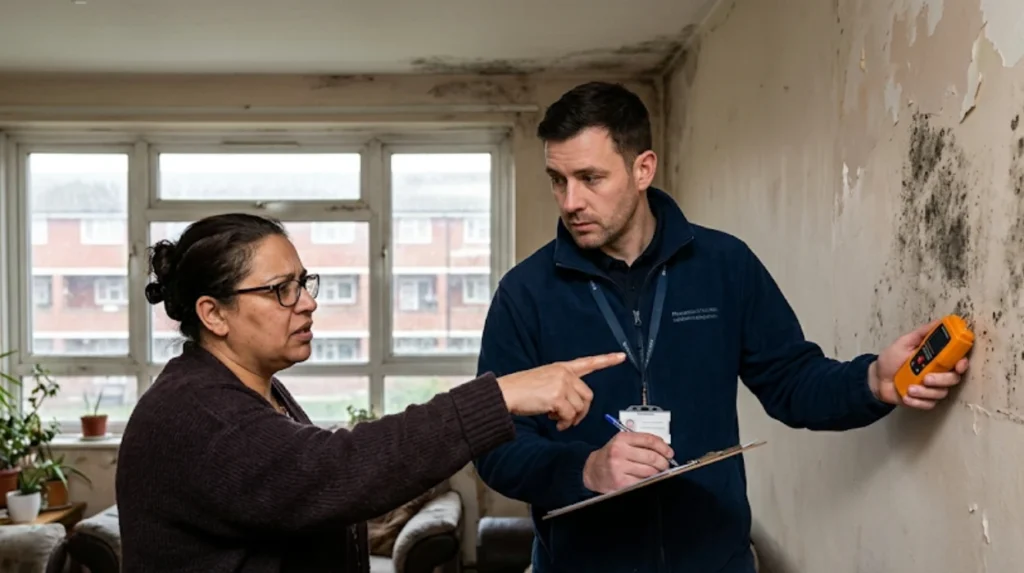
After you report, a technical officer from the Damp and Mould Team visits your home, inspects the property, identifies the cause of the damp or mould, and explains what repairs or improvements will be carried out. Work may range from cleaning and painting to installing extractor fans, fixing leaks, or improving ventilation and heating.
The inspection focuses on finding the root cause rather than just removing visible mould. Officers look for:
- Water leaks from pipes, roofs, windows or external walls
- Poor ventilation in kitchens, bathrooms and bedrooms
- Inadequate heating leading to cold surfaces and condensation
- Structural defects such as cracked render, failed waterproofing or blocked drainage
Once the cause is identified, the team allocates operatives to complete the work. This may involve washing away mould, repairing or fitting extractor fans, sealing leaks, replacing damaged plaster, or improving insulation and heating. The officer explains the plan and expected timelines before leaving the property.
How quickly will Southwark Council respond to a damp and mould report?
Southwark Council says it will visit your home the next working day for serious cases and will prioritise the most serious problems first, especially where vulnerable residents such as families with young children or people with breathing difficulties are affected.
Response times depend on risk level and available resources. Urgent cases linked to health risks, severe leaks, or safety hazards are treated as priority appointments. Routine cases may be scheduled as standard appointments, but the council aims to act quickly where damp or mould is clearly affecting health.
Under Awaab’s Law, social landlords must fix serious hazards within set timescales, which increases pressure on councils like Southwark to respond promptly and complete repairs within legally defined periods.
What should you do if Southwark Council does not respond or fix damp and mould?
If the council does not respond, delays unreasonable, or fails to fix the problem, you escalate by contacting the council’s complaints team, then the Housing Ombudsman, and may consider legal action for housing disrepair. Evidence of reports, visits, and unresolved issues supports your complaint or claim.
The first step is to use Southwark Council’s formal complaints process, describing the original report, dates of contact, any visits, and the ongoing problem. If the complaint is not resolved satisfactorily, you can escalate to the Housing Ombudsman, an independent body that reviews disputes between tenants and landlords, including local authorities.
In cases of long-term disrepair that breach your tenancy agreement or housing standards, tenants may also pursue a housing disrepair claim for compensation and court-ordered repairs. Legal advice organisations or specialist housing lawyers can help assess whether the council’s failure amounts to actionable disrepair.
How does reporting damp and mould differ for private renters in Southwark?
Private renters must first report damp and mould to their landlord or agent in writing, allow at least 14 days for response (shorter if there is severe risk), and then use Southwark Council’s private housing issue form if the landlord fails to act. The council can investigate serious disrepair that poses health risks.
For privately rented properties, the council’s role is different. The landlord is primarily responsible for repairs. The tenant must:
- Notify the landlord or agent in writing about the damp or mould.
- Allow at least 14 days for a response, unless the issue is severe and imminent.
- Keep contact details for the landlord.
If the landlord fails to respond or fix the problem, the tenant can report the issue using Southwark Council’s “Report a private housing issue” form, which covers serious disrepair such as continuous leaks, drainage problems, faulty electrics, no heating in winter, filthy or verminous premises, and asbestos.
The council will assess whether the issue poses a risk and may investigate informally or formally. Priority is given to cases with the greatest risk to tenants, but not all enquiries lead to formal investigation.
What support is available for tenants with health problems linked to damp and mould?
Tenants with health problems linked to damp and mould should report the issue immediately and clearly state how it affects their health, so the council can prioritise their case. The Damp and Mould Team focuses on acting quickly where vulnerable residents, including families with young children or people with breathing difficulties, are affected.
When reporting, tenants should explain:
- What health symptoms they experience (coughs, wheezing, asthma flare-ups, skin irritation)
- Which household members are affected, especially children, elderly people, or those with chronic conditions
- How the problem impacts daily life (sleep, ability to work, need for medical care)
This information helps officers classify the case as high risk and schedule priority visits and repairs. The council’s Good Landlord Plan emphasises providing safe, warm homes free from damp and mould, with particular attention to vulnerable tenants.
Explore More Help & Resources
A Complete Travel Guide to Lewisham for First-Time Visitors and Tourists
How to use Southwark’s portal for reporting tree hazards
How can Southwark tenants help prevent damp and mould after repairs are completed?
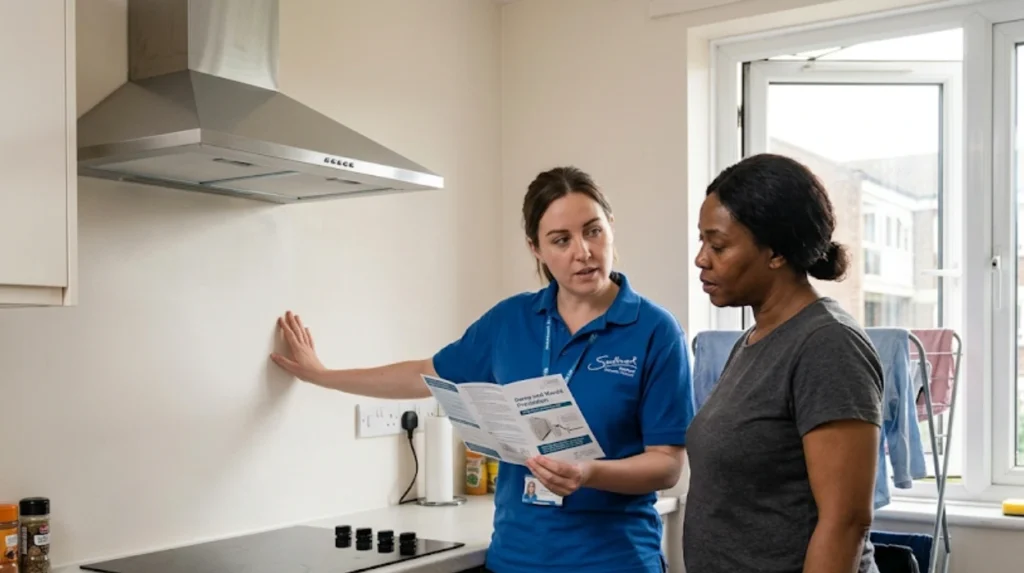
Tenants can help prevent damp and mould by using heating appropriately, ventilating rooms regularly, avoiding blocking air flows, and reporting new problems early. The council provides leaflets and guidance during visits to explain how to reduce condensation and moisture in the home.
Practical steps include:
- Keeping indoor temperatures steady, especially in colder months
- Opening windows or using extractor fans in kitchens and bathrooms when cooking or showering
- Not drying clothes indoors without ventilation
- Keeping furniture slightly away from walls to allow air circulation
- Cleaning visible mould safely and reporting any new patches quickly
Technical officers often provide a leaflet during the home visit that explains these measures and how the specific repairs (such as new extractor fans or sealed leaks) fit into a longer-term prevention strategy.
Why is reporting damp and mould important for Southwark’s housing standards and legal compliance?
Reporting damp and mould is essential for meeting Southwark Council’s legal and policy obligations as a social landlord, including new national standards such as Awaab’s Law, which require timely fixes for serious conditions. Accurate reporting helps the council identify problematic blocks, plan home condition surveys, and maintain safe housing for 37,000 council homes.
Southwark Council conducts a home condition survey aimed at visiting all 37,000 council homes to identify buildings and blocks with damp and mould issues. Data from tenant reports feeds into this survey and helps target资源和 interventions where problems are most concentrated.
By reporting early, tenants contribute to the council’s ability to comply with statutory housing standards, avoid enforcement action, and fulfil its Good Landlord Plan. This protects both individual households and the broader reputation and performance of Southwark’s housing service.
How do I report damp and mould in a Southwark Council home?
You can report damp and mould by completing Southwark Council’s online reporting form, emailing the Damp and Mould Team, calling the council’s housing repairs service, or using the online chat feature on the council’s website. A technical officer will then arrange an inspection of your home.