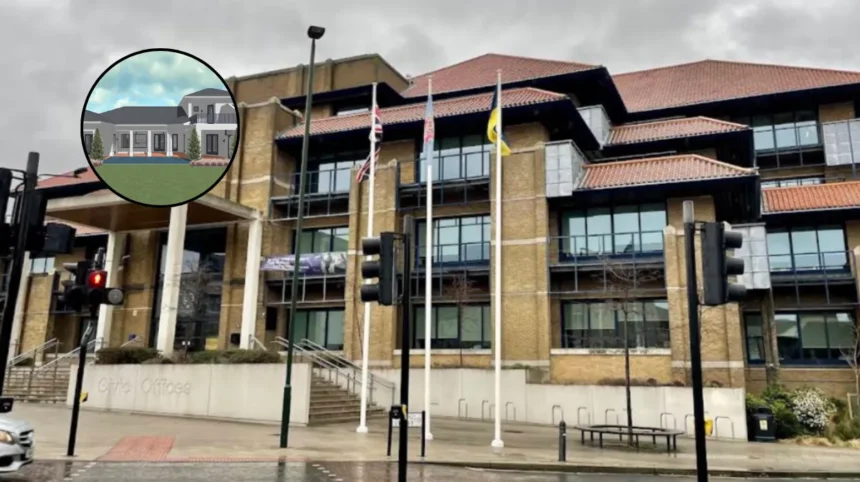
Key Points
- Bexley Council has received a planning application from Mr I Sandhu to convert 11 Upper Abbey Road, Belvedere, from two flats (Use Class C3) to a large House in Multiple Occupation (HMO, sui generis) for up to ten occupants.
- The proposed HMO targets young professionals, students, key workers, and others renting individually, with each resident having their own bedroom but sharing kitchens, bathrooms, and living areas.
- External changes include a first-floor side extension above the garage, enlargement of the roof space with two rear dormers and front rooflights, and minor alterations to windows and the front entrance.
- Internally, the property will feature ten bedrooms, each with a dedicated shower and toilet, plus a shared kitchen, lounge, dining space, and access to the rear garden.
- The site is in a residential area with a Public Transport Accessibility Level (PTAL) rating of 3 (moderate access), Flood Zone 1, outside any conservation area, and classified as “primarily residential” by the council.
- Planning documents note one licensed HMO nearby and assert that a 10-bedroom HMO here would not cause an overconcentration locally.
- The development is designed as car-free, with secure cycle storage at the rear and refuse storage at the front; on-street parking is available along Upper Abbey Road.
- Proposals claim to deliver high-quality HMO accommodation meeting Bexley’s minimum standards, efficient use of the building, additional housing in a sustainable area, and no harm to neighbours regarding privacy, noise, or disturbance.
Belvedere (South London News) March 24, 2026 – Bexley Council has received a planning application from Mr I Sandhu to transform 11 Upper Abbey Road from two existing flats into a 10-bedroom House in Multiple Occupation (HMO), sparking interest in local housing dynamics amid rising demand for shared rentals. The proposal, which includes minor external extensions and comprehensive internal reconfiguration, aims to house up to ten individual renters in a car-free setup, with each bedroom featuring en-suite facilities. Situated in a primarily residential neighbourhood with moderate public transport access, the plans emphasise compliance with council standards and minimal impact on the surrounding community.
- Key Points
- What Is the Proposed Development at 11 Upper Abbey Road?
- Who Is Behind the HMO Application?
- What Changes Are Planned for the Property?
- Where Does 11 Upper Abbey Road Stand in Local Context?
- What Are the Transport and Sustainability Features?
- Will the HMO Impact Neighbours?
- How Does This Fit Bexley’s HMO Landscape?
- What Happens Next in the Planning Process?
What Is the Proposed Development at 11 Upper Abbey Road?
The application seeks permission to change the use of the property from Use Class C3 (two flats) to sui generis (large HMO for ten occupants).
As detailed in the planning submission to Bexley Council, Mr I Sandhu’s proposal includes a first-floor side extension above the garage, roof space enlargement via two rear dormers and front rooflights, and subtle external modifications to maintain the property’s street-facing appearance.
Internally, the layout would provide ten bedrooms, each equipped with a dedicated shower and toilet to meet modern HMO standards. Shared amenities comprise a kitchen, lounge, and dining area, with residents accessing the rear garden.
Planning documents highlight that these features align with Bexley’s minimum space requirements for high-quality accommodation, promoting efficient land use in a sustainable residential zone.
Externally, changes remain limited: secure cycle storage at the rear, refuse bins at the front, and no significant alterations visible from Upper Abbey Road. The car-free ethos reflects typical HMO demographics—young professionals, students, and key workers—who rely less on private vehicles, though on-street parking exists nearby.
Who Is Behind the HMO Application?
Mr I Sandhu is the applicant submitting the plans to Bexley Council for 11 Upper Abbey Road. No further personal details on Mr Sandhu appear in available planning summaries, but the submission positions him as the proponent of this conversion project.
The property, previously comprising two flats and sold for £215,000 in 2017 under leasehold to Sanctuary Housing Association, now stands as the focus of this HMO bid.
As reported in Bexley planning contexts, such applications often come from individual investors responding to London’s rental shortages. Mr Sandhu’s documents argue the scheme provides
“additional housing in a sustainable residential area,”
underscoring a private initiative to bolster local supply without overdevelopment.
What Changes Are Planned for the Property?
External modifications are understated to preserve the residential character. These encompass the garage-top extension, dormer additions for roof enlargement, and minor window and entrance tweaks. From the street, the property
“would remain largely unchanged,” per the application.
Inside, the transformation creates ten self-contained bedrooms with en-suites, minimising shared facility pressures. A communal kitchen, lounge, dining space, and garden access cater to group living. Refuse management at the front and cycle parking at the rear support practical occupancy.
These adaptations aim to meet Bexley’s HMO benchmarks, including room sizes and amenities, as expanded licensing schemes in Belvedere—covering HMOs with five or more occupants—gain traction since January 2025.
Where Does 11 Upper Abbey Road Stand in Local Context?
Located in Belvedere, DA17 5AE, the site boasts a PTAL 3 rating, indicating moderate public transport links via buses and nearby stations like Belvedere (1.3 miles away). It lies in Flood Zone 1 (lowest risk), outside conservation boundaries, and within a “primarily residential” council designation.
One licensed HMO operates nearby, but documents claim no overconcentration risk from this 10-bedroom addition.
Belvedere’s selective licensing, active since early 2025, targets private rentals including smaller HMOs, with 139 properties licensed by March 2025 and estimates of 2,300 more potentially eligible.
The area sees related activity, such as traffic orders on Upper Abbey Road junctions from March 2026 and other local plans like BexleyCo Homes’ 86-unit Station Road project.
What Are the Transport and Sustainability Features?
PTAL 3 offers “moderate access” to buses, trains, and Underground, per Transport for London metrics (1-6b scale). The car-free design suits non-car owners, with on-street parking available.
Cycle storage enhances green credentials, aligning with Bexley’s push for sustainable housing. As a “car-free development,” it reduces parking strain, vital in residential Belvedere where HMOs often prioritise public transport users.
Planning notes efficient building reuse, contributing to housing without greenfield expansion, in line with local plan allocations.
Will the HMO Impact Neighbours?
Proposals assert
“no harm to neighbours in terms of privacy, noise, or disturbance.”
En-suite bedrooms reduce shared bathroom queues, potentially curbing noise, while high-quality standards mitigate issues.
With only minor external changes and one existing HMO nearby, overconcentration is dismissed. Bexley’s Article 4 Direction since 2017 curbs small HMO conversions without permission, ensuring scrutiny for larger ones like this.
Local Facebook groups highlight HMO objections elsewhere in Belvedere, citing area character, though none specifically reference this application.
How Does This Fit Bexley’s HMO Landscape?
Bexley mandates licensing for HMOs with five-plus occupants, regardless of storeys since 2018. By November 2024, 228 mandatory licences existed, with selective schemes expanding in Belvedere.
This 10-bedroom HMO falls under sui generis, requiring full planning nod. Unlike small C4 HMOs (up to six), it demands detailed review. Estimates peg 525 licensable HMOs borough-wide.
The application emphasises standards compliance, amid council tools like public registers and pre-application advice.
What Happens Next in the Planning Process?
Bexley Council’s portal handles applications, with public consultation typical. Residents can comment via pa.bexley.gov.uk, as seen in nearby cases.
Decisions weigh local plans, neighbour input, and standards. Approval could yield high-quality rentals; rejection might cite unspecified concerns. No decision date is confirmed, but processes follow inverted pyramid scrutiny—key impacts first.
This proposal, if greenlit, adds to Belvedere’s rental stock, reflecting London’s HMO boom for key workers. Monitoring via Bexley’s notices ensures transparency.