Key Points
- A Greek restaurant in Bexley has asked for a male employee, previously banned by police from the premises, to be allowed to return to work.
- The man was reportedly banned after an incident in which he allegedly grabbed a female customer by the neck and pretended to pour alcohol down her throat.
- Police have alleged in documents that the man’s presence at the Sidcup restaurant makes women feel unsafe.
- The Metropolitan Police are understood to have applied licence conditions to prevent the man from working at the restaurant following the alleged incident.
- The restaurant has reportedly challenged or opposed the police-imposed condition and is seeking permission for the employee to return to his role.
- Licensing authorities have been involved in assessing the incident, police claims, and the restaurant’s request for the employee’s return.
- The alleged victim’s account includes claims that she felt frightened and humiliated by the incident, which she says took place in front of other customers.
- The man has not been convicted in relation to the allegation at the time of reporting, and his legal status remains that of a person accused but not found guilty in court.
- The restaurant’s management has argued that the employee is valued, that the incident has been misrepresented or exaggerated, and that he should be allowed to resume work.
- Police have cited safeguarding concerns, particularly around the safety and comfort of women, to justify their objection to the man returning to the venue.
- The case raises issues around workplace safety, women’s safety in hospitality venues, and the balance between presumption of innocence and precautionary action by authorities.
- Licensing hearings and discussions have examined CCTV, witness statements and police reports in relation to the incident and the man’s conduct at work.
- The restaurant has maintained that it takes customer safety seriously and that it complies with licensing and safeguarding requirements.
- Advocacy and commentary around women’s safety in nightlife and hospitality settings provide wider context to the concerns raised by police in this case.
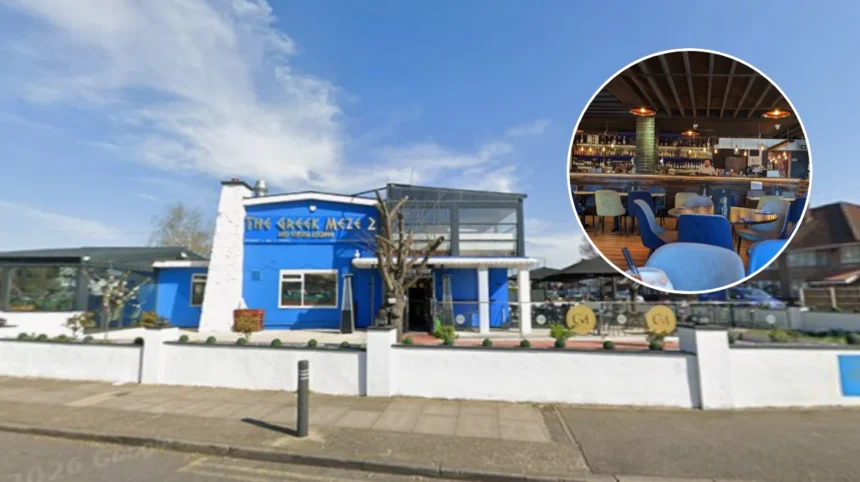
Bexley (South London News) March 17, 2026 – A Greek restaurant in Sidcup, Bexley, is seeking the return of a male employee who was banned from working at the venue after an alleged incident in which he reportedly grabbed a female customer by the neck and pretended to pour alcohol down her throat, prompting police to say his presence makes women feel unsafe.
- Key Points
- Why was the Greek restaurant employee in Bexley banned from working at the Sidcup venue?
- How have police argued that the man makes women feel unsafe at the Sidcup restaurant?
- Why does the Bexley Greek restaurant want the banned employee to return to work?
- What did the alleged victim say about the incident at the Sidcup restaurant?
- How have licensing authorities and legal processes been used in this Bexley case?
- What wider concerns about women’s safety in hospitality does this Sidcup case highlight?
- What is the current status of the banned employee and what happens next?
Why was the Greek restaurant employee in Bexley banned from working at the Sidcup venue?
As reported by MyLondon, the incident at the centre of the dispute took place at a Greek restaurant in Sidcup, within the London Borough of Bexley, when a female customer alleged that a male member of staff had grabbed her by the neck and mimed pouring alcohol down her throat in front of others. According to the detailed account attributed to MyLondon’s reporter, the woman said she was left shaken and humiliated by the incident, and subsequently contacted the police to report what had happened.
The Metropolitan Police, as described in the MyLondon coverage, then assessed the complaint and the available evidence, including witness accounts and any venue records or CCTV where available, before seeking conditions to prevent the man from continuing his role at the restaurant. In documentation summarised in the MyLondon report, officers argued that the conduct alleged in the complaint was sufficiently concerning to justify action through licensing and safeguarding routes rather than waiting solely on the outcome of any criminal process. MyLondon’s report further noted that police told licensing officials the man’s behaviour, as alleged, risked undermining public confidence in the venue’s ability to keep customers – especially women – safe.
The article described how the reported conduct occurred in a social, hospitality setting, where customers would reasonably expect staff to adhere to professional standards and boundaries with regard to physical contact and alcohol service. In this context, the alleged grabbing of a customer by the neck and the simulated pouring of alcohol down her throat was highlighted by police as a behaviour that could be perceived as intimidating and non-consensual, particularly in a public space. MyLondon’s journalist also reported that the allegation fed into wider police concern about women’s experiences of harassment and unwanted physical contact in restaurants, bars and nightlife venues.
How have police argued that the man makes women feel unsafe at the Sidcup restaurant?
As reported by the MyLondon journalist, the Metropolitan Police set out their position in licensing papers and formal objections, stating that the employee’s continued presence at the restaurant would make women feel unsafe. In these documents, police are said to have pointed specifically to the alleged neck‑grabbing incident as evidence of behaviour that could intimidate or distress female customers, especially when carried out by a staff member in a position of responsibility. The MyLondon article stated that police framed their intervention as a preventative safeguarding measure to protect women who might visit the restaurant.
The report further indicated that police licensing officers referred to their broader duty to minimise the risk of harassment and assault in licensed premises when articulating why they believed the man should be barred from working there. According to the MyLondon coverage, officers drew a connection between the alleged conduct and a pattern of behaviours which, in their view, could contribute to an unsafe environment for women, even in the absence of a criminal conviction. The focus, as described by MyLondon, was on the perception of safety and how women might feel entering a venue knowing that a staff member accused of such conduct remained in post.
As reported in the same article, police emphasised to licensing decision‑makers that their remit in such cases is not limited to criminal enforcement but also includes proactive steps to prevent potential harm and maintain public confidence in licensed venues. MyLondon’s journalist highlighted that this argument reflects a wider policing and licensing approach in London, where authorities can impose conditions or restrictions on venues and individuals based on risk assessments rather than waiting for outcomes in court. The case at the Sidcup restaurant was presented in that context, with officers arguing that allowing the man to work at the venue again would undermine their efforts to ensure women’s safety in hospitality settings.
Why does the Bexley Greek restaurant want the banned employee to return to work?
As reported by MyLondon, the restaurant’s management has opposed the police‑imposed condition that prevents the man from working on the premises and has sought to have him reinstated. The article described the venue’s leadership as arguing that the employee is a valued member of staff who has contributed positively to the restaurant’s operation and customer experience. According to MyLondon’s coverage, the restaurant has questioned aspects of the allegation, suggesting that the incident has been misunderstood, mischaracterised or exaggerated and that it does not warrant such a stringent restriction on the employee’s ability to work.
MyLondon’s journalist reported that representatives of the restaurant have stressed their commitment to safety and compliance with licensing regulations, arguing that they would not knowingly permit behaviour that places customers at risk. In statements summarised by the outlet, the management is said to have told licensing officials that the employee has otherwise maintained professional conduct and that the venue has internal procedures to address any staff misconduct. MyLondon indicated that the restaurant contends that a complete work ban is a disproportionate response given the information currently available and the fact that the man has not been convicted of any offence in relation to the allegation.
The article noted that, in the restaurant’s view, the conditions attached to its licence – particularly the one naming and excluding the individual employee – have had a practical impact on its staffing and operations. As covered by MyLondon, management have indicated they believe they can manage any risk through supervision, training and internal disciplinary measures, rather than through a permanent or open‑ended prohibition. The request for the employee’s return has therefore been framed, in MyLondon’s reporting, as both a question of fairness to the staff member and a matter of proportionality for the business.
What did the alleged victim say about the incident at the Sidcup restaurant?
As relayed in the MyLondon article, the woman at the centre of the allegation gave an account to police and licensing authorities describing how she felt during and after the incident. According to the report, she stated that the male employee grabbed her by the neck and pretended to pour alcohol down her throat while she was at the restaurant, an episode she said took place in view of other customers. MyLondon’s coverage noted that she told officers the interaction was unwanted and left her feeling shocked, uncomfortable and embarrassed, particularly because it occurred in a public setting where she had expected to relax and feel safe.
In the summary published by MyLondon, the woman is reported to have said that the staff member’s actions were not playful or consensual from her perspective and that she did not feel able to challenge him in the moment. The article indicated that she later decided to report the matter because of the impact it had on her sense of safety and her concern that similar behaviour could happen to other women. MyLondon’s journalist explained that her statement formed a key part of the evidence considered by both police and licensing officials in deciding how to respond to the situation.
The report also made clear that her account is one of several pieces of information under consideration, alongside any available CCTV and witness statements, and that the man has not been found guilty of any criminal offence in relation to the allegation. MyLondon noted that the employee has the right to contest the claims and that any criminal investigation would proceed under the usual standards of evidence and due process. Nonetheless, the woman’s description of feeling frightened and demeaned has been central to the police case arguing that his presence at the restaurant could make women feel unsafe.
How have licensing authorities and legal processes been used in this Bexley case?
According to MyLondon’s reporting, the Metropolitan Police turned to licensing procedures as a primary means of addressing the concerns raised by the Sidcup incident. The article explained that police applied for or supported conditions on the restaurant’s licence that would bar the named employee from working at the premises, a step commonly used in London when authorities believe an individual’s presence in a licensed venue could undermine public safety or the licensing objectives. MyLondon’s journalist set out that these objectives typically include the prevention of crime and disorder, public safety, and the protection of children from harm, with safeguarding concerns for women often considered under these headings.
The report noted that a local licensing sub‑committee was convened to hear evidence from the police, the restaurant’s representatives and, where appropriate, the complainant or their statements. As covered by MyLondon, the committee was asked to weigh the seriousness of the alleged behaviour, the police assessment of risk, and the restaurant’s assurances about its internal management and safety measures. The outlet explained that licensing panels can confirm, amend or remove conditions and that their decisions can sometimes be appealed through the courts if parties believe they are disproportionate or unfair.
MyLondon’s coverage highlighted that the use of a licence condition to restrict a specific employee, rather than imposing broader sanctions on the venue, reflects an approach that targets individuals considered to pose a risk while allowing the business to continue operating. At the same time, the article pointed out that such conditions can have significant consequences for the named person’s livelihood, raising questions about how licensing decisions interact with criminal law and employment rights. The Sidcup case, as described by MyLondon, therefore sits at the intersection of local licensing practice, workplace management and the wider legal framework governing allegations of misconduct.
What wider concerns about women’s safety in hospitality does this Sidcup case highlight?
As outlined by MyLondon in its coverage, the police argument that the employee makes women feel unsafe at the Sidcup restaurant fits into a broader conversation about women’s safety in bars, restaurants and nightlife spaces across London and the UK. The article situated the case within ongoing public concern about harassment, unwanted physical contact and the misuse of alcohol in social venues, noting that police and councils have been under pressure to do more to protect women and respond quickly to complaints. MyLondon’s journalist pointed to previous campaigns and initiatives, both by the Metropolitan Police and by local authorities, that encourage venues to take a proactive stance on safeguarding.
The report suggested that the decision to pursue licensing restrictions in response to the alleged incident at the Greek restaurant reflects this shift towards earlier intervention, with authorities seeking to act before patterns of behaviour develop or more serious harm occurs. As described by MyLondon, supporters of this approach argue that women’s accounts of feeling uncomfortable or threatened in hospitality settings should be taken seriously and can justify robust measures, even where there is no criminal conviction. At the same time, the article acknowledged that such cases can be contentious, particularly when they involve balancing the presumption of innocence and the rights of workers against the perceived need for precautionary action.
MyLondon’s coverage also indicated that the case may prompt discussions within the local hospitality sector in Bexley and beyond about staff training, supervision and clear boundaries around physical contact and alcohol‑related “banter” or theatrics. The article noted that venues are increasingly expected to demonstrate they can identify and prevent behaviour that could make women feel unsafe, whether it comes from customers or staff. In that context, the Sidcup restaurant’s efforts to have the banned employee return to work are being closely scrutinised against the backdrop of these wider expectations and debates about what constitutes a safe and respectful environment for women.
What is the current status of the banned employee and what happens next?
As reported by MyLondon, at the time of its latest article the employee remained banned from working at the Sidcup Greek restaurant under the licensing condition challenged by the venue, pending further consideration by the relevant authorities. The article stated that the man had not been convicted over the allegation and that any criminal investigation would follow its own trajectory under the standard rules of evidence and prosecutorial decision‑making. MyLondon’s journalist emphasised that, in the meantime, the licensing restrictions operate as a separate, preventive mechanism based on risk rather than guilt.
The report suggested that the restaurant’s challenge to the condition could lead to additional hearings or legal steps, including possible appeals, if the management continues to press for the employee’s reinstatement. MyLondon indicated that the outcome will depend on how licensing decision‑makers balance the police assessment of risk, the complainant’s account and evidence, and the venue’s arguments about proportionality and its commitment to safety. Until a change is formally agreed, the man is understood to remain unable to work at the restaurant under the existing licence terms.
In its coverage, MyLondon also noted that the case is likely to be monitored by other local businesses and campaigners concerned with women’s safety in hospitality, as any ruling could set a practical benchmark for how similar allegations are handled in licensing contexts. The article pointed out that, whatever the ultimate decision regarding the employee’s return, the incident has already placed a spotlight on the responsibilities of venues, police and licensing bodies when allegations arise that a staff member’s behaviour has made a female customer feel unsafe.