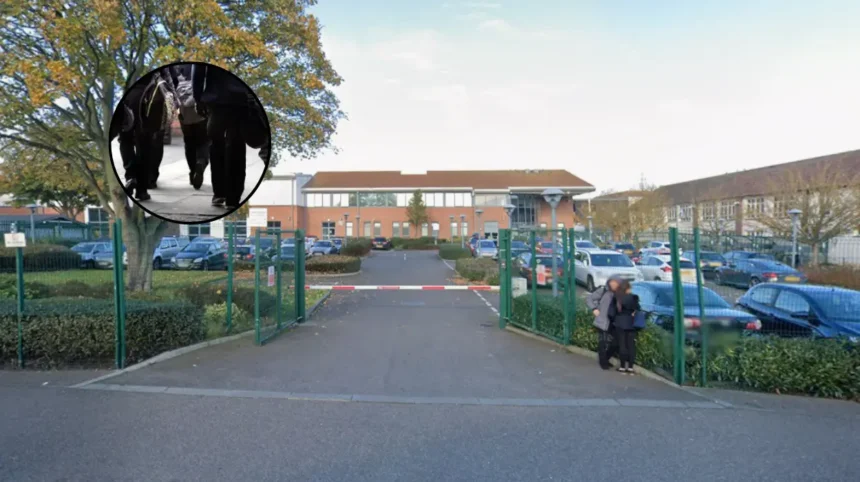
Key Points
- Ofsted inspected Welling School in February 2026 and identified six areas that needed attention, including curriculum, teaching, achievement, attendance and behaviour.
- The school’s GCSE performance remained below the national average, with 26.7 per cent of pupils achieving grade 5 or above in English and maths in 2024/25, compared with 45.4 per cent nationally.
- Ofsted said the school showed signs of improvement in some areas, but the report still pointed to ongoing weaknesses in pupils’ attendance, behaviour and outcomes.
- The school had previously been rated Requires Improvement after its October 2023 inspection.
- Welling School is an 11-18 academy in Bexley and part of The Kemnal Academies Trust.
Bexley (South London News) May 16, 2026, a secondary school has been told it still needs improvement after Ofsted found persistent weaknesses in pupils’ attendance, behaviour and achievement, while also noting some signs of progress.
What did Ofsted say about Welling School?
As reported by Ofsted, the inspection found that Welling School had six areas that were not up to standard, including the curriculum, teaching, pupils’ achievement, attendance and behaviour.
The regulator’s report said the school was showing signs of improvement, but it also made clear that key parts of its work still required attention.
Ofsted’s published information confirms the school’s overall status remains Requires Improvement.
The report also highlighted a continuing gap between Welling School’s results and the national picture.
In 2024/25, 26.7 per cent of pupils achieved grade 5 or above in English and maths, compared with 45.4 per cent nationally.
That means the school’s headline GCSE performance was well below the England average, according to Ofsted’s data.
Which areas need attention?
Ofsted said the school needed to improve curriculum design, teaching quality, achievement, attendance and behaviour.
The report also noted that expectations of behaviour around the school were variable, while attendance had improved steadily.
Even so, it said many pupils were still missing out on important learning.
The inspection findings suggest that the school is not dealing with one isolated issue, but with several linked problems.
Weak attendance can affect behaviour, and both can limit achievement if pupils miss too much learning.
That is why Ofsted often treats these areas as connected rather than separate concerns.
How strong are the results?
The clearest performance figure in the report is the English and maths GCSE benchmark.
Ofsted’s data shows Welling School at 26.7 per cent for 2024/25, below the national 45.4 per cent.
The same Ofsted page also shows the school’s 2023/24 figure at 29.3 per cent against a national 45.9 per cent, which suggests the gap has remained significant.
That performance context matters because GCSE English and maths are among the most closely watched school measures.
They are also central to post-16 study, apprenticeships and many forms of employment.
For parents and pupils, these figures are often a major indicator of how well a school is preparing students for the next stage.
What is the school’s history?
Ofsted’s record shows Welling School was judged Requires Improvement in its October 2023 inspection.
The same record shows an earlier inspection in May 2022 rated the school Inadequate.
That means the school has already been through a period of scrutiny and recovery in recent years.
The school is an academy in Welling, within the Bexley local authority, and part of The Kemnal Academies Trust.
It serves pupils aged 11 to 18 and has 1,087 pupils on roll, with a capacity of 1,850.
Those details place the latest inspection in the context of a large secondary school that is still operating below full capacity.
Why does this matter for families?
For families in Welling and the wider Bexley area, the report is important because it gives a formal assessment of standards in the local secondary sector.
Parents looking at secondary options will likely focus on behaviour, attendance, teaching quality and GCSE outcomes, all of which are central to the report.
The findings may also affect confidence in the school while it works to raise standards.
For current pupils, the practical issue is whether improvements in classroom consistency and attendance can translate into better results.
If the school succeeds, students could benefit from stronger progress and better exam outcomes.
If not, the gap with national performance may remain a concern for future cohorts.
Background of the development
Ofsted is England’s education watchdog and publishes inspection reports on schools to assess quality and standards.
Welling School’s recent inspection follows a string of earlier judgements, including Inadequate in 2022 and Requires Improvement in 2023.
The latest published data also shows that the school’s GCSE English and maths performance has stayed below national averages in recent years.
The school’s own website says it is an all-ability 11-18 comprehensive serving the local community and neighbouring boroughs.
That makes Ofsted’s findings especially relevant because the school has a broad intake and a wide age range, from Year 7 through to sixth form.
Prediction: How could this affect pupils and parents?
The most immediate effect is likely to be continued pressure on leaders to improve attendance, behaviour and teaching consistency.
If the school can strengthen those areas, pupils may see better classroom experiences and stronger exam results over time.
Parents are likely to watch closely for signs that future inspections and performance data begin to close the gap with national averages.