Key Points
- An 11-year-old boy, Jaiden Shehata, died after being struck by a train at a level crossing in Kenley, south London.
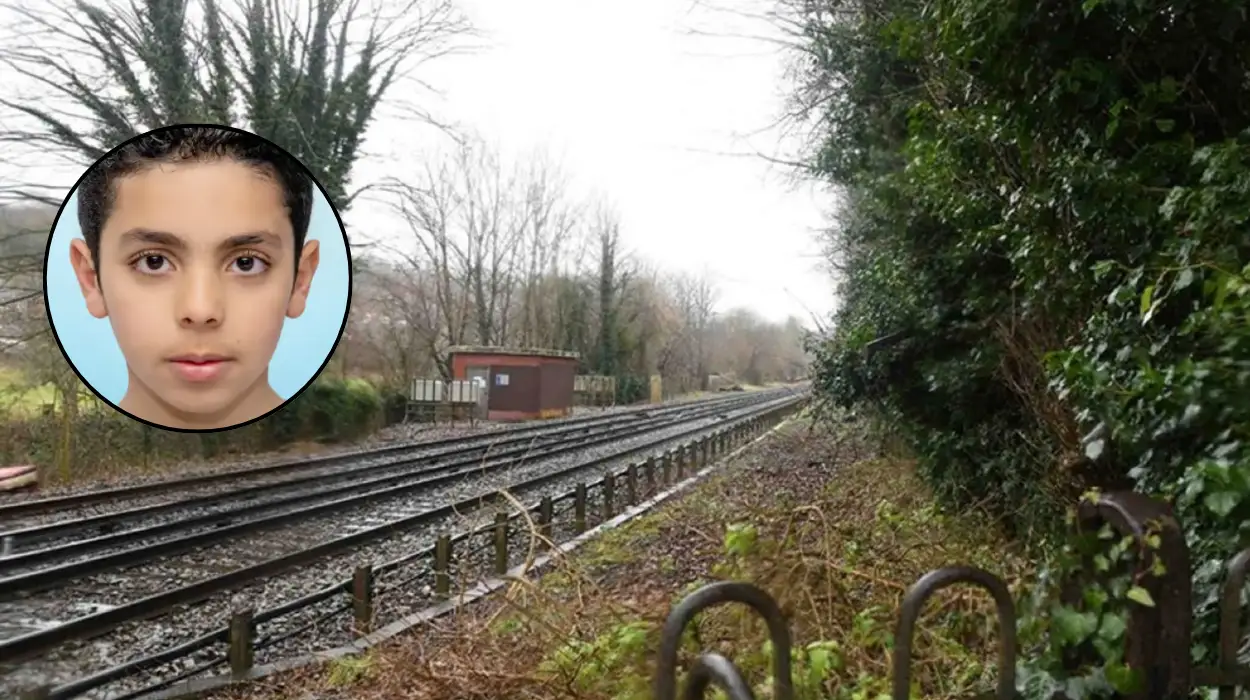
- The incident occurred on January 23 at about 8.03am on the Bourneview footpath crossing.
- Rail Accident Investigation Branch (RAIB) found Jaiden was likely distracted by a video playing on his mobile phone.
- The train driver sounded the horn and applied emergency brakes but could not avoid the collision.
- The crossing has no warning lights or barriers; users must decide when it is safe to cross.
- Network Rail risk assessments recorded six near misses and a previous fatality at the crossing, deemed a deliberate act.
- RAIB recommends introducing targeted railway safety lessons in schools and improving hazard visibility at crossings.
- Network Rail and the Rail Safety and Standards Board (RSSB) have committed to reviewing safety measures following the investigation.
What happened to Jaiden Shehata at the Bourneview footpath crossing?
As reported by the Rail Accident Investigation Branch (RAIB), an 11-year-old boy named Jaiden Shehata was tragically killed after being struck by a Southern train travelling at approximately 50mph. The incident took place on January 23 at about 8.03am at the Bourneview footpath level crossing near Kenley in south London. According to RAIB’s investigation, Jaiden was walking to school and started to cross the railway crossing when the train driver sounded the horn and applied the emergency brake. Despite this, Jaiden did not have enough time to move clear, leading to fatal injuries.
- Key Points
- What happened to Jaiden Shehata at the Bourneview footpath crossing?
- How did distractions contribute to the accident, according to the RAIB?
- What safety features does the Bourneview footpath crossing have?
- What is the history of safety incidents at the crossing?
- What recommendations has the RAIB made following their investigation?
- How have Network Rail and RSSB responded to the recommendations?
- What school did Jaiden attend and how often did he use the crossing?
How did distractions contribute to the accident, according to the RAIB?
RAIB’s detailed investigation revealed that Jaiden was likely distracted by his mobile phone at the time of crossing. CCTV footage reviewed by the investigators shows him walking towards the crossing, looking both ahead and down at a glowing object consistent with the illuminated screen of a mobile phone. His coat hood was pulled over his head, which likely further reduced his awareness. Analysis of the phone indicated that a video clip was playing at the moment of the accident, suggesting Jaiden’s focus was diverted from the railway hazards.
What safety features does the Bourneview footpath crossing have?
The RAIB report highlights the fact that the level crossing does not have warning lights or barriers—an arrangement common amongst many footpath crossings in the UK. Users of the crossing are expected to stop, look, and listen for any approaching trains before making their own assessment about whether it is safe to cross. This reliance on personal judgement places significant responsibility on pedestrians, which can be particularly challenging for younger individuals like Jaiden.
What is the history of safety incidents at the crossing?
Network Rail’s most recent risk assessment from May 2023 noted six near misses at the Bourneview footpath crossing between November 30, 2018, and February 9, 2023. Additionally, there was a single fatality at the site recorded in March 2020, but it was classified as a deliberate act. These statistics underline ongoing safety concerns at this location, though no direct causal links to the current accident were indicated beyond the risk environment.
What recommendations has the RAIB made following their investigation?
The RAIB has issued several recommendations aimed at preventing future tragedies. They have advised that curriculum setters for schools across the UK collaborate with railway infrastructure managers to introduce targeted and locally relevant railway safety education for pupils of all ages. RAIB also called for Network Rail and the Rail Safety and Standards Board (RSSB) to improve the visibility of these dangerous crossing areas, especially to distracted individuals. Furthermore, they recommended reconsidering approaches to managing risks specifically tailored for younger crossing users.
How have Network Rail and RSSB responded to the recommendations?
An RSSB spokesperson expressed condolences to Jaiden’s family and others affected, stating:
“We extend our deepest sympathies to the family, friends and all those affected by the tragic death of Jaiden Shehata.”
The spokesperson also welcomed the RAIB’s report and emphasised that ensuring safety at level crossings remains a key priority for RSSB and the rail industry as a whole. They committed to working collaboratively to consider and implement the RAIB recommendations promptly.
What school did Jaiden attend and how often did he use the crossing?
News website Inside Croydon reported that Jaiden was a pupil at the nearby Riddlesdown Collegiate secondary school. RAIB further confirmed that Jaiden had routinely used the Bourneview footpath crossing as part of his daily route to and from school since enrolling in the previous September, illustrating the crossing’s integral role in local daily life.
The tragic death of Jaiden Shehata shines a stark light on the dangers posed by railway level crossings without active safety barriers or signals. With distractions such as mobile phones widely prevalent, the incident has prompted calls for more robust safety education and enhanced physical safeguards to protect vulnerable pedestrians, especially children. The ongoing collaborative efforts of RAIB, Network Rail, RSSB, and local educational authorities reflect a committed response to improving crossing safety across the UK.