Key Points
- Bromley Council, a South London authority, has formally challenged the first-ever Care Quality Commission (CQC) assessment of its adult social care services after receiving a ‘Requires Improvement’ rating with a score of 56.
- The council cited “scoring inconsistencies and omissions of agreed factual corrections” in the report, as well as “ambiguity” about the weighting applied by the CQC to evidence from different sources.
- The CQC report was “broadly consistent with the council’s own understanding of strengths and areas for development,” according to Bromley Council.
- A report to Bromley Council’s Adult Care and Health Policy Development and Scrutiny Committee on February 3 discussed the CQC report, but the item was withdrawn from the agenda after the report was removed from the CQC website the previous day due to an error.
- The original published report contained an error, leading to its temporary removal from the CQC website while amendments were made; during this time, Bromley Council requested a review of the report and its ‘Requires Improvement’ score.
- All local authorities inspected by the CQC can request a review of their ratings after publication if they have new evidence; this is separate from the factual accuracy stage and cannot be requested solely due to disagreement with judgements or ratings.
- The review is conducted by an independent assessment team that did not perform the initial assessment, ensuring fairness.
- It is not currently known how long the CQC will take to conduct the ratings review.
- The CQC has stated it is unable to comment while the review is ongoing.
- Local Democracy Reporting Service (LDRS) understands the sequence of events leading to the challenge.
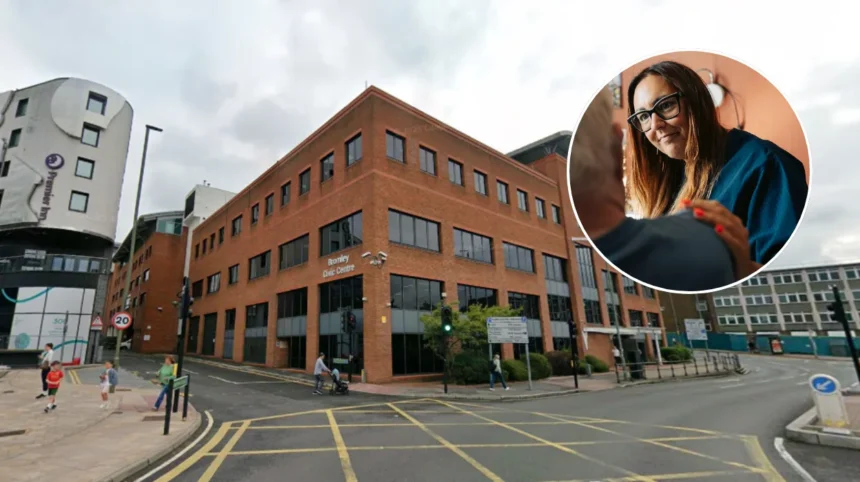
Bromley (South London News) February 10, 2026 – Bromley Council has launched a formal challenge against the Care Quality Commission’s (CQC) inaugural assessment of its adult social care services, contesting the ‘Requires Improvement’ rating and accompanying score of 56. The South London authority argues that the report features scoring inconsistencies, omissions of agreed factual corrections, and ambiguities in how evidence from various sources was weighted. This development follows the temporary removal of the report from the CQC website due to an identified error, prompting the council to seek a review.
- Key Points
- What Triggered Bromley Council’s Challenge to the CQC Rating?
- Why Was the CQC Report Removed from the Website?
- How Does the CQC Review Process Work for Local Authorities?
- What Is the ‘Requires Improvement’ Rating and Its Score of 56?
- Who Is Involved in This Dispute?
- What Are the Broader Implications for Adult Social Care in South London?
- Has Similar Challenges Occurred with Other Councils?
- What Happens Next in the CQC Review?
What Triggered Bromley Council’s Challenge to the CQC Rating?
The challenge stems from Bromley Council’s dissatisfaction with specific aspects of the CQC’s evaluation process. As detailed in coverage by MyLondon, the council described the report as “broadly consistent with the council’s own understanding of strengths and areas for development” but highlighted critical flaws. These include “scoring inconsistencies and omissions of agreed factual corrections,” alongside some “ambiguity” about the weighting applied by the CQC to evidence received from different sources.
A key report prepared for Bromley Council’s Adult Care and Health Policy Development and Scrutiny Committee, scheduled for discussion on February 3, encapsulated these concerns. However, the agenda item was abruptly withdrawn after the CQC removed the report from its website the day prior. The Local Democracy Reporting Service (LDRS), as cited in MyLondon’s article, understands that the original published report contained an error, necessitating its temporary withdrawal for amendments.
During this window, Bromley Council seized the opportunity to request a formal review of both the report and its ‘Requires Improvement’ score. This action aligns with standard CQC procedures, where local authorities may submit new evidence post-publication to prompt reassessment.
Why Was the CQC Report Removed from the Website?
The CQC’s decision to pull the report was directly linked to an error in its content. According to insights from the LDRS, as reported by MyLondon, the document was temporarily taken down from the CQC website while the identified error was being rectified. This removal occurred just before the February 3 committee meeting, leading to the withdrawal of the discussion item from Bromley Council’s agenda.
No further details on the nature of the error have been publicly disclosed in available coverage. The incident underscores the CQC’s commitment to accuracy in its assessments, particularly as these represent the first wave of evaluations for local authority adult social care services under the new framework.
How Does the CQC Review Process Work for Local Authorities?
The CQC operates a structured mechanism for post-publication reviews, accessible to all inspected local authorities. MyLondon’s reporting clarifies that councils can request a review when new evidence emerges after an assessment has been published. Crucially, this process is distinct from the initial factual accuracy stage and cannot be invoked merely because an authority disagrees with the judgements or overall rating.
To ensure impartiality, the review is handled by an independent assessment team unrelated to the original evaluation. This framework aims to maintain fairness and objectivity in revisiting ratings. While the exact timeline for Bromley’s review remains unknown, the CQC has confirmed it cannot provide commentary during the ongoing process.
As reported by MyLondon without a specific byline, the CQC stated:
“It is not currently known how long it will take the CQC to conduct the ratings review. The CQC has said it is unable to comment whilst the review is ongoing.”
What Is the ‘Requires Improvement’ Rating and Its Score of 56?
The ‘Requires Improvement’ designation reflects the CQC’s judgement that Bromley Council’s adult social care services fall short of ‘Good’ or ‘Outstanding’ standards but are not at the ‘Inadequate’ level. The specific score of 56 was assigned in this first-ever assessment, marking a significant milestone in the regulator’s expanded oversight of local authorities.
Bromley Council’s challenge targets this score, alleging inconsistencies in its calculation. The council’s position, as outlined in the committee report covered by MyLondon, maintains that while the report acknowledges strengths, procedural lapses undermine its validity.
This rating carries implications for service delivery, funding, and public perception, prompting the council’s proactive response.
Who Is Involved in This Dispute?
Key players include Bromley Council, representing the South London borough, and the Care Quality Commission as the independent regulator of health and social care in England. The Adult Care and Health Policy Development and Scrutiny Committee within Bromley Council was set to scrutinise the report, though the session was deferred.
The LDRS, a specialist in local government reporting, provided critical understanding of the timeline and error, as integrated into MyLondon’s coverage. No individual councillors or CQC officials are named in the primary reporting, maintaining focus on institutional actions.
What Are the Broader Implications for Adult Social Care in South London?
This challenge highlights ongoing tensions between local authorities and regulators amid heightened scrutiny of adult social care. Bromley Council’s stance—that the report is mostly aligned with its self-assessment—suggests a nuanced picture: recognition of developmental areas but rejection of perceived procedural flaws.
For residents relying on these services, the review process offers a pathway to potential rating adjustments, ensuring evidence-based evaluations. The incident also draws attention to the CQC’s evolving role, with this being its inaugural local authority assessment under the updated regime.
As MyLondon reports, the episode reflects broader efforts by councils to hold regulators accountable, potentially setting precedents for future disputes.
Has Similar Challenges Occurred with Other Councils?
While the provided coverage centres on Bromley, the CQC’s review mechanism is uniformly available, implying other authorities may pursue similar actions. No parallel cases are detailed in MyLondon’s article, but the standardised process suggests this could become a common recourse for contested ratings.
The emphasis on new evidence and independent review teams positions these challenges as safeguards rather than routine appeals, distinguishing them from mere dissatisfaction.
What Happens Next in the CQC Review?
The timeline for resolution remains uncertain, with the CQC declining comment during the process. Bromley Council awaits the independent team’s findings, which could affirm, adjust, or overturn the ‘Requires Improvement’ rating and score of 56.
Should new evidence sway the outcome, it may prompt revisions to the report, reinstating it on the CQC website with updates. Meanwhile, the council continues to address identified areas for development, balancing challenge with service improvements.
This saga exemplifies the rigorous oversight of adult social care, where transparency and accountability intersect. Bromley Council’s actions ensure that factual accuracy and fair weighting underpin public trust in these vital services.