Key Points
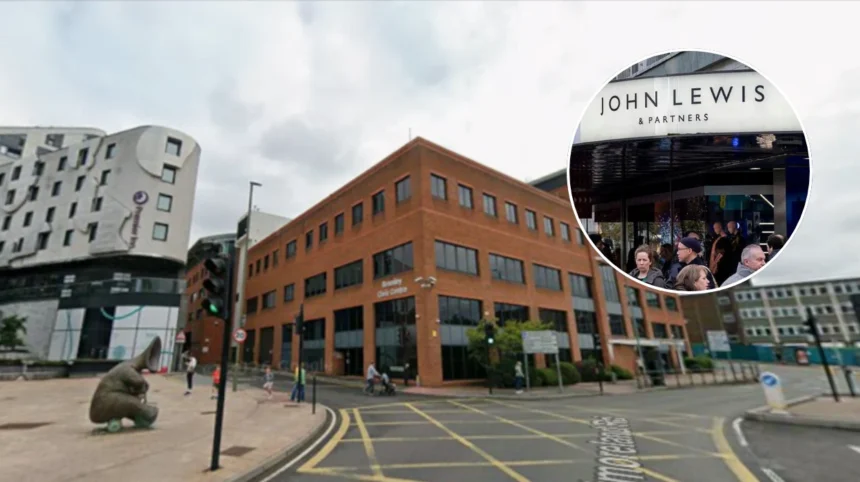
- Bromley Council approved plans in July 2024 for John Lewis Partnership (JLP) to build 353 rental flats above the existing Waitrose store on Masons Hill in Bromley town centre, South London.
- The development includes three towers: 24-storey, 19-storey, and 10-storey buildings, alongside a refurbished and extended Waitrose store retaining over 70% of customer parking.
- About 30 of the 353 homes (roughly 10%) are designated as affordable, with priority for local residents in lettings.
- JLP announced on 25 February 2026 its withdrawal from the build-to-rent sector due to higher interest rates, inflationary pressures, and a cautious property market, scrapping a £500m programme including sites in Bromley, West Ealing (428 flats), and Reading (170 flats).
- Despite JLP’s exit, the Bromley plans could proceed via sale to property developers after final negotiations with the council, as confirmed by multiple sources.
- Local opposition included Cllr Julie Ireland, who argued for well-designed homes at sensible heights fitting surroundings.
- Supporters like Cllr Alexa Michael highlighted the scheme’s contribution to housing supply and economic boost on brownfield land.
- Construction was scheduled to start in 2025 over 45 months, but now uncertain pending site future.
- JLP’s spokesperson attributed the retreat to a changed financial environment since 2020 plans, refocusing on core retail.
- The Waitrose store will continue operating unaffected.
Bromley (South London News) February 27, 2026 – Approved plans to construct 353 rental flats above the Waitrose supermarket on Masons Hill could still advance despite the John Lewis Partnership’s recent announcement to exit the housebuilding sector, as the sites may be sold to other developers.
- Key Points
- What Triggered John Lewis’s Exit from Housebuilding?
- When and How Was the Bromley Plan Approved?
- What Does the Proposed Development Include?
- Why Are Locals Divided on the Plans?
- What Happens Next for the Bromley Site?
- How Does This Fit Broader Housing Challenges?
- What Are the Implications for West Ealing and Reading?
The employee-owned retailer confirmed its withdrawal from build-to-rent ventures, citing unsustainable economics in the current high-interest-rate climate. Bromley Council’s July 2024 approval for the ambitious project remains in place, sparking discussions on its potential handover.
What Triggered John Lewis’s Exit from Housebuilding?
John Lewis Partnership ditched its £500m build-to-rent initiative after deeming the model unviable amid elevated borrowing costs and weaker investor demand. As reported by Construction Enquirer’s unnamed correspondent, a JLP spokesperson stated:
“Our rental property ambition was based on a very different financial environment: one with more stable investment returns, lower borrowing costs and more affordable costs to build homes. Unfortunately, the current climate – higher interest rates, inflationary pressures and a more cautious property market – has meant the model no longer meets the Partnership’s investment criteria.”
The decision, announced around 25-26 February 2026, ends diversification efforts launched in 2020, with JLP now prioritising its core John Lewis and Waitrose retail operations. Investment manager abrdn had partnered on the venture, but rising build costs undermined progress.
Property118 coverage echoed this, noting the exit spans Bromley, Reading, and West Ealing schemes designed for large-scale rental housing.
When and How Was the Bromley Plan Approved?
Bromley Council granted planning permission in July 2024 for the redevelopment next to Bromley South railway station. As detailed by London News Online, the scheme optimises brownfield land at the town centre’s edge.
Cllr Alexa Michael, chairwoman of the Development Control Committee, said:
“This development will make an essential contribution of much-needed housing in Bromley, while also providing a significant boost to the local economy. The proposal represents a clear net benefit to the borough and enhances local housing supply, which optimises land use on this highly-accessible brownfield site at the edge of Bromley’s town centre.”
The consultation drew 250 responses, with the majority supportive despite opposition from Bromley Town Ward councillors. Planning officers had recommended approval ahead of the 25 July 2024 committee meeting, per Bromley Liberal Democrats’ report.
Originally, works were set to commence between January and March 2025, spanning 45 months to completion by late 2028. Housing Today noted JLP would own and manage the properties, prioritising locals.
What Does the Proposed Development Include?
The project features 353 homes across three towers: a 24-storey block, 19-storey, and 10-storey structure above the supermarket. Time Out described it as including a “state-of-the-art Waitrose” store, public green spaces, a cafe, amenity areas for community groups and schools, plus cycle and pedestrian links to the high street.
More than 70% of customer parking will be retained post-refurbishment and extension of the store. Around 30 units qualify as affordable, comprising under 10% of the total.
CGI renderings depict a modern integration of residential and retail spaces.
Why Are Locals Divided on the Plans?
Opposition centred on design, height, and fit with surroundings. As reported by the Evening Standard’s unnamed journalist, Cllr Julie Ireland, who opposed approval under the Conservative-led council, stated:
“Bromley does need new homes — but they must be the right homes in the right places. New development should be well designed, at a sensible height, and fit comfortably with its surroundings.”
GB News highlighted resident concerns in Bromley over unmet affordable housing expectations initially. Similar issues arose in Reading regarding local services strain.
Yet, council spokespersons emphasised net benefits, with broad consultation support.
What Happens Next for the Bromley Site?
Plans could proceed if sold to developers post-council negotiations, as per Infrastructure Now and Construction Enquirer. John Lewis will finalise talks before options like sale. PropertyWire confirmed headline consents for all sites, with Bromley among them.
The Waitrose store remains operational unaffected. JLP is also exiting property management upon contract ends.
How Does This Fit Broader Housing Challenges?
The saga underscores London’s housing pressures amid empty homes nationally. BBC News reported estimates of over a million unoccupied homes in England, with leaders urging action. Bromley’s project aimed to address supply shortages via brownfield reuse.
JLP’s retreat reflects sector-wide woes: London’s development activity has plunged with funding hurdles. Nonetheless, the approved permissions position Bromley for potential continuation under new ownership.
What Are the Implications for West Ealing and Reading?
Parallel schemes face identical fates: 428 flats in four high-rises above West Ealing Waitrose and 170 on Reading’s former industrial site (£70m). GB News noted consents for roughly 1,000 homes total across sites.