- Project: £1m restoration of David Bowie’s childhood home in Bromley.
- Location: Bromley, childhood home of David Bowie.
- Funding: £1 million dedicated to full restoration.
- Purpose: Preserve and restore iconic music heritage site.
- Status: Project actively underway with key works planned.
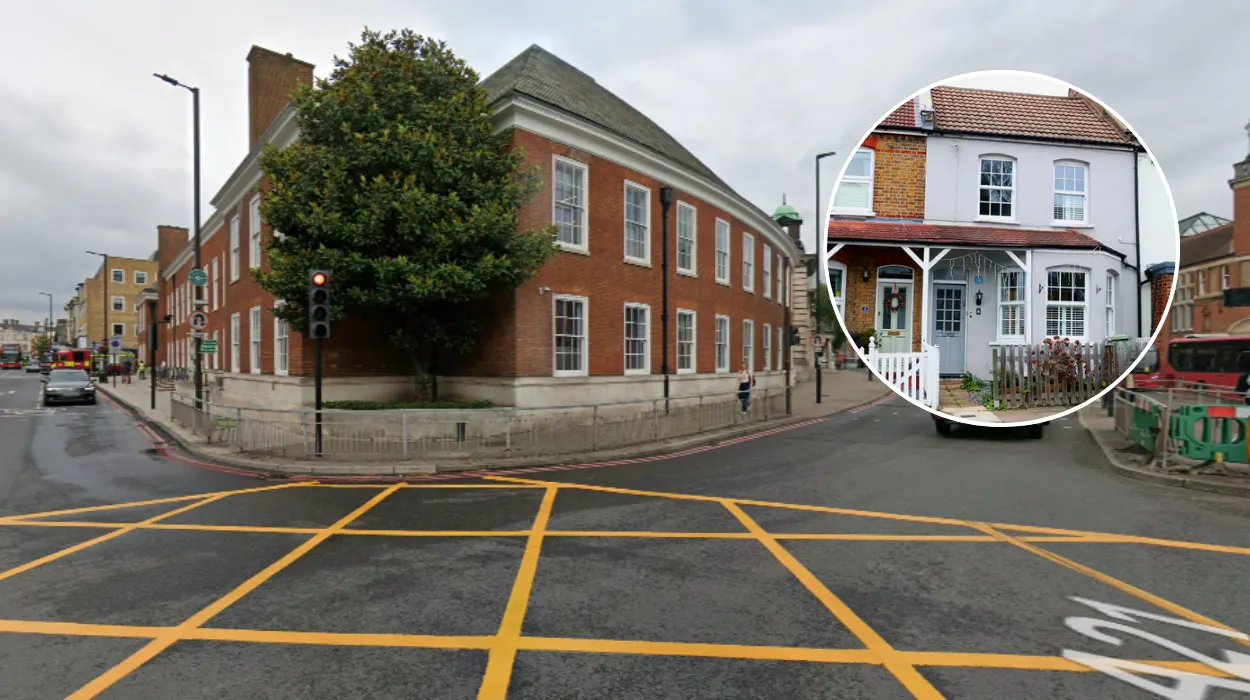
The main distinction between No. 4 Plaistow Grove in Bromley and tens of thousands of other suburban terraced houses from the 20th century is that David Jones and his family grew up there between the ages of eight and twenty.
The fact that Jones went on to become David Bowie has convinced the Heritage of London Trust to purchase 4, Plaistow Grove in order to restore it to the style that Jones/Bowie may have recognized when he lived there in the 1960s and create an “immersive” visitor experience that will open next year.
On the anniversary of Bowie’s birth in Brixton in 1947, the advertisement made history. He passed away ten years ago hereafter at the age of sixty- nine.
Bowie recalled his time growing up in his bedroom in Plaistow Grove:
“I spent so much time in my bedroom. It really was my entire world. I had books up there, my music up there, my record player. Going from my world upstairs out onto the street, I had to pass through this no-man’s-land of the living room.”
Throughout his career, Bowie would have 11 No. 1 albums and five UK No. 1 singles.
The property is close to the Edwardian “Bowie bandstand,” which was renovated in 2024 by Heritage of London Trust and Bromley Council after the late musician played there in 1969.
The Bowie property is believed to be the first of its kind in south London, but similar historical projects at the former residences of music legends like Jimi Hendrix in Mayfair and John Lennon in Liverpool have previously been completed with varying degrees of success.
Naturally, Bromley lad Bowie came up with the expression “So fucking Croydon” while attending Croydon College of Art.
Geoffrey Marsh, the curator of the V&A’s “David Bowie Is” exhibition, said:
“It was in this small house, particularly in his tiny bedroom, that Bowie evolved from an ordinary suburban schoolboy to the beginnings of an extraordinary international stardom.,”
explains Marsh.”
The Bowie residence, museum, and shrine will host workshops.
As part of a makeover that would ultimately cost about £1 million, the house is estimated to have sold for somewhere in the mid-£400,000s.
The repair will be partially funded by a £500,000 grant that the project obtained from the Jones Day Foundation. Additionally, the Trust is starting a public fundraising campaign.
“David Bowie was a proud Londoner. Even though his career took him all over the world, he always remembered where he came from and the community that supported him as he grew up,”
Dr Nicola Stacey, the director of the Heritage of London Trust, said.
“It’s wonderful to have this opportunity to tell his story and inspire a new generation of young people and it’s really important for the heritage of London to preserve this site.”
What archive items will be displayed in Bowies bedroom?
No specific library particulars have been intimately detailed for display in David Bowie’s restored nonage bedroom at 4 Plaistow Grove, Bromley, as the £1m Heritage of London Trust design emphasises faithful 1960s recreation over named vestiges.
The upstairs bedroom where Bowie( also David Jones) spent hours with his record player, books, and music, composing” Space Oddity” will use a preliminarily unseen library of family prints, V&A records, and period documents to recreate authentic rudiments like modestmid-century furnishings, flowery wallpapers, and a single bed.
Watchman Geoffrey Marsh highlights the room’s part in Bowie’s elaboration from suburban schoolboy to stardom; anticipated displays include replica treatises, Little Richard 45s, art inventories from his Croydon College days, and a Dansette record player mirroring his teen sanctuary.