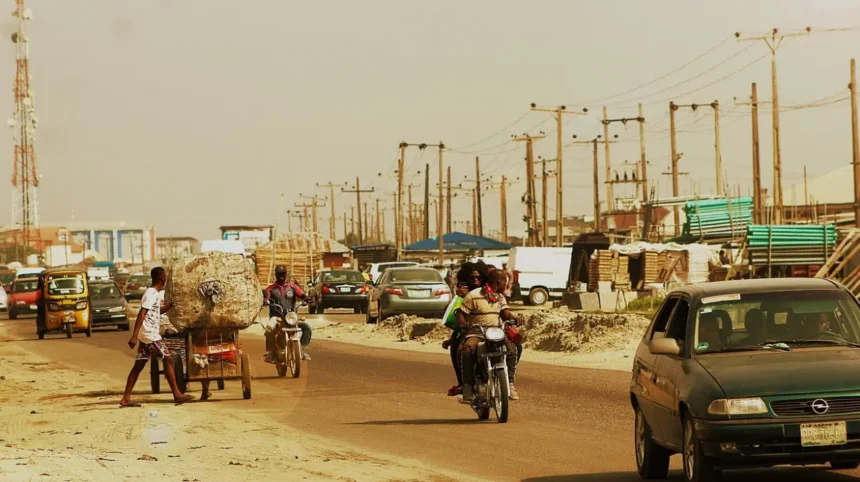
On a sun-bleached day in Nigeria’s third largest city, Ibadan, a future delicacy vendor holds a microphone to various residents discussing their predictions on the future of palm oil prices.
The video, first published on March 7th, 2023, offers a rare insight into the backend of an underground delicacy trade that saw arrests in late December of 2025, with seizures of frozen, whole pangolins reported by the Food Standards Agency.
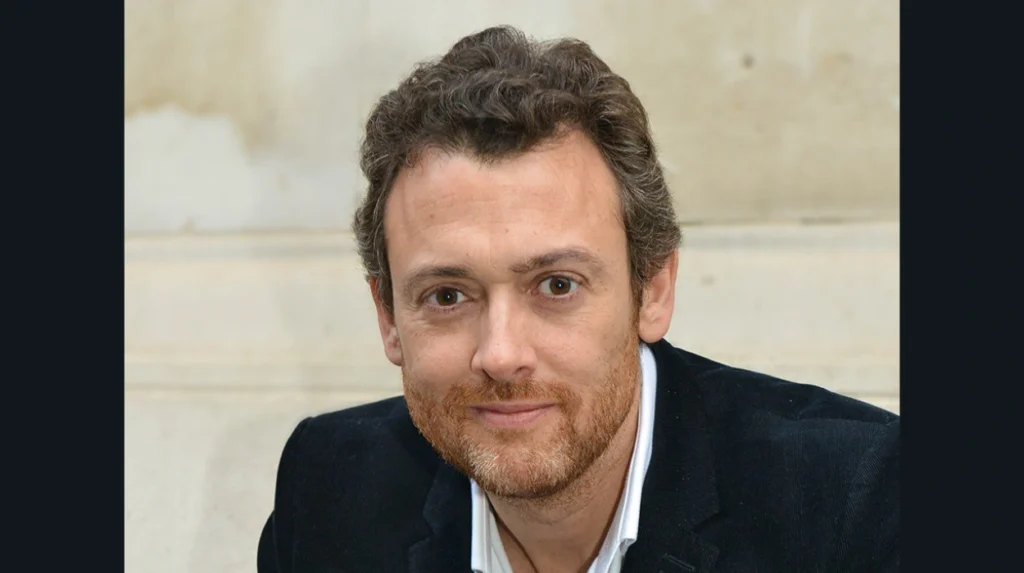
One expert, Professor Richard Sullivan, Director for the Institute of Cancer Policy at King’s College London, warned of threats to both human health and British livestock, originating from a network of loose vendors described as an “uncontrollable” source.
There’s been past reports of endangered species being part of the bushmeat trade too, Richard Sullivan added that specific communities wanted specific foodstuffs, leading to a diverse trade that involves both meat and veg.
With regard to illicit meat trade, Richard Sullivan said:
“We know it’s been going up because the other factor is what we see in urban areas, where we get specific communities that are looking for particular foodstuffs from their origin countries.”
Sullivan added:
“So we see a lot of this in Southeast London, for example, with Congolese communities, Nigerian diaspora, et cetera.”
South London News found social media accounts across TikTok and Instagram that advertised in-person pickups in Croydon and Leceister too.
Throughout South London News’ research, we found evidence of social media accounts openly advertising mail-order shipping from sub-Saharan Africa. We traced the history of one vendor specialising in Nigerian delicacies, Baroh Food Mart, over the last two years to see how packages of bushmeat were entering the UK.
As reported by several other outlets such as the Londoner, and Countryside Alliance, social media is commonly used by vendors targeting diaspora communities to advertise their products, although Sullivan confirmed that community butchers can also be involved.
Richard Sullivan said:
“Some of the communities are quite homogenous so they tend to have one community buying from that shop, others, it’s quite mixed. You’ll get particular types of butchers who are serving, not just African communities or African heritage, but also communities of Caucasians because they’re living there next to it.”
Baroh Food Mart advertised a range of products including blended crayfish, stockfish, dried periwinkles, dried snails, dried catfish, dried cow meat, fresh goat meat, panla fish and fresh snails.
On the various products offered, Richard Sullivan said:
“They have different kinds of disease profiles and that’s the issue. This is the problem with different types.”
Sullivan added:
“Some in theory have much higher rates than others of particular disease profiles. But the general factor [is], all meats are potentially dangerous if they haven’t been checked and vetted. Even goats carry weird and wonderful viruses.”
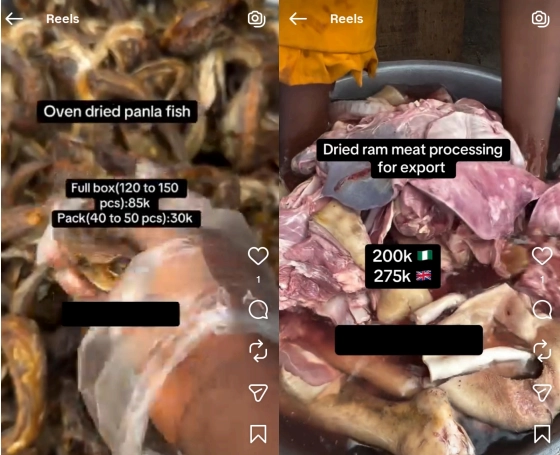
Once a client has selected their choice of products, there’s various methods vendors can use to get fresh meat from Africa to the UK, with the most popular option being air freight. Baroh Food Mart advertised previous tracking numbers from London to Lagos, and from Amsterdam to Baltimore – which the courier confirmed to us were genuine.
Richard Sullivan said:
“Fresh butchered meat that’s just been frozen is now more of a risk than it was […] 10, 15 years ago when it was prohibitively expensive because of the cold chain. But there’s much better cold chains now coming in from major air hubs.”
Baroh Food Mart told us shipping frozen meat would take three days at a cost of 26,000 Nigerian Naira or roughly 15 pounds.
The issue with individuals or fragmented companies shipping their own products could be curbed by testing at airports and ports, although Sullivan dismissed the idea of air freight being more secure in terms of detection.
Sullivan added:
“They do do testing ad-hoc really, what they’re after is weapons, drugs, […] they’re set up to find that sort of stuff.”
Rapid testing would involve a careful balance of having the resources and newest technology, although Sullivan described the current problem at points of entry being the length of time needed for laboratory tests.
In February, there were record levels of illegally imported meat found at the Port of Dover, with a report from the Environment, Food and Rural Affairs Committee (EFRA) stating that a rise in illegal meat smuggling posed an increasing threat to the UK in September of last year.
Richard Sullivan said:
“Ports have been saying this for a while […] you have to have the resources to do the testing when stuff is coming across borders. And at the moment, that money just hasn’t been made available.”
Sullivan added:
“They’re threatening the general [public], their health directly and generally potentially bringing novel viruses. So I think that’s one useful [thing], which is [if] you actually deal with the demand side. And the second thing is you do need to uplift the port [authority] for [their] ability to do rapid testing to see what on earth is coming in, but it’s very hard to deal with the source. Sources are… uncontrollable.”
The loose network of vendors and lack of regulation in sub-Saharan Africa would be near impossible to stop, according to Sullivan, who added that reducing demand within diaspora communities by increasing awareness could be the key to preventing the illicit trade. Although, working within local communities is a complicated issue, especially when deciding how campaigns work in practice.
Richard Sullivan said:
“It’s quite complicated from different [angles …] sociology, anthropology, it’s been done a bit – which communities do and don’t use. There’s no truth as written, there’s always kind of first generation people moving or older parents, that’s not completely true, depending on what you’re looking at.”
Sullivan added:
“It’s an oddity, but getting into that kind of culture and engineering, and reducing the use of that sort of meat, and moving on to other types of meat is quite hard because you develop a particular taste for certain things.”
The possible “massive economic impact” of the illicit meat trade is of particular concern to UK’s livestock, which has seen foot and mouth outbreaks in the past that devastated cattle.
Richard Sullivan said:
“Go and look at the last time we had a foot and mouth outbreak. It had a massive economic impact […] It’s terrible.”
Sullivan assured the risk to human health was unlikely, with less risk of any novel viruses causing outbreaks in the UK as opposed to Africa (or their source country) first, although the biggest risk factor for health was bushmeat.