Key Points
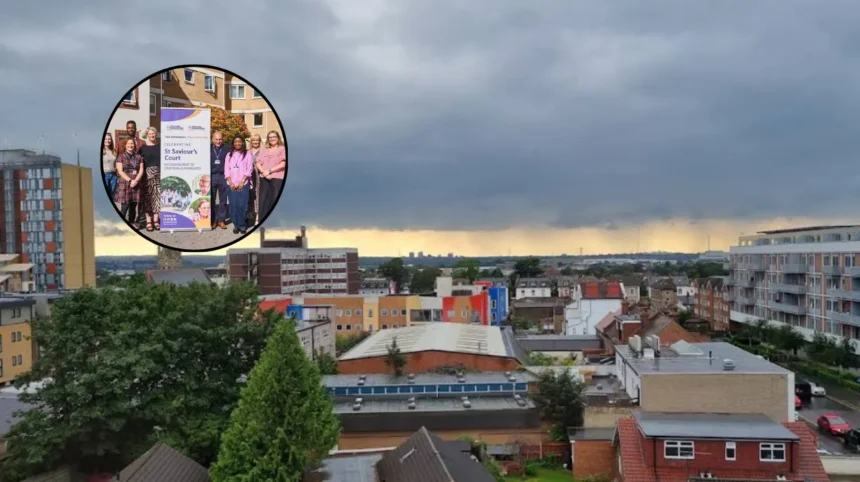
- Major Acquisition: Croydon Almshouses has officially acquired St Saviour’s Court, a sheltered housing complex located on Old Lodge Lane in Purley.
- Date of Effect: The official transfer of ownership and operational responsibility took effect on October 1.
- Expanded Capacity: The merger brings together St Saviour’s Court (53 units) and the Elis David Almshouses in Waddon (57 units) under a single organizational umbrella.
- Historic Legacy: Founded in 1447 by London merchant Elis David (Elias Davy), Croydon Almshouses predates the famous Whitgift Almshouses and stands as Croydon’s oldest active charity.
- New Operational Slogan: The charity has launched a unifying campaign under the banner “Two almshouses. One community” to celebrate the integration of the Purley site.
- Recent Property Changes: The acquisition follows the charity’s divestment of Mary Tate’s Almshouses in Mitcham, which was disposed of just over a year prior.
Purley (South London News) October 14, 2026 – Croydon Almshouses, the oldest registered charity in the borough, has formally expanded its social housing portfolio through the strategic acquisition of the St Saviour’s Court sheltered housing facility on Old Lodge Lane in Purley. The transaction, which officially took effect on October 1, unifies two distinct retirement facilities under a shared administration, bringing together 53 purpose-built apartments in Purley alongside the existing 57-flat complex at Elis David Almshouses on Duppas Hill Terrace in Waddon. Charity leadership confirmed that while both properties will retain their individual character, history, and name, the consolidation is designed to secure long-term operational resilience and enhance dignified living standards for elderly residents facing economic hardship.
- Key Points
- What is the Significance of Croydon Almshouses Acquiring St Saviour’s Court?
- How Does St Saviour’s Court Compare to the Existing Waddon Property?
- What Are the Key Features of St Saviour’s Court in Purley?
- What Are the Structural Details of Elis David Almshouses in Waddon?
- Who Founded Croydon Almshouses and What Is Its Historical Background?
- How Does the Charity Differ From the Whitgift Almshouses?
- When Was the Charity Originally Established?
- What Recent Portfolio Changes Preceded the Purley Acquisition?
- Background of the Purley Sheltered Housing Development
- Prediction: How This Development Can Affect Local Residents and Housing Stakeholders
What is the Significance of Croydon Almshouses Acquiring St Saviour’s Court?
The integration of St Saviour’s Court into the Croydon Almshouses charity represents a major reorganization of local sheltered housing resources within South London. According to public operational statements issued by Croydon Almshouses, the transfer marks an “important new chapter” for the borough’s oldest philanthropic institution and the vulnerable seniors it serves. By bringing the Purley facility under its corporate management, the charity significantly enhances its capacity to offer secure, independent accommodation to over-65s impacted by financial insecurity.
Under the unified operational model, the charity has launched the official slogan “Two almshouses. One community” to underline its commitment to maintaining cohesive service standards across both geographic locations. Management confirmed that despite the unified governance framework, neither location will lose its local identity. Public declarations from the charity affirmed that “while St Saviour’s Court and Elis David Almshouse will each retain their own identity, history and character, they are now part of Croydon Almshouses community.”
How Does St Saviour’s Court Compare to the Existing Waddon Property?
The two housing sites brought together under this acquisition offer substantial residential capacity, though they originate from different eras of development.
What Are the Key Features of St Saviour’s Court in Purley?
Constructed relatively recently in 2006, the retirement housing development at St Saviour’s Court was originally established to cater to senior citizens aged over 65 originating from the Southwark area. Built over four floors, the Old Lodge Lane building contains 53 self-contained one-bedroom and two-bedroom flats designed specifically for modern eldercare needs and step-free accessibility.
What Are the Structural Details of Elis David Almshouses in Waddon?
By contrast, the property previously operating solely as the Elis David Almshouses consists of 57 purpose-built self-contained flats situated at Duppas Hill Terrace in Waddon. Designed with a specific mission to alleviate social deprivation among older citizens, the Waddon site focuses on “enabling residents impacted by poverty to live with dignity and independence” within a structured communal setting. Combined, the two facilities now allow Croydon Almshouses to oversee 110 purpose-built sheltered units across the borough.
Who Founded Croydon Almshouses and What Is Its Historical Background?
To understand the institutional framework behind this acquisition, it is necessary to examine the deep historical roots of the organization, which often causes confusion with other local philanthropic entities in the region.
How Does the Charity Differ From the Whitgift Almshouses?
Local historians and charity representatives frequently note that Croydon Almshouses should not be confused with the Whitgift Almshouses, another prominent historical foundation situated in Croydon town centre. While Archbishop John Whitgift established his famous hospital in the late 16th century, Croydon Almshouses possesses an even older origin story that predates the famous Elizabethan prelate by more than 150 years.
When Was the Charity Originally Established?
Croydon Almshouses traces its documented history back to 1447, when it was established by Elis David (historically recorded in early documents as Elias Davy). David was an influential citizen and prominent merchant operating within the City of London who sought to establish a permanent community of care for the destitute elderly. His initial foundation was centred directly near Croydon Parish Church (now Croydon Minster), establishing a centuries-long tradition of civic relief that continues through to the modern acquisition of the Purley site.
What Recent Portfolio Changes Preceded the Purley Acquisition?
The purchase of St Saviour’s Court comes during a period of active estate restructuring for the charity. Public records confirm that it is little more than a year since Croydon Almshouses disposed of another historical asset within its portfolio: Mary Tate’s Almshouses, situated in nearby Mitcham. The strategic divestment of the Mitcham property and the subsequent acquisition of the modern Purley facility illustrate an evolving asset management strategy aimed at consolidating modern, high-density residential facilities that offer sustainable operational costs for the charity moving forward.
Background of the Purley Sheltered Housing Development
Almshouses represent one of the oldest forms of subsidized housing in the United Kingdom, traditionally funded by private charitable trusts or livery companies to provide dwelling spaces for elderly individuals who can no longer afford private rent or property maintenance. Across Greater London, historical almshouses have increasingly faced structural challenges due to the costs associated with maintaining ancient, listed buildings while complying with contemporary health, safety, and accessibility standards required for elderly residents.
In the Borough of Croydon, social housing providers and care charities have experienced growing pressure due to demographic shifts, characterized by an aging local population and rising living costs across South London. The acquisition of St Saviour’s Court by Croydon Almshouses reflects a broader trend of charity consolidation within the social care sector. Newer facilities like St Saviour’s Court, built in 2006 with multi-floor layouts and modern insulation standards, offer significantly lower maintenance overheads compared to medieval or Victorian structures. This acquisition strategy enables long-standing charitable trusts to re-invest their capital reserves into scalable assets, ensuring that historical endowments founded in the 15th century remain financially solvent and functional in the 21st century.
Prediction: How This Development Can Affect Local Residents and Housing Stakeholders
The acquisition of St Saviour’s Court by Croydon Almshouses is likely to yield several distinct direct and indirect effects across key stakeholder groups in the local community:
- For Current and Prospective Residents: Residents at St Saviour’s Court are expected to benefit from enhanced operational stability and access to the deep community support networks maintained by Croydon Almshouses. Because the charity specializes strictly in elderly poverty relief and independent living, tenants will benefit from long-term security of tenure under an organization whose core purpose is charitable care rather than commercial property management.
- For the Local Authority (Croydon Council): The consolidation creates a stronger, better-capitalized housing provider operating within the borough. As local councils face severe fiscal constraints regarding direct social housing provision, well-funded charitable entities like Croydon Almshouses help absorb local demand for senior social housing, easing pressure on council waiting lists for specialized elderly accommodation.
- For the Broader South London Community: The acquisition sets a operational precedent for historical charities managing legacy assets in South London. By successfully transitioning capital away from older outlying properties (such as the former Mitcham site) into larger modern developments in Purley and Waddon, Croydon Almshouses demonstrates a viable blueprint for how medieval foundations can secure their financial future while expanding their geographic footprint within the local area.