Key Points
- A planning conditions appeal for two homes in Croydon has been dismissed by Inspector S F Barnes on 24 November 2026.
- The appeal concerned the partial demolition and conversion of an existing outbuilding into two homes on Ashburton Road, within the East India Estate Conservation Area.
- Croydon Council granted planning permission for the conversion on 12 March 2026.
- The applicant later submitted one combined application seeking approval of details under six planning conditions.
- The conditions covered construction logistics, external materials, smart glazing, storage, landscaping and waste.
- Croydon Council refused the combined application on 4 June 2026 because of information provided for two of the six conditions.
- The Inspector limited the substantive appeal assessment to condition 3, concerning the construction logistics plan, and condition 4, concerning external materials.
- The Inspector accepted the construction logistics details submitted by the appellant.
- The appeal nevertheless failed because the proposed window materials and colours were not adequately identified in the original application.
- The Inspector found that additional information supplied through the appellant’s costs claim could not be used to resolve deficiencies in the planning appeal.
- The appellant’s costs claim was refused.
Croydon (South London News) November 2026 — A planning conditions appeal concerning the conversion of an outbuilding into two homes on Ashburton Road in Croydon has failed after a Planning Inspector found that the proposed window specifications remained ambiguous.
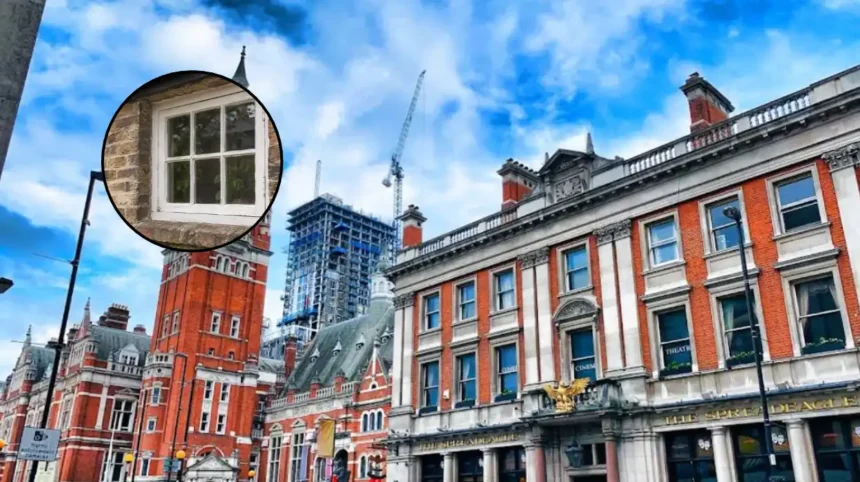
Inspector S F Barnes dismissed the appeal on 24 November 2026. The decision concerned an outbuilding conversion within the East India Estate Conservation Area, an area recognised as a heritage asset.
As reported by Planning Geek, the appeal arose after Croydon Council granted permission on 12 March 2026 for the partial demolition and conversion of an existing outbuilding into two homes. The applicant subsequently made one application seeking approval of details required under six separate planning conditions.
Those conditions related to:
- Construction logistics
- External materials
- Smart glazing
- Storage
- Landscaping
- Waste
Croydon Council refused the combined application on 4 June 2026. However, the council did not identify problems with all six conditions. Instead, it refused the application because of the information provided for two conditions.
The Inspector therefore confined the substantive assessment of the appeal to condition 3, which concerned the construction logistics plan, and condition 4, which concerned external materials.
What Did the Inspector Accept?
The Inspector accepted the construction logistics details submitted as part of the appeal.
This meant that the arrangements for how construction work would be managed and delivered were not the reason the appeal failed. The logistics plan was considered acceptable in the appeal assessment.
However, the same outcome did not apply to the external materials condition.
The central issue was that the proposed window materials and colours had not been adequately identified in the original application. Because those details remained unclear, the Inspector was unable to approve the external materials submission.
The decision means that the combined application was refused, despite the logistics element being accepted.
Why Were Window Details Decisive?
The window specifications were decisive because the application did not sufficiently identify the materials and colours proposed for the windows.
The Inspector’s conclusion was that this ambiguity prevented approval of the external materials condition. In other words, the information before the Inspector did not provide a clear enough description of what would be installed.
This was particularly significant because the site lies within the East India Estate Conservation Area. Conservation areas are heritage assets, and external appearance, including window materials and colours, can be relevant when assessing whether development respects the character of the area.
The appeal decision does not state that windows were unacceptable in principle. Rather, it records that the proposed materials and colours were not adequately identified, leaving the matter unresolved.
What Was the Procedural Issue?
An important procedural issue in the case concerned additional information supplied through the appellant’s costs claim.
The Inspector found that this additional information could not be used to resolve the deficiencies in the planning appeal.
This meant that even if further detail about the windows emerged during the costs proceedings, it could not be treated as curing the gap in the original conditions application.
The decision therefore turned on the information properly before the Inspector in the planning appeal itself. The window details remained insufficient within that material.
What Happened to the Costs Claim?
The appellant’s costs claim was refused.
The costs application was separate from the substantive planning appeal. Although the appellant sought costs, the Inspector refused that claim.
The refusal of costs does not alter the central planning outcome: the combined conditions application was dismissed because the window specifications remained ambiguous.
Planning Geek reported that the Inspector accepted the delivery arrangements but separately refused the appellant’s costs claim.
What Does the Decision Mean?
The decision means that the applicant cannot proceed on the basis that the required external materials details have been approved.
The construction logistics plan was accepted, but the external materials condition remains unresolved because of the insufficient window information.
For the proposed two homes, the applicant would need to address the window materials and colours clearly if a fresh submission is made. The appeal decision itself does not record what revised details, if any, may now be submitted.
The case also illustrates that a combined application covering several conditions can fail if one required element is not adequately addressed, even where other elements are found acceptable.
Background of the Development
Croydon Council granted planning permission on 12 March 2026 for the partial demolition and conversion of an existing outbuilding into two homes on Ashburton Road.
The site is located within the East India Estate Conservation Area. The permission was subject to conditions requiring further details to be approved before specified works could proceed.
The applicant subsequently sought approval of details under six conditions in one combined application. Croydon Council refused that application on 4 June 2026, identifying concerns with the information provided for two conditions rather than all six.
The appeal was considered by Inspector S F Barnes, who dismissed it on 24 November 2026. The Inspector accepted the construction logistics details but found that the proposed window materials and colours were not adequately identified in the original application.
The Inspector also refused the appellant’s costs claim and held that additional information provided through that claim could not be used to resolve the deficiencies in the planning appeal.
Prediction: How Could This Affect Homeowners and Developers?
For homeowners and developers in Croydon, the decision highlights the importance of submitting precise external materials information when discharging planning conditions.
Applicants proposing work within conservation areas may need to ensure that window materials, colours and finishes are clearly specified from the outset. Where details are vague, a conditions application may be refused even if other aspects, such as construction logistics, are accepted.
The case may also encourage applicants to treat each planning condition separately and check that every required detail is fully addressed before submission. A combined application can still fail if one element remains unclear.
For residents of the East India Estate Conservation Area, the decision indicates that external appearance details, particularly window specifications, may continue to receive close scrutiny. The outcome does not determine that the two homes cannot proceed, but it leaves the external materials matter unresolved following the dismissed appeal.