Key Points
- High Court Legal Challenge Granted: A Croydon resident has successfully won the right to challenge Croydon Council in the High Court over its controversial decision to close its face-to-face, walk-in housing and homelessness service.
- The Core Issue: The legal challenge focuses on the council’s March 2025 decision to end all spontaneous public walk-in access at its main office, transitioning instead to a strict digital-first, pre-booked appointments system. Inside Croydon
- Vulnerable Groups Disadvantaged: Public Interest Law Centre (PILC) argues that the system creates unlawful gatekeeping, heavily discriminating against digitally excluded individuals, those with learning disabilities, and rough sleepers. Inside Croydon
- Broader London-Wide Trend: The closure of the Mint Walk service highlights a systemic issue across the capital; an investigation by King’s College London revealed that only three out of London’s 33 boroughs still provide a face-to-face drop-in service for homeless individuals. Inside Croydon
- Allegations of Unlawful Decision-Making: The claim asserts that the closure was enacted during a closed meeting by the Executive Mayor and Chief Executive without a written decision, in breach of local authority regulations and the council’s constitution. Inside Croydon
- Widespread Local Opposition: Nearly 30 voluntary and charitable organisations across Croydon have openly condemned the shift, describing the resulting situation for vulnerable residents as total “chaos.” Inside Croydon
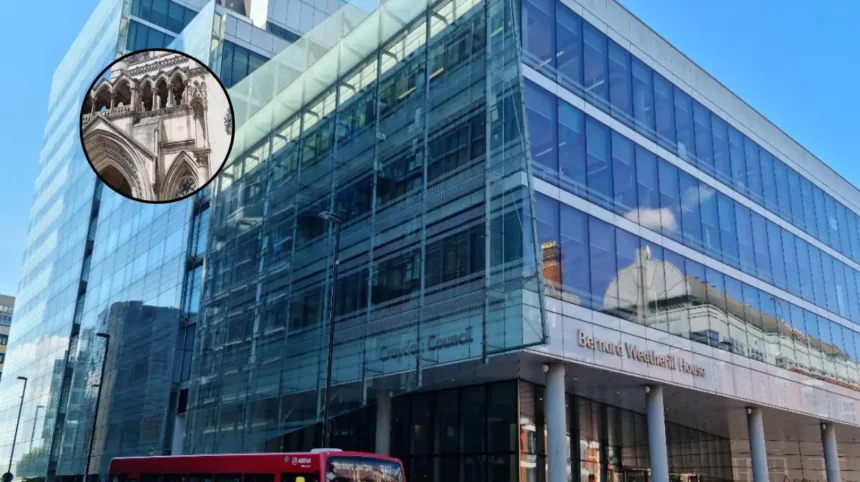
Croydon, (South London News) July 8, 2026 — A High Court judge has formally granted permission for a full judicial review into Croydon Council’s decision to shut down its primary face-to-face walk-in homelessness service, Access Croydon. The legal challenge, brought forward on behalf of a vulnerable local resident, focuses directly on the local authority’s decision in March 2025 to discontinue all immediate in-person public access at its offices in Bernard Weatherill House on Mint Walk.
- Key Points
- What Are the Core Legal Arguments Being Brought Against Croydon Council?
- How Have Local Charities and Council Staff Reacted to the “Digital-First” Transition?
- Is the Closure of In-Person Homelessness Services Unique to Croydon?
- Background of This Particular Development
- Prediction: How This Development Can Affect the Particular Audience
The transition shifted the council’s housing support into a strictly “digital-first” system, forcing residents to navigate an online self-service portal or secure pre-booked appointments to speak with a housing officer.
The High Court judge found that there was minimal evidence proving Croydon Council had established adequate measures or safetynets to protect individuals who are completely unable to access digital systems or book online appointments.
The case, which is being spearheaded by the Public Interest Law Centre (PILC) and backed by dozens of local charities, argues that by closing the walk-in front desk, the local authority has instituted an unlawful mechanism of “gatekeeping” that effectively blocks vulnerable populations from accessing statutory services they are legally entitled to receive.
What Are the Core Legal Arguments Being Brought Against Croydon Council?
According to detailed legal filings published by the Public Interest Law Centre (PILC), the claimant in the case is a Croydon resident who faced imminent eviction from their home but was entirely unable to navigate the council’s digital portal independently due to a severe learning disability.
Legal representatives from PILC argue that the local authority’s operational change actively violates multiple statutory duties.
The public interest group has outlined four core grounds of unlawfulness within their High Court application:
- Breach of Statutory Homelessness Duties: Under UK housing legislation, local authorities are legally bound to provide easily accessible advice, information, and preventative assistance regarding homelessness. The claim argues that a rigid appointment-only protocol actively violates these core responsibilities. Inside Croydon
- Unlawful Discrimination Against the Digitally Excluded: By mandating an online interface as the primary gateway for help, the system disproportionately disadvantages rough sleepers without internet connectivity, individuals who cannot read or write, and those living with cognitive or physical disabilities. Inside Croydon
- Violations of Local Government Constitutional Rules: The legal challenge asserts that the Executive Mayor and the former Chief Executive enacted the absolute closure during a closed-door meeting without producing a formal, transparent written decision, operating outside of both national local authority regulations and the council’s own internal constitution. Inside Croydon
- Improper Gatekeeping of Urgent Relief: The replacement system fails to accommodate individuals experiencing acute, sudden crises who require immediate, same-day face-to-face intervention to prevent them from spending the night on the street. Inside Croydon
How Have Local Charities and Council Staff Reacted to the “Digital-First” Transition?
The internal and external fallout from the March 2025 closure has drawn severe criticism across the borough. As documented by journalist Steven Downes of Inside Croydon, the operational shift ordered by senior council leadership resulted in an immediate structural crisis.
Frontline council staff, who were forced to operate within the constraints of the appointment-only model, described the everyday implementation at Fisher’s Folly—the local moniker for the council’s office complex—as complete “chaos.”
Because desperate individuals continued to arrive at Mint Walk seeking emergency housing assistance, council employees were routinely forced to physically escort digitally excluded residents away from the main building and over to the Croydon Central Library.
This makeshift arrangement caused extensive queues to form at public library terminals, where highly vulnerable people were left waiting simply to log onto a council computer to request a future interaction with a housing officer.
Following the initial closure notice, a coalition of approximately 30 voluntary sector organisations and local charities working across Croydon drafted an urgent joint letter addressed to the council’s executive leadership.
The coalition explicitly demanded the immediate re-opening of the central public service desk, stating that restricting access strictly to pre-booked appointments was actively “denying residents access to vital support” at their most desperate hour. Despite the widespread community pushback, local leadership left the strict restrictions in place.
Is the Closure of In-Person Homelessness Services Unique to Croydon?
While the legal focus remains pinned to the specific administrative failures at Bernard Weatherill House, data shows that Croydon’s operational shift mirrors a systemic transformation occurring across the entire capital.
As highlighted in the public interest litigation updates by the Public Interest Law Centre (PILC), the ongoing challenge targets a much broader institutional trend. Research and data gathering conducted by investigators at King’s College London revealed a stark reality regarding the accessibility of civic support systems across the city.
According to the King’s College London findings, out of the 33 distinct local authorities that comprise Greater London, only three boroughs continue to maintain open, face-to-face, walk-in drop-in services for individuals who are experiencing homelessness or facing immediate housing displacement.
The widespread elimination of physical civic hubs has created a vast regional landscape of digital exclusion, isolating thousands of vulnerable Londoners who lack the physical, financial, or cognitive means to engage with municipal bureaucracies via smartphones or web browsers.
Background of This Particular Development
The roots of the current High Court litigation are tied to Croydon Council’s protracted and severe financial instability.
Over the last several years, the London Borough of Croydon has issued multiple Section 114 notices—effectively declaring effective municipal bankruptcy—forcing the local authority to initiate deep, aggressive cost-cutting measures across all operational departments to balance its heavily strained budgets.
In March 2025, under the leadership of Executive Mayor Jason Perry and the then-Chief Executive Katherine Kerswell, the council abruptly announced the closure of the Access Croydon public service desk with barely one weekday’s notice given to the community.
The administration heavily championed a “digital-first” corporate strategy, arguing that moving standard public inquiries and housing applications to online self-service modules would significantly optimize administrative efficiency and reduce overhead costs.
However, the borough’s housing department was already under intense scrutiny. Croydon has frequently found itself defending its housing allocation practices at the Royal Courts of Justice, notably participating in the landmark R (on the application of Imam) v London Borough of Croydon case before the UK Supreme Court, which evaluated how local authority budgetary constraints interact with statutory duties to provide suitable housing for disabled individuals.
In a very recent attempt to address the mounting legal pressures and community backlash surrounding the walk-in ban, Mayor Perry’s administration issued a late-night operational note announcing a shifting of certain housing desk services to an alternative site on South End.
However, because the council firmly maintains that all face-to-face interactions will remain strictly restricted to an appointment-only basis, legal experts note that the physical relocation does not alter the fundamental legal question of whether the council’s systematic exclusion of walk-in applicants violates British public law.
Explore More Croydon Council News
Croydon Council Approves New Temporary Accommodation Charging Policy: Croydon 2026
Croydon Council Validates New Thornton Heath Restaurant Plans 2026
Prediction: How This Development Can Affect the Particular Audience
This High Court judicial review carries profound, immediate implications for two primary audiences: the vulnerable, digitally excluded residents of Croydon, and the broader network of local government authorities across the United Kingdom.
For the immediate audience of vulnerable Croydon residents—particularly rough sleepers, individuals with learning difficulties, those without fixed internet access, and victims of sudden domestic displacement—the outcome of this High Court review will dictate their physical access to safety.
If the High Court rules against Croydon Council and declares the walk-in closure unlawful, the local authority will be legally forced to dismantle its strict gatekeeping apparatus.
This will compel the re-establishment of a permanent, physical, face-to-face emergency drop-in infrastructure at municipal offices.
For the local population, this would mean an immediate restoration of a low-barrier safety net where an individual facing eviction can speak directly to a human being and receive statutory crisis intervention on the same day, preventing avoidable episodes of street homelessness.
Conversely, if the council’s system is upheld, vulnerable residents will face a permanently high bureaucratic barrier, forcing them to rely entirely on overburdened third-sector charities to act as technological intermediaries.
For the wider audience of local government executives and housing policy creators across London and the UK, this case will function as a major binding legal precedent. Because 30 out of 33 London boroughs have already eliminated their face-to-face walk-in housing provisions, a High Court judgment favoring the claimant will send shockwaves through municipal administrations nationwide.
A ruling of unlawfulness will establish that “digital-first” policies cannot be used as a shield to bypass statutory duties under the Housing Act. Local authorities across the country will be forced to urgently re-evaluate and roll back their digital-only transition plans, prompting a mandatory reinvestment in physical public service desks to avoid facing identical, costly judicial reviews within their own boroughs.