Key Points
- Croydon Regeneration Approval: Croydon Council has officially greenlit major public realm transformation plans for College Green to reconnect historic community links.
- Large-Scale Housing Consultation Launched: Wates Developments is initiating a public consultation for up to 900 sustainable homes at Velmore Farm, including 40% public open space.
- Severe Financial Losses to Rogue Builders: New data from the Federation of Master Builders reveals Essex homeowners have lost £448 million over five years due to unlicensed trade work.
- Massive Funding Influx for NHS Decarbonisation: Phase 4 of the Public Sector Decarbonisation Scheme will distribute over £816 million, with roughly half targeted at NHS estate energy efficiency.
- Bradford Council’s Five-Year Biodiversity Roadmap: A newly unveiled Enhanced Biodiversity Duty report establishes clear targets to nearly double tree canopy cover from 9.14% to 17%.
Croydon (South London News) July 7, 2026 – Local government infrastructure, residential development frameworks, consumer protection vulnerabilities, healthcare sustainability initiatives, and ecological preservation mandates have taken center stage across the United Kingdom following a series of major structural, financial, and environmental updates.
- Key Points
- What Does the Approved College Green Scheme Mean for Croydon’s Town Centre?
- How Will the Proposed 900-Home Velmore Farm Development Impact the Local Community?
- Why Have Essex Homeowners Lost £448 Million to Unlicensed Builders?
- How Can NHS Trusts Secure Capital via Phase 4 of the Decarbonisation Scheme?
- What Environmental Targets Has Bradford Council Set in Its New EBD Report?
- Background of the Particular Development
- Prediction and Regional Implications
In London, Croydon Council has formally approved the extensive regeneration of College Green to deliver revitalized public spaces, while Wates Developments has triggered a widespread public consultation for a massive 900-home sustainable community at Velmore Farm. Concurrently, a stark economic report from the Federation of Master Builders (FMB) has exposed that homeowners across Essex have hemorrhaged an estimated £448 million to rogue builders over the past five years.
On a national scale, planning consultancy Lichfields has highlighted a significant capital opportunity as Phase 4 of the Public Sector Decarbonisation Scheme readies £816 million for low-carbon estate upgrades, heavily favoring NHS trusts. Finally, in West Yorkshire, Bradford Council has unveiled its definitive Enhanced Biodiversity Duty (EBD) report, committing to aggressive environmental targets, including nearly doubling its local tree canopy cover over the next five years.
What Does the Approved College Green Scheme Mean for Croydon’s Town Centre?
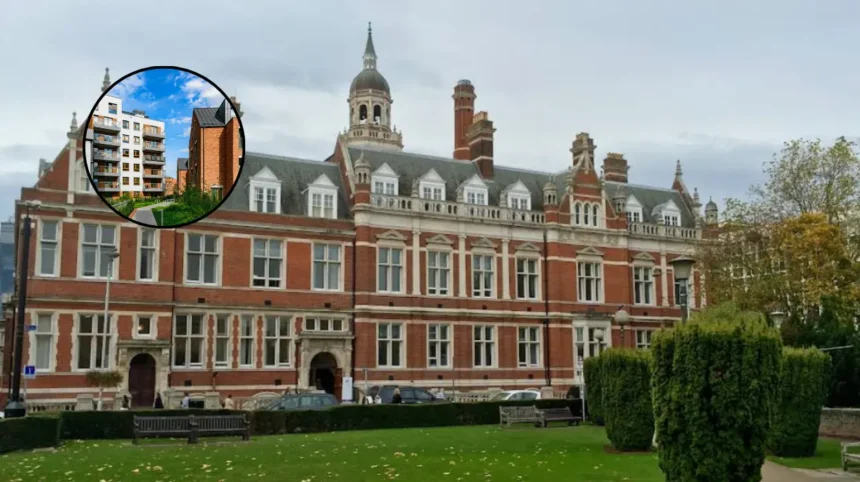
As compiled from public planning documents and municipal reports issued by Croydon Council, the newly approved transformation of College Green marks a critical milestone in the borough’s overarching Town Centre Regeneration Programme. The designated site—situated strategically between Fairfield Halls and Croydon College—is poised to undergo an extensive public realm overhaul designed by MICA Architects.
According to structural briefs published by Croydon Council, the scheme will establish an entirely new public green space tailored for recreation, community relaxation, and informal civic gatherings.
A primary structural objective of the MICA Architects design is the optimization of pedestrian links connecting Fairfield Halls and Croydon College, seamlessly integrating educational and cultural hubs.
The design process relied heavily on community engagement. As detailed in the council’s project launch logs, the final proposals were directly shaped through iterative public consultations, which prominently featured specialized workshops with students from Croydon College, localized community action groups, and a broad-reaching online public survey.
MICA Architects noted in their design statement that the project purposefully aims to restore the site’s historic role as a foundational community gathering place, paying structural homage to its former long-term historical use as the official location of the regional Walnut Fair.
Financially, this public realm upgrade does not draw from the council’s core statutory service budgets. Instead, Croydon Council confirmed the project is fully funded through Croydon’s specialized Growth Zone programme.
This financial mechanism is further bolstered by direct operational and capital support from the Greater London Authority (GLA) and Transport for London (TfL).
The Executive Mayor of Croydon noted in the wider strategic plan that this College Green approval operates alongside parallel public realm interventions at Minster Green and Surrey Street, complementing a series of recent infrastructural upgrades executed across central Croydon to stimulate footfall and economic vitality.
How Will the Proposed 900-Home Velmore Farm Development Impact the Local Community?
Based on corporate project briefings released by Wates Developments, a comprehensive public consultation has officially launched regarding an expansive master-planned community proposed for Velmore Farm. The geographic footprint of the site sits adjacent to Chandlers Ford and Valley Park, falling squarely within areas earmarked for strategic residential expansion.
As stated by the planning team at Wates Developments, the site has been formally identified for sustainable development within the emerging Test Valley Local Plan, signaling a high level of compliance with regional long-term spatial planning targets.
To ensure democratic community feedback, Wates Developments announced that a public exhibition will be hosted on July 16, 2026, at St Francis Church.
This event will allow local residents to visually evaluate detailed architectural layouts, review environmental impact statements, and conduct direct inquiries with the project’s master planners and engineering teams.
The architectural layout put forward by Wates Developments details a mixed-tenure framework comprising up to 900 residential dwellings.
A core component of the plan is its emphasis on affordability; the developers confirmed that approximately 360 of the homes will be classified under affordable tenures, systematically distributed across shared ownership, affordable rent, and social rent sub-categories to mitigate local housing waitlists.
Beyond residential structures, the blueprint incorporates 5,000 square meters of dedicated employment space intended to stimulate localized job creation and economic self-sufficiency.
According to the master plan drawings, approximately 40 per cent of the total Velmore Farm site will be strictly retained as public open space.
This green framework features dedicated sports pitches, localized community facilities, residential allotments, children’s play areas, a curated community orchard, and heavily landscaped walking routes designed to preserve natural topography.
In terms of wider civic infrastructure, Wates Developments stated that the project will legally bindingly provide substantial financial contributions to reinforce local public services. These capital injections will be routed through formal Section 106 legal agreements and the Community Infrastructure Levy (CIL).
The developer’s planning statement explicitly guarantees that these funds will be directly allocated toward regional education provisions, local healthcare expansion, sustainable transport networks, and critical highway improvements to offset any vehicular traffic increases on adjacent arterial roads.
Why Have Essex Homeowners Lost £448 Million to Unlicensed Builders?
According to a comprehensive statistical research report published by the Federation of Master Builders (FMB), domestic property owners throughout the county of Essex have suffered catastrophic financial losses totaling an estimated £448 million over the preceding five-year period due to the actions of unqualified, unvetted, or entirely unlicensed building operators.
The FMB’s localized data tracking highlights severe regional disparities in economic damage, pointing to concentrated pockets of rogue trading activity across specific Essex municipalities.
As detailed in the FMB statistical release, Colchester recorded the highest financial damage within the county, with local homeowners losing an estimated £29 million. This was followed closely by the borough of Thurrock at £28.8 million, Harlow at £27.7 million, Chelmsford at £27.5 million, and Braintree at £27.2 million.
The research compiled by the FMB indicates that more than one-third of all homeowners across the broader East of England region had inadvertently contracted a builder who was subsequently discovered to be completely unqualified or lacking proper trade licensing.
Furthermore, 12 per cent of respondents within the regional survey explicitly reported direct capital loss, with individual household losses averaging £2,612 per failed building project.
When isolating data specifically for the county of Essex, the FMB discovered that 21 per cent of all surveyed homeowners stated they had suffered definitive financial injuries. Consumer dissatisfaction remains exceptionally high across the county; the FMB verified that a mere 39 per cent of Essex homeowners reported being completely satisfied with the ultimate structural or aesthetic outcome of their hired building works.
As reported by senior policy analysts within the Federation of Master Builders, these localized metrics strongly mirror an ongoing, highly damaging national trend.
The FMB currently estimates that UK homeowners on a macro scale have lost a aggregate total of £14.3 billion over the past five years to rogue traders.
In direct response to these findings, the leadership of the Federation of Master Builders publicly renewed its long-standing political demand for the UK government to implement a mandatory national licensing scheme for all commercial builders, arguing that current consumer protection laws are entirely inadequate to prevent widespread cowboy trading.
How Can NHS Trusts Secure Capital via Phase 4 of the Decarbonisation Scheme?
Based on an analytical market briefing released by the national planning and development consultancy Lichfields, NHS trusts across the United Kingdom are uniquely positioned to leverage a massive wave of statutory funding via Phase 4 of the Public Sector Decarbonisation Scheme.
According to financial breakdowns verified by Lichfields, Phase 4 of the centralized government scheme will systematically distribute more than £816 million in capital grants between the 2025/26 and 2027/28 financial fiscal years.
Crucially for healthcare administrators, approximately half of this total funding pot is legally earmarked for direct allocation to NHS organizations and operational hospital trusts.
The primary objective of this capital injection is to subsidize the immediate installation of advanced, low-carbon estate improvements.
Lichfields noted that the grant funding will explicitly support large-scale engineering projects, including the integration of commercial heat pumps, extensive solar photovoltaic (PV) panel arrays, modern lower-carbon insulation heating systems, and multi-tiered energy-efficiency measures designed to slash carbon emissions across the aging NHS estate.
However, senior planning consultants at Lichfields issued an operational warning alongside the funding announcement.
The consultancy stated that early, highly meticulous planning and detailed structural design work will be absolutely essential for NHS trusts to guarantee that individual projects can be delivered successfully within rigid statutory timelines and that assigned funds are fully utilized without clawbacks.
Lichfields highlighted that a vast majority of the approved schemes are expected to involve the complex retrofitting of highly active, existing hospital buildings.
Because these structural installations must occur while simultaneously maintaining critical, uninterrupted clinical services and patient care, they introduce severe planning, logistical, and delivery challenges.
Lichfields concluded its advisory by stating that projects involving heavy external plant machinery, large-scale heat pump installations, sprawling solar arrays, and electric vehicle (EV) charging infrastructure on active, operational hospital sites will highly likely require early, specialized planning permissions and structural input to legally circumvent compounding project delays.
What Environmental Targets Has Bradford Council Set in Its New EBD Report?
As revealed in the official publication of Bradford Council’s Enhanced Biodiversity Duty (EBD) report—a comprehensive ecological strategy produced in direct partnership with environmental and planning consultancy LUC—the local authority has outlined a structured, legally compliant framework to aggressively improve biodiversity and protect the natural environment across the entirety of the district.
The analytical document compiled by LUC establishes a series of urgent environmental priorities that Bradford Council must execute over its immediate planning horizon.
A primary focus highlighted by LUC is the rapid improvement of the ecological condition of existing protected biological sites and nature reserves throughout the district.
Most notably, the EBD report sets an ambitious statutory target to drastically increase Bradford’s localized tree canopy cover.
The district’s canopy cover currently sits at a minimal 9.14 per cent; the newly adopted policy legally binds the council to scale this figure up to 17 per cent over the target timeline, while concurrently expanding equal public access to natural green spaces for urban populations.
According to Bradford Council’s environmental cabinet, the EBD report functions as a unified mechanism that brings together all pre-existing, fragmented environmental policies, localized planning strategies, and active green projects into one centralized document.
LUC planners noted that by consolidating these ecological frameworks, the report explicitly identifies new environmental interventions and creates a clearly mapped checklist of actions spanning the next five years.
Bradford Council confirmed that the finalized report will serve as a foundational legal tool to help the local authority successfully secure competitive external funding for green infrastructure from central government and private ecological funds.
Furthermore, the framework will allow the council to seamlessly integrate advanced biodiversity metrics into all emerging municipal development strategies while systematically monitoring and reporting annual progress transparently to the public.
Background of the Particular Development
The diverse developments highlighted across the UK reflect long-term systemic pressures mounting within the realms of British municipal management, urban planning, and consumer protection.
The regeneration of Croydon’s College Green is the latest chapter in a protracted battle to revitalise a borough heavily impacted by historic financial crises and Section 114 notices, which effectively declared the council bankrupt in recent years. The reliance on the Growth Zone mechanism, backed by the GLA and TfL, underscores a broader shift where cash-strapped local authorities must depend entirely on ring-fenced, external regional funding streams to execute critical public realm improvements rather than utilizing core municipal budgets.
Similarly, Wates Developments’ move to initiate a massive 900-home consultation at Velmore Farm comes at a time of severe national housing shortages, clashing with local resistance to the development of edge-of-settlement green spaces.
This project aligns directly with central government directives forcing local councils to compile robust “Local Plans” to meet strict, mandatory housing delivery targets.
In contrast, the FMB’s alarming report regarding a £448 million loss to rogue builders in Essex highlights a multi-decade regulatory void in the UK construction sector.
Unlike other professional industries, domestic building work in the UK remains largely unregulated, allowing unvetted operators to trade without mandatory licenses—a vulnerability exacerbated recently by post-pandemic inflation, supply chain strains, and a severe shortage of skilled tradespeople, leaving consumers highly exposed to fraud.
This infrastructure strain is mirrored in the healthcare sector, where the NHS faces a daunting backlog of estate maintenance exceeding £11 billion.
The allocation of Phase 4 of the Public Sector Decarbonisation Scheme represents a targeted effort by the Department for Energy Security and Net Zero to tackle both the climate crisis and the decay of public buildings simultaneously, forcing old, inefficient NHS brick-and-mortar facilities to meet net-zero mandates by 2050.
Finally, Bradford Council’s EBD report is a direct statutory response to the UK’s Environment Act 2021, which legally mandated all public authorities to periodically review and take action to further the conservation and enhancement of biodiversity, marking a transition toward highly quantified, legally auditable local environmental targets.
Explore More Croydon Council News
Croydon Council Approves New Temporary Accommodation Charging Policy: Croydon 2026
Croydon Council Warned Over Ongoing Financial Crisis: Croydon 2026
Prediction and Regional Implications
The execution of these localized strategies will fundamentally reshape the economic, physical, and environmental landscapes for residents and businesses across the respective regions.
In Croydon, the transformation of College Green will provide immediate visual and structural enhancements, likely boosting footfall for surrounding commercial businesses and improving safety for thousands of students moving between Croydon College and nearby transit hubs. However, localized construction disruptions may cause short-term logistical friction for commuters.
For the communities surrounding Chandlers Ford and Valley Park, the Velmore Farm development will drastically alter local demographics. If fully approved, the injection of 900 homes will bring an influx of thousands of new residents.
This will significantly increase local consumer spending, benefiting regional businesses, while the 360 affordable units will provide critical housing pathways for young local families currently priced out of the market.
Conversely, despite the promised Section 106 and CIL contributions, existing residents will likely experience notable pressure on local GP surgeries, primary school placements, and peak-hour traffic volumes along nearby highways during the multi-year construction phase.
In the East of England, the FMB’s highly publicized data exposing £448 million in losses will likely trigger an immediate wave of consumer caution among Essex homeowners. Local trade businesses that hold legitimate, accredited certifications are predicted to see a substantial surge in demand as households actively avoid unvetted independent contractors.
This heightened awareness may force rogue traders out of the local market, though it may also drive up the prices and wait times for reputable, licensed building services across Essex due to supply-demand imbalances.
Within the healthcare sector, patients and NHS staff will see dramatic changes to their physical environments as Phase 4 funding kicks in.
The rollout of extensive retrofits means hospital campuses will undergo significant on-site disruption, with heavy machinery, scaffolding, and drilling potentially impacting parking availability and patient transport routes. Long-term, however, the installation of heat pumps and solar arrays will vastly lower hospital utility expenditures, allowing trusts to reallocate millions of pounds from operational energy bills back into frontline clinical patient care and staffing.
Lastly, residents in the Bradford district will experience a visible greening of their urban environments over the next five years. The aggressive push to nearly double tree canopy cover from 9.14% to 17% will require extensive tree-planting initiatives across public parks, residential streets, and rural fringes.
This will directly improve local air quality, mitigate urban heat island effects, and reduce localized flooding risks for homeowners, successfully elevating the district’s overall climate resilience.