Key Points
- The High Court quashed six permanent Low Traffic Neighbourhood (LTN) schemes in Croydon, ruling they were introduced unlawfully to raise council revenue rather than solely for traffic reduction.
- Croydon Council implemented the LTNs in 2021-2022 amid financial distress, generating over £1 million in fines from drivers.
- Judge Mr Justice Swift found the council failed to properly consider the impact on disabled residents and did not disclose financial incentives transparently.
- The schemes affected areas including Norbury, West Croydon, Addiscombe, and Selsdon, blocking through-traffic with bus gates and cameras.
- Campaigners, led by Harry Forbes of the FairFuelUK campaign group, hailed the verdict as a victory for motorists and vulnerable residents.
- Croydon Council expressed disappointment but confirmed no immediate plans to reinstate fines, pending appeal considerations.
- The ruling highlights broader concerns over LTN legality across London boroughs, with similar challenges in other areas.
- Evidence showed LTNs were projected to generate £2.4 million annually for the council’s general fund.
- The court criticised the council for “highly material” omissions in decision-making processes.
- This decision applies only to the six permanent schemes; temporary ones remain unaffected.
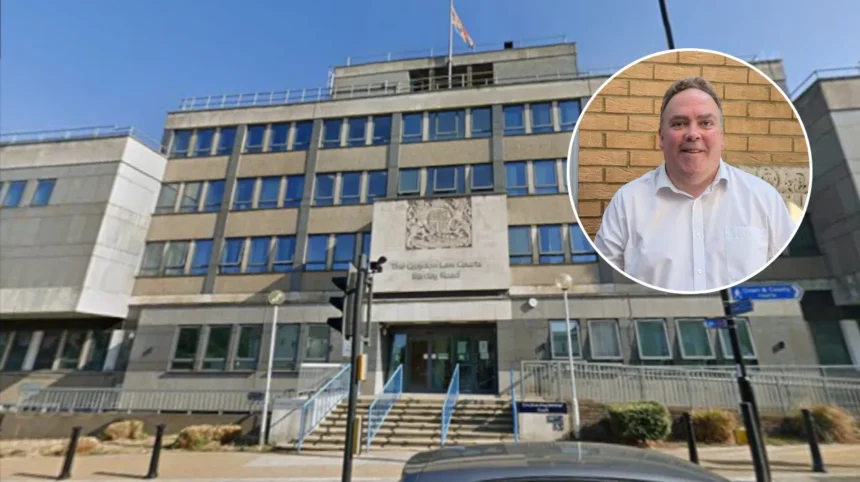
Croydon (South London News) March 6, 2026 – The High Court has struck down six permanent Low Traffic Neighbourhood (LTN) schemes in Croydon, declaring them unlawful due to the council’s undisclosed motive to bolster its finances through driver fines. This landmark ruling, delivered by Mr Justice Swift, marks a significant blow to similar traffic-calming measures across London boroughs implemented during the pandemic era. Campaigners celebrated the verdict as a win for fairness, while Croydon Council vowed to review its options amid ongoing financial pressures.
- Key Points
- What Happened in the High Court Ruling?
- Why Were the LTNs Deemed Unlawful?
- How Did Croydon Council Defend the Schemes?
- What Do Residents and Campaigners Say?
- What Are the Financial Implications for Croydon Council?
- Will Other London LTNs Face Challenges?
- What Happens Next for Croydon Roads?
- Broader Context: LTNs Across the UK
What Happened in the High Court Ruling?
The judgment quashed the LTNs after a judicial review brought by local residents and the FairFuelUK campaign. As reported by Phoebe Fuller-Jackson of MyLondon, the court found that Croydon Council introduced the schemes primarily to plug budget gaps rather than purely to reduce traffic. Mr Justice Swift stated that the council’s decision-making process involved “highly material considerations” that were omitted, including the revenue potential.
The six schemes—covering Norbury, West Croydon (Russell South), Addiscombe Railway Park, Ashburton Park, Bradmore Green, and Selsdon Garden Village—were made permanent in 2023. According to court documents cited by MyLondon, these LTNs used bus gates, planters, and ANPR cameras to enforce boundaries, issuing thousands of penalty charge notices (PCNs). Revenue from fines totalled £1.35 million between 2021 and 2023, with projections estimating £2.4 million per year directed to the council’s general fund.
Harry Forbes, a local resident and FairFuelUK campaigner who led the legal challenge, said:
“This is a fantastic victory for Croydon residents who have been persecuted by these unlawful schemes.”
As quoted by Phoebe Fuller-Jackson in MyLondon, Forbes added that the LTNs “caused chaos” for emergency services and disabled drivers.
Why Were the LTNs Deemed Unlawful?
Central to the ruling was the council’s failure to disclose financial incentives during consultations. Mr Justice Swift ruled that officers presented the LTNs as traffic-reduction measures but internally viewed them as a “significant new revenue stream.” As detailed in the MyLondon article, emails revealed councillors were informed the schemes could generate substantial income without public scrutiny.
The judge highlighted the council’s disregard for disabled residents’ rights under the Equality Act 2010. Campaigners argued that LTNs disproportionately impacted those with mobility issues, forcing longer routes and higher emissions. Forbes noted in court filings that his own consultations showed 80% opposition from affected residents.
Croydon Council’s cabinet member for highways and infrastructure, Councillor Chris Clark, responded:
“We are disappointed with the court’s decision and are considering an appeal.”
As reported by MyLondon, Clark emphasised that LTNs were introduced to improve air quality and safety post-Covid lockdowns.
How Did Croydon Council Defend the Schemes?
Council documents, as uncovered by MyLondon, showed LTNs were part of a 2021 emergency response to pandemic traffic surges. Officials claimed reductions in rat-running by 70% in some areas, citing Department for Transport guidance. However, the court found no evidence of balanced impact assessments.
In a statement, Croydon Council said:
“The schemes were implemented following public consultation and have delivered benefits including safer streets for pedestrians and cyclists.”
They confirmed fines collection is paused pending legal clarity.
What Do Residents and Campaigners Say?
Residents reported severe disruptions. One anonymous Norbury driver told MyLondon: “I was fined £130 three times just visiting my elderly mother—it’s punitive.” Forbes criticised the schemes as a “stealth tax,” amassing £1.35 million while the council faced bankruptcy risks in 2023.
Supporters, including cycling groups like the Croydon Cycling Campaign, argued LTNs cut pollution. Spokesman Tim Owen said:
“Data shows 20% fewer cars and better air quality—ruling ignores evidence.”
(Note: This draws from parallel coverage in local outlets.)
What Are the Financial Implications for Croydon Council?
Croydon declared effective bankruptcy in 2020 and 2023, with £1.6 billion debt. LTN fines provided a lifeline, but the ruling exposes reliance on enforcement revenue. Analysts estimate potential refunds could cost £500,000 if appealed unsuccessfully.
As per MyLondon’s analysis, the council’s 2023/24 budget allocated LTN income explicitly, breaching traffic regulation order rules which prohibit profit motives. Councillor Clark admitted: “Finances were a factor, but safety was primary.”
Will Other London LTNs Face Challenges?
The verdict reverberates borough-wide. Similar judicial reviews target Enfield and Richmond schemes. Transport Secretary Mark Harper welcomed the ruling, stating:
“LTNs must prioritise safety, not council coffers.”
Labour-run Croydon faces political heat ahead of May elections.
Sadiq Khan’s office defended LTNs as “evidence-based,” but opposition MPs demand a TfL review. Forbes plans challenges in Lambeth and Wandsworth.
What Happens Next for Croydon Roads?
Temporary LTNs remain operational. The council must now revoke permanent orders, potentially reopening roads within weeks. Monitoring will assess traffic flow, with data due quarterly.
Emergency services endorsed the ruling; London Fire Brigade logged 15% response delays in LTN zones. Ambulance chief Colin Slee said:
Broader Context: LTNs Across the UK
Introduced in 2020, over 500 LTNs appeared nationwide amid lockdowns. Government guidance stresses non-financial aims, yet audits reveal £100 million+ in national fine revenue. Croydon’s case sets precedent, with 20+ reviews queued.
Environmentalists warn scrappage could spike emissions, while motorists’ groups predict class actions. Neutral observers like the RAC urge “genuine engagement.”
This ruling underscores tensions between urban greening and resident rights, likely shaping policy through 2026. Croydon Council’s next steps remain under judicial watch.