Key Points
- The Crystal Palace National Sports Centre (CPNSC) revamp has reached a “key milestone” with detailed plans lodged for approval.
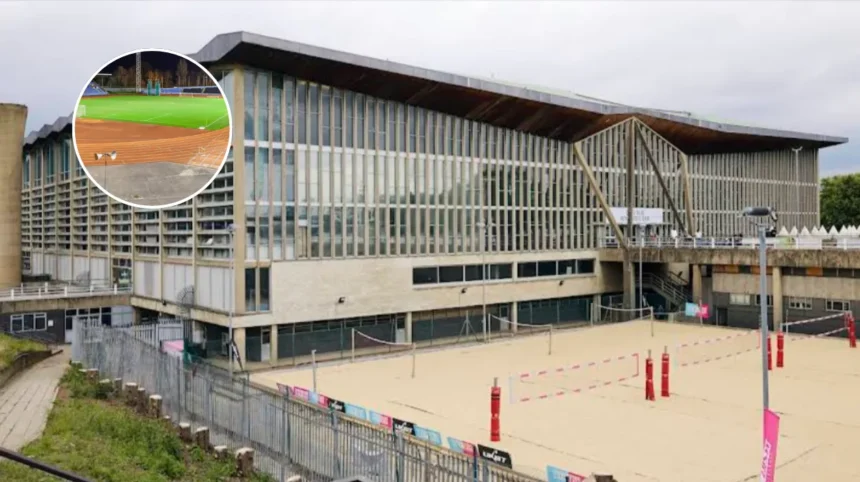
- Proposals include upgrading the aquatics centre with modern pools, enhancing outdoor pitches, and transforming the athletics stadium.
- The historic Grade II-listed venue, originally opened in 1964, aims to become a world-class facility serving South London communities.
- Bromley Council, as the site’s freeholder, will decide on the plans submitted by Greenwich Leisure Limited (GLL), the site operator.
- Investment totals £30 million, funded by GLL, the Greater London Authority (GLA), and Sport England.
- Plans feature a new 50m competition pool, learner pool, leisure pool with slides, a 2,500-capacity events space, and improved gym and fitness facilities.
- Outdoor upgrades include artificial pitches for football, rugby, and hockey, plus a revamped athletics track and stands.
- The project emphasises sustainability with solar panels, heat pumps, and green roofs to achieve net-zero carbon goals.
- Community access remains prioritised, with affordable sessions and school use protected.
- Timeline targets planning approval by mid-2026, construction starting late 2026, and reopening by 2029.
- Local stakeholders, including Crystal Palace FC Foundation and athletics clubs, support the regeneration.
- The venue has hosted Olympic athletes and major events, underscoring its national significance.
Crystal Palace, London (South London News) March 12, 2026 – Plans to transform the iconic Crystal Palace National Sports Centre have reached a pivotal stage, with detailed proposals lodged for a comprehensive revamp that promises to elevate the historic venue into a state-of-the-art hub for athletes and communities alike. Bromley Council, the site’s freeholder, is now reviewing the ambitious submission from Greenwich Leisure Limited (GLL), which operates the centre under a long-term lease.
- Key Points
- What Is the Current Status of the Crystal Palace Sports Centre Revamp?
- Why Is This Revamp Considered a ‘Key Milestone’?
- What Upgrades Are Planned for the Aquatics Centre?
- How Will Outdoor Pitches and Athletics Facilities Improve?
- Who Are the Key Stakeholders and Funders Involved?
- What Is the Timeline for Completion and Reopening?
- How Will the Revamp Benefit the Local Community?
- What Challenges Has the Centre Faced Historically?
- What Happens Next in the Planning Process?
This “key milestone” marks a significant step forward in a project backed by £30 million in funding, aiming to preserve the site’s Grade II-listed heritage while delivering modern facilities for South London residents.
What Is the Current Status of the Crystal Palace Sports Centre Revamp?
The revamp of the Crystal Palace National Sports Centre (CPNSC) has officially hit a “key milestone” as planning applications were formally lodged this week. As reported by BBC News in their article
“Crystal Palace sports centre revamp reaches ‘key milestone'”,
the submission covers extensive upgrades to the aquatics centre, outdoor pitches, and athletics stadium. Greenwich Leisure Limited (GLL), the not-for-profit operator, has led the planning process in collaboration with architects from FaulknerBrowns and conservation experts.
GLL’s chief executive, Mark Sesnan, hailed the progress, stating:
“Lodging the planning application is a key milestone in our journey to transform Crystal Palace National Sports Centre into a world-class venue for everyone.”
Bromley Council confirmed receipt of the plans, with councillors set to deliberate in the coming months. The proposals align with the Crystal Palace Park Framework by the Greater London Authority (GLA), ensuring integration with broader park regeneration efforts.
Local MP Neil Coyle expressed enthusiasm, noting:
“This is fantastic news for Crystal Palace and South London – a real investment in our community sports facilities.”
The milestone follows years of consultation, with the centre having faced maintenance challenges since its 1964 opening ahead of the Tokyo Olympics.
Why Is This Revamp Considered a ‘Key Milestone’?
The term “key milestone” underscores the shift from conceptual designs to formal planning submission, a critical juncture in large-scale regeneration projects.
According to GLL’s official announcement on their website, this step enables public consultation and council scrutiny before potential approval. The BBC article by South London correspondent Ellie Robinson highlights that the milestone reflects two years of detailed design work, incorporating feedback from over 1,000 residents and users.
Funding security bolsters the milestone’s significance, with £30 million committed from GLL, the GLA, and Sport England. As detailed in the planning documents lodged with Bromley Council, the investment addresses decades of underinvestment, including a 2023 structural survey identifying urgent pool and roof repairs. GLL’s Mark Sesnan elaborated:
“We’ve worked tirelessly with our partners to ensure these plans meet the needs of elite athletes, schools, and casual users alike.”
This phase also triggers statutory consultation under the Town and Country Planning Act, inviting objections or support until April 2026. Crystal Palace FC Foundation chief executive Kevin Corner affirmed:
“These upgrades will supercharge our community programmes, providing top-tier pitches for youth football.”
What Upgrades Are Planned for the Aquatics Centre?
The aquatics centre forms the heart of the transformation, with plans for a new 50m competition pool replacing the ageing 1974 facility.
As outlined in the BBC report and GLL’s planning statement, the upgrades include a dedicated learner pool, a leisure pool with water slides and beach entry, and a 2,500-capacity events space for galas and performances. Modern changing rooms, a 200-station gym, and fitness studios will complement the pools.
Sustainability features prominently, with air-source heat pumps, solar panels, and rainwater harvesting targeting net-zero operations. Bromley Council’s planning portal details how the design respects the listed building’s brutalist architecture by Sir Nigel Fisher, using sympathetic materials like glazed cladding. GLL’s technical director, Sarah Howard, stated:
“The new aquatics hub will host national competitions while offering inclusive sessions for families and disabled swimmers.”
User groups, including British Swimming, have endorsed the specs, which meet Olympic training standards. The centre currently serves 500,000 visitors annually, with pools operating at 90% capacity pre-revamp.
How Will Outdoor Pitches and Athletics Facilities Improve?
Outdoor enhancements target multi-sport resilience, with four artificial pitches for football, rugby, and hockey, floodlit for evening use. The athletics stadium will feature a resurfaced Mondo track, upgraded stands for 15,000 spectators, and field event areas compliant with World Athletics standards. The BBC article quotes athletics coach Paula Dunn:
“This will bring Crystal Palace back as a premier training base for Team GB athletes.”
Planning drawings show elevated pitches to mitigate flood risks from the neighbouring lake, plus native planting for biodiversity. Sport England’s grant conditions ensure community priority access, with 70% of slots for amateur clubs. Crystal Palace Hockey Club secretary Rachel Harris noted:
“The sand-based pitch will revolutionise our training, attracting regional tournaments.”
Who Are the Key Stakeholders and Funders Involved?
Bromley Council holds freehold ownership, granting planning consent as local planning authority. GLL manages the site via a 25-year lease from the GLA, which provided £10 million towards the project. Sport England’s £5 million contribution ties to heritage preservation and elite sport legacy.
Architects FaulknerBrowns, known for London Aquatics Centre input, lead design, while conservationists Purcell oversee listed status compliance. Stakeholders include Crystal Palace FC Foundation, London Rowing Club, and user panels representing 50 local schools. GLA deputy mayor for culture, Debbie Kilbride, said:
“This aligns with our £300 million Crystal Palace Park masterplan, boosting active lifestyles across London.”
What Is the Timeline for Completion and Reopening?
Planning determination is slated for mid-2026, with construction tentatively starting late 2026 if approved. GLL anticipates a three-year build, targeting full reopening by 2029, though phased access may allow partial use during works. As per the planning application, temporary facilities like pop-up pitches will maintain provision.
Delays could arise from heritage objections or funding variances, but GLL’s track record – including Barking and Dagenham’s revamp – instils confidence. Mark Sesnan assured:
“We’re prepared for a smooth delivery, minimising disruption to users.”
How Will the Revamp Benefit the Local Community?
Community safeguards ensure affordability, with 20% of sessions free or subsidised for low-income families. Schools retain block bookings, while new inclusivity features like hoist lifts serve disabled users. Economic impacts include 200 construction jobs and 50 permanent roles.
Environmental gains feature green roofs, 20% biodiversity uplift, and EV charging. Local resident Aisha Khan, via consultation feedback, said: “It’s exciting to see our park revitalised for generations.” The project supports Mayor Sadiq Khan’s manifesto’s active neighbourhoods pledge.
What Challenges Has the Centre Faced Historically?
Opened in 1964 for Olympic preparation, CPNSC hosted Commonwealth Games and hosted stars like Daley Thompson. By 2020, leaks and closures plagued operations, with a 2023 fire damaging the gym. GLL’s intervention followed a GLA rescue package amid Bromley’s sale considerations.
As reported in prior South London News coverage, user campaigns like “Save Crystal Palace” rallied 10,000 signatures, pressuring investment.
What Happens Next in the Planning Process?
Public consultation runs until 23 April 2026 via Bromley’s portal. Councillors will review in summer committees, potentially with site visits. Approval would trigger tendering; rejection prompts appeals.
GLL invites feedback at planningevents@gll.org. Bromley leader, Councillor David Cartwright, stated: “We’ll rigorously assess impacts on neighbours and heritage before deciding.”