Key Points
- An estimated 500 people attended a civic service in New Addington to mark the tenth anniversary of the Croydon tram crash.
- The memorial featured speeches, prayers, and an impeccably observed two-minute silence led by Civic Mayor Mohammed Islam.
- High-profile attendees included Natasha Irons MP, four New Addington councillors, Town Hall representatives, and London Fire Commissioner Jonathan Smith.
- Seven commuters lost their lives on 9 November 2016 when a tram derailed near the Sandilands stop whilst travelling at 43mph in a 12mph zone.
- The victims were identified as Dane Chinnery, Philip Seary, Mark Smith, Dorota Rynkiewicz, Donald Collett, Philip Logan, and Robert Huxley, aged between 19 and 63.
- Sixty-one passengers sustained injuries, with 19 suffering life-changing physical and psychological trauma.
- Transport for London and Tram Operations Ltd were subsequently fined a combined total of £14 million after pleading guilty to health and safety breaches.
- BBC London Transport Correspondent Tom Edwards described the incident as a “forgotten tragedy”, noting how its initial coverage was overshadowed by international political events and emphasizing that questions regarding safety oversight remain.
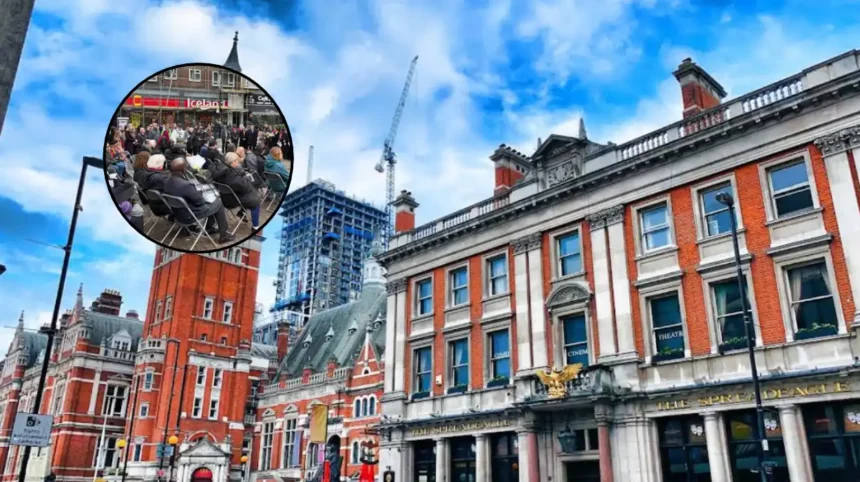
New Addington (South London News) November 10, 2026 – An estimated 500 people gathered in New Addington this morning for a solemn civic service commemorating the tenth anniversary of the Croydon tram disaster, one of the deadliest rail transport incidents in modern British history. Local residents, grieving families, civic leaders, and emergency service responders assembled to honor the memory of the seven passengers who lost their lives on the morning of 9 November 2016. The solemn proceedings included formal speeches, prayers, and a impeccably observed two-minute silence that brought the local square to a complete standstill.
- Key Points
- How Did Local Leaders and Emergency Services Honor the Victims?
- What Occurred on the Morning of 9 November 2016?
- What Legal Accountability and Safety Measures Followed the Crash?
- Why Is the Disaster Characterized as a ‘Forgotten Tragedy’?
- Background of the Sandilands Tram Disaster
- Prediction: How Will This Anniversary and Ongoing Regulatory Reviews Affect the Affected Audience?
Civic Mayor Mohammed Islam led the formal proceedings on behalf of the borough. High-profile political figures in attendance included Natasha Irons, the Member of Parliament for the constituency, all four local ward councillors representing New Addington, and numerous senior administrators from the Town Hall. They were joined by first responders who were deployed to the wreckage near the Sandilands tram stop ten years ago, alongside senior officers representing London’s emergency services.
How Did Local Leaders and Emergency Services Honor the Victims?
London Fire Commissioner Jonathan Smith attended the service in New Addington to pay tribute to the victims and acknowledge the enduring impact of the disaster on the surrounding community.
In a formal statement released during the commemoration, London Fire Commissioner Jonathan Smith stated that
“on the 10th anniversary of this tragic incident, my thoughts, and those of everyone at London Fire Brigade, are with those who lost loved ones, those who survived, and those who continue to feel the impact of this terrible incident.”
Commissioner Jonathan Smith also praised the heroic efforts of the personnel who worked under extreme pressure during the initial search and rescue operation, noting that he would
“like to pay tribute to those firefighters and emergency service workers who responded on the day. We have not forgotten the dedication and professionalism shown by all those who worked tirelessly at the scene. Their work in incredibly challenging conditions is just one example of the dedication shown by emergency service workers on a daily basis.”
What Occurred on the Morning of 9 November 2016?
The disaster unfolded shortly after 6:00 am, approximately an hour before dawn on a wet, overcast autumn morning. A two-carriage tram heavily laden with commuters travelling towards Wimbledon via Central Croydon entered a sharp left-hand curve on the approach to the Sandilands junction.
Investigative reports established that the tram was travelling at approximately 43 mph as it entered the curve—a section of track governed by a strict speed limit of 12 mph. The excessive velocity caused the vehicle to derail and overturn on its side, sliding for a considerable distance before coming to a halt.
Seven individuals suffered fatal injuries in the derailment. The deceased were subsequently identified as Dane Chinnery, Philip Seary, Mark Smith, Dorota Rynkiewicz, Donald Collett, Philip Logan, and Robert Huxley. The victims ranged in age from 19 to 63 years old. Five of the seven commuters who died were residents of the tight-knit New Addington neighborhood, compounding the sense of loss across the immediate community.
In addition to the fatalities, 61 other passengers onboard sustained injuries. Nineteen of those individuals suffered life-changing physical trauma, including severe fractures, chronic pain conditions, and limb amputations. A significant number of survivors were rendered permanently unable to return to work due to the combination of physical disabilities and long-term psychological distress.
What Legal Accountability and Safety Measures Followed the Crash?
In the aftermath of the crash, extensive investigations were launched by the Rail Accident Investigation Branch and the Health and Safety Executive to evaluate the operational standards and management oversight of the tram network.
Following regulatory investigations, both Transport for London (TfL) and Tram Operations Ltd—a subsidiary of FirstGroup responsible for operating the network—were prosecuted under workplace health and safety legislation. Both corporate entities entered guilty pleas to charges alleging a failure to take reasonable care for the safety of passengers. The court imposed a combined fine of £14 million against the two organizations.
Subsequent to the legal proceedings, safety management practices across the London Tramlink network underwent substantial revisions. Mandatory upgrades were implemented to prevent similar occurrences in the future, including:
- The installation of an automatic braking system designed to intervene and slow down trams approaching curves at excessive speeds.
- Enhanced real-time speed monitoring systems accessible to operational control centers.
- Advanced driver distraction and fatigue monitoring technology fitted within tram cabs.
- Structural improvements to track signage and driver training protocols across the entire network.
Why Is the Disaster Characterized as a ‘Forgotten Tragedy’?
Despite the scale of the loss and the severity of the systemic failures identified, public commentators have noted that the event did not command sustained national attention in the immediate hours following the crash.
Addressing the milestone anniversary, BBC London Transport Correspondent Tom Edwards categorized the event as a “forgotten tragedy.”
BBC London Transport Correspondent Tom Edwards observed that the disaster “was overshadowed on the day by news coverage of the arrival of Donald Trump in the White House.”
Furthermore, BBC London Transport Correspondent Tom Edwards emphasized that systemic questions surrounding safety governance remain relevant today, highlighting that “10 years on, there still remain questions over how a lax safety regime was allowed to develop and how systemic failings contributed to the deaths of seven commuters.”
Background of the Sandilands Tram Disaster
The Croydon Tramlink system opened in May 2000 to provide rapid transit connections across South London, linking regional transportation hubs in Croydon with suburban estates such as New Addington. Prior to November 2016, the network maintained an exemplary safety record over sixteen years of operation, handling tens of millions of passenger journeys annually without a fatal collision.
The Sandilands junction sits at a critical intersection where three lines converge before passing through a series of tunnels toward central Croydon. The curve preceding the junction requires a sharp reduction in speed from the open-track limit of 50 mph down to 12 mph. Investigations conducted by the Rail Accident Investigation Branch revealed that the physical infrastructure at the time lacked automated fail-safe mechanisms or automatic train protection systems to restrict speed if a driver failed to decelerate manually.
The initial findings prompted widespread reviews across light rail systems throughout the United Kingdom. Regulators identified systemic weaknesses in risk assessments regarding driver fatigue, route familiarity, and high-risk speed transitions. In response, the Office of Rail and Road established the Light Rail Safety and Standards Board to standardize safety protocols, safety critical reporting, and risk modeling across all light rail and tram networks nationwide.
Prediction: How Will This Anniversary and Ongoing Regulatory Reviews Affect the Affected Audience?
The tenth anniversary of the Sandilands disaster marks a critical juncture for several key stakeholder groups associated with the South London transit network and light rail infrastructure across the United Kingdom.
For the Bereaved Families and Local Residents of New Addington
The formal decennial commemoration will reinforce ongoing demands from local residents and victims’ families for complete transparency and long-term support services. Given that five of the seven victims resided in New Addington, the anniversary highlights persistent community concerns regarding mental health provision, ongoing financial rehabilitation for disabled survivors, and permanent memorial arrangements. Families are expected to maintain pressure on local authorities and Transport for London to ensure that safety commitments made in court are rigorously maintained over the coming decades.
For Transport for London, Tram Operations Ltd, and UK Light Rail Operators
The continued focus on systemic safety management will force light rail operators across the United Kingdom to adopt increasingly stringent safety technologies. Operator compliance will likely be subjected to stricter auditing by the Light Rail Safety and Standards Board. Transit authorities will face pressure to invest in continuous upgrades, such as next-generation automated train control systems, advanced driver fatigue detection, and enhanced cab infrastructure. This increased regulatory oversight will drive operational expenditure higher as transit agencies prioritize risk mitigation to maintain public confidence.
For Daily Commuters and the Broader Traveling Public
Passengers using light rail networks will see a permanent legacy of heightened safety enforcement integrated into their daily commutes. While automated speed control and automatic braking systems provide greater operational safety, commuters may experience occasional service adjustments as operators strictly enforce speed compliance and conduct maintenance on specialized safety hardware. Ultimately, the lessons learned from the Croydon tram disaster will continue to shape national light rail standards, prioritizing fail-safe redundancy to ensure that high-speed derailments do not recur.