Key Points
- Large-scale criminal fly-tipping remains a serious and persistent problem in Croydon, despite a sharp drop in incidents over the past year.
- Official figures show that Croydon recorded 1,585 large-scale fly-tipping incidents in 2024–25, including 1,537 “tipper lorry loads” and 48 “significant/multi loads”.
- The 2024–25 total represents a 56% decrease from the 3,627 large-scale incidents logged in 2023–24, indicating a steep year-on-year fall.
- Despite this reduction, the number of large-scale incidents in Croydon is still 78% higher than the 891 cases recorded in 2019–20, showing a sustained long‑term rise since before the Covid-19 pandemic.
- Data published by the Department for Environment, Food and Rural Affairs (DEFRA) on 25 February confirms that Croydon remains among the London boroughs with the highest volumes of large‑scale fly-tipping.
- The DEFRA statistics form part of a wider pattern of rising serious fly-tipping incidents across England, underlining that the problem is national as well as local.
- The figures distinguish between “tipper lorry loads” and “significant/multi loads”, categories used by DEFRA to capture larger, often commercial or organised, waste dumping.
- While Croydon has long been viewed as a hotspot for large-scale fly-tipping, the latest data suggest that other boroughs, including neighbouring Merton, are now seeing comparable growth and are “catching up” in terms of incident numbers.
- Local authorities rely on DEFRA’s annual fly-tipping statistics to shape enforcement strategies, resource allocation and targeted clean‑up operations.
- The contrast between the sharp recent fall and the higher long‑term trend raises questions about whether current enforcement and prevention efforts are delivering lasting change or a temporary reduction.
Croydon (South London News) February 27, 2026 – Large-scale criminal fly-tipping remains entrenched in Croydon, with new government data showing that although the borough has seen incidents more than halve in a year, the volume of serious dumping is still far above pre-pandemic levels and continues to place it among England’s worst-hit urban areas.
- Key Points
- How serious is the current fly-tipping problem in Croydon?
- How have Croydon’s fly-tipping numbers changed over time?
- What does DEFRA’s data reveal about wider trends across England?
- Why is Merton said to be ‘catching up’ with Croydon?
- How do ‘tipper lorry loads’ and ‘significant/multi loads’ differ?
- What are the implications for residents and local services?
- What questions remain about enforcement and future trends?
How serious is the current fly-tipping problem in Croydon?
Newly released statistics from the Department for Environment, Food and Rural Affairs (DEFRA), published on Wednesday 25 February, underline the scale of the challenge facing Croydon Council and local residents. The 2024–25 figures show 1,585 large-scale fly-tipping incidents in the borough, a total that keeps Croydon firmly in the group of London areas with the highest numbers of serious waste dumping cases.
In these official returns, Croydon reported 1,537 “tipper lorry loads” and a further 48 “significant/multi loads”, categories typically associated with larger, often organised or commercial, fly-tips rather than small domestic rubbish deposits. As collated by DEFRA, large‑scale incidents such as these usually involve substantial quantities of waste dumped on roadsides, industrial estates or open land, often requiring specialist clean‑up and investigation by local authority teams.
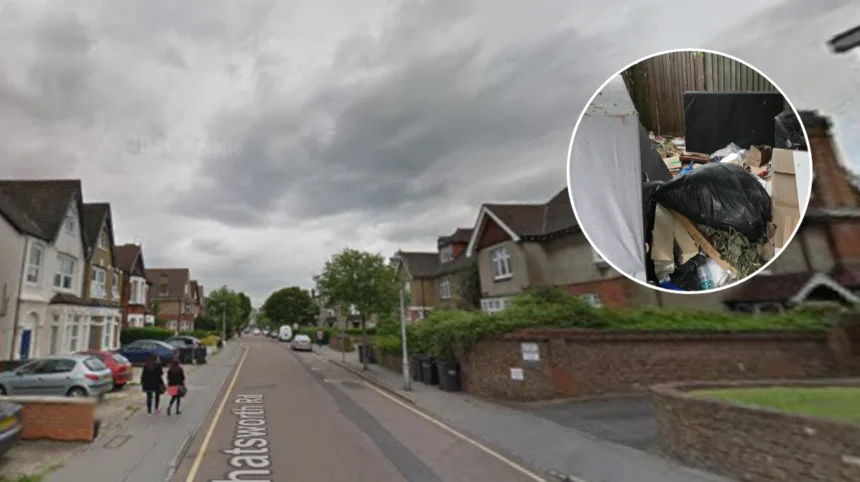
The burden on the borough remains considerable. Tipper lorry loads in particular point to offenders using vehicles capable of transporting large volumes of construction debris, household clearances or commercial waste, which can block pavements, attract vermin and create hazards for pedestrians and drivers. For residents, these incidents frequently translate into unsightly and sometimes hazardous piles of rubbish appearing overnight in residential streets or near local businesses.
How have Croydon’s fly-tipping numbers changed over time?
The headline year‑on‑year change in Croydon is striking. DEFRA’s data records that large‑scale fly‑tipping incidents in the borough fell from 3,627 in 2023–24 to 1,585 in 2024–25, a 56 per cent decrease in just one year. That drop suggests that enforcement operations, public awareness campaigns or changes in waste management practices may have had a measurable impact over the most recent reporting period.
However, when the figures are set against pre‑pandemic levels, the longer‑term picture looks far less positive. Croydon had 891 large‑scale fly‑tipping incidents in 2019–20, meaning that the 2024–25 total is still 78 per cent higher than it was five years ago. This indicates that, despite the recent fall, serious fly‑tipping in the borough remains significantly more prevalent than before Covid‑19, and that any improvement to date has not been sufficient to reverse the overall upward trend.
As collated in DEFRA’s England‑wide dataset, Croydon’s trajectory mirrors a broader national pattern in which large‑scale incidents rose sharply through the early 2020s, coinciding with pandemic‑related changes in waste generation, household clear‑outs and pressure on formal disposal routes. Even with the latest reduction, the borough is still managing a higher baseline of large‑scale dumping than in previous years, underscoring concerns among campaigners and local politicians that the problem has become entrenched.
What does DEFRA’s data reveal about wider trends across England?
The figures released by DEFRA do not exist in isolation. The department’s publication, which covers local authority returns from across England, shows that Croydon’s experience is part of a continuing rise in large‑scale fly‑tipping nationally. While some councils have reported year‑on‑year falls in particular categories, the broad pattern highlighted in the dataset is of serious offences remaining high compared with pre‑pandemic years.
According to DEFRA, “tipper lorry loads” and “significant/multi loads” are used to describe larger incidents that typically require more resources to clear and investigate. These categories are often associated with criminal enterprises that may undercut legitimate waste disposal businesses by offering cheap, illegal dumping, as well as with rogue traders who fail to use licensed facilities.
The department’s statistics show that the cumulative burden of such incidents runs into tens of thousands of cases across England each year, with urban boroughs like Croydon consistently appearing among the higher‑ranking authorities. The ongoing national rise highlighted in the latest release has led to renewed debate over whether existing penalties, including fixed penalty notices and court‑imposed fines, are sufficient to deter organised offenders and repeat violators.
Why is Merton said to be ‘catching up’ with Croydon?
Although Croydon has long been viewed as one of the capital’s most affected boroughs for large‑scale fly‑tipping, recent trends show that neighbouring Merton and other south London authorities are experiencing comparable pressures. The characterisation of Merton as “catching up” reflects the fact that, while Croydon’s recorded incidents remain higher in absolute terms, other boroughs have seen their own tallies increase or remain stubbornly high in the latest DEFRA tables.
In practical terms, this means that the visual and environmental impacts associated with serious dumping — including piles of builders’ waste on residential roads, abandoned white goods and bulk household items in alleyways, and large accumulations of mixed rubbish on green spaces — are no longer concentrated in one or two historic hotspots. As a result, councils like Merton are now facing many of the same challenges around enforcement resourcing, public reporting systems and contract management that Croydon has been grappling with for several years.
The emerging pattern across south London suggests that offenders may be shifting their activity between boroughs in response to enforcement, or exploiting cross‑boundary gaps in surveillance and intelligence sharing. This raises the prospect of greater collaboration between neighbouring authorities on joint operations, information exchange and shared use of tools such as mobile CCTV and automatic number plate recognition to track vehicles suspected of involvement in large‑scale fly‑tipping.
How do ‘tipper lorry loads’ and ‘significant/multi loads’ differ?
DEFRA’s categorisation is central to understanding the scale of the problem recorded in Croydon’s 2024–25 figures. A “tipper lorry load” denotes a large quantity of waste, typically equivalent to what might be carried in a commercial tipping vehicle, and is frequently linked to construction and demolition materials, bulky household items and commercial refuse.
“Significant/multi loads”, by contrast, refers to particularly sizeable incidents or those involving multiple deposits at the same location, sometimes over a short period, which cumulatively amount to a major environmental blight. While Croydon’s 48 cases in this category are small in number compared with tipper lorry loads, they tend to be among the most disruptive and costly to address.
In the 2024–25 reporting year, Croydon’s 1,537 tipper lorry loads and 48 significant/multi loads together produced the total of 1,585 large‑scale incidents that keeps the borough in the upper tier nationally. These categories sit above smaller‑scale fly‑tips in DEFRA’s classification system and are a key focus for councils because of the disproportionate impact they have on budgets, community confidence and the appearance of local neighbourhoods.
What are the implications for residents and local services?
For residents, the continued high volume of large‑scale fly‑tipping means that dumped waste remains a regular feature of daily life in parts of Croydon. Large piles of rubbish can deter people from using local amenities, contribute to perceptions of neglect and, in some cases, cause direct health and safety risks, particularly where items such as asbestos, electrical goods or sharp metal are involved.
For the council, responding to over 1,500 large‑scale incidents in a year demands significant resources, from dedicated fly‑tipping clearance crews to enforcement officers tasked with gathering evidence and pursuing offenders. The cost implications can be substantial, diverting funds from other frontline services and placing pressure on already tight budgets.
The sharp reduction since 2023–24 may provide some short‑term relief for cleansing teams; however, the fact that incident numbers are still far higher than in 2019–20 suggests that the underlying drivers of serious fly‑tipping have not been fully addressed. Issues such as the cost of legal disposal for commercial operators, the availability of convenient waste and recycling facilities, and public awareness of duty‑of‑care responsibilities remain central to any long‑term solution.
What questions remain about enforcement and future trends?
The contrast between Croydon’s recent 56 per cent year‑on‑year fall and its 78 per cent increase over pre‑pandemic levels raises several unresolved questions about the effectiveness of current measures. Observers will want to know whether the decline between 2023–24 and 2024–25 reflects a sustained shift in behaviour or is instead the result of short‑term enforcement initiatives, changes in reporting practices or statistical anomalies.
At the same time, the continued national rise in serious fly‑tipping incidents recorded elsewhere in England points to structural issues that extend beyond any single borough. Policymakers and campaigners are likely to scrutinise whether existing powers, including fixed penalties, vehicle seizures and court‑ordered fines, are sufficient to deter organised offenders, and whether additional tools or higher sanctions are needed to tackle persistent hotspots.
With Merton and other south London boroughs “catching up” in terms of large‑scale incidents, there is growing recognition that a coordinated regional approach may be required, alongside local initiatives, to disrupt cross‑boundary dumping networks and ensure that progress in one area is not undermined by displacement to another. As DEFRA’s data continue to track the trajectory of fly‑tipping into future years, both Croydon and its neighbours will be under pressure to demonstrate that they can turn short‑term reductions into lasting improvements on the ground.