Key Points
- Founding of Urban Nest Property Solutions: Croydon local Ben Sheehan-Gyles and his partner Silvia have spent two years building Urban Nest Property Solutions to provide housing for vulnerable individuals.
- Personal Roots: Sheehan-Gyles’s drive stems from his upbringing in council housing, which gave him direct insight into the challenges faced by vulnerable communities.
- Target Demographics: The organization aims to develop tailored accommodation for care leavers, young people, individuals with learning disabilities, and adults with autism.
- Holistic Support Model: The project focuses not only on providing physical shelter but also on offering wrap-around support to empower residents towards independence.
- Local Community Focus: The initiative specifically targets the London Borough of Croydon to address localized housing shortages and support gaps.
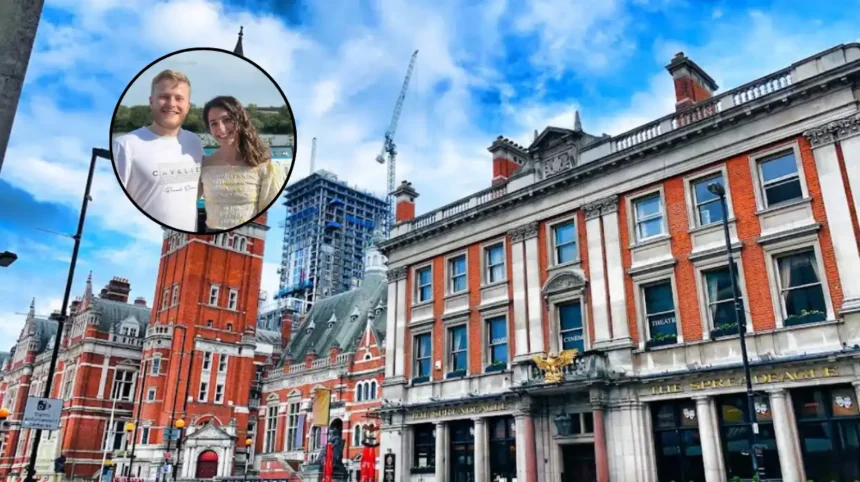
Croydon (South London News) August 13, 2026 – A local resident who grew up in council housing has launched a specialized property initiative alongside his partner to address the critical shortage of supportive accommodation in South London. Ben Sheehan-Gyles and his partner Silvia have spent the past two years establishing Urban Nest Property Solutions, a property development venture designed specifically to support vulnerable demographics. The couple’s project focuses on creating safe, adapted housing combined with targeted care networks for young people transitioning out of the care system, adults with learning disabilities, and individuals on the autism spectrum, drawing directly on Sheehan-Gyles’s personal background to inform their community-focused approach.
- Key Points
- Who is behind the ‘Build Croydon Better’ initiative?
- Why did Ben Sheehan-Gyles decide to tackle Croydon’s housing crisis?
- Which groups will benefit from these new supported housing solutions?
- How does Urban Nest Property Solutions plan to transform social housing in South London?
- What is the background to Croydon’s social housing and care challenges?
- How will this development affect vulnerable residents and the wider Croydon community?
Who is behind the ‘Build Croydon Better’ initiative?
The driving force behind Urban Nest Property Solutions consists of Croydon resident Ben Sheehan-Gyles and his partner, Silvia. Over a two-year period of planning, research, and resource aggregation, the pair established the enterprise to reframe how supported housing is delivered at a borough level.
Sheehan-Gyles brings a personal perspective to the venture, having grown up in council accommodation within Croydon. This background exposed him directly to the structural challenges, maintenance delays, and social stigmas often associated with social and assisted housing sectors.
Rather than approaching property development purely from a commercial yield perspective, the couple has structured their enterprise around social impact. Silvia’s operational collaboration with Sheehan-Gyles has enabled the organization to align real estate acquisition with local authority care requirements.
The couple’s combined focus centers on acquiring, renovating, and managing residential units across Croydon that are explicitly configured to meet complex physical and sensory needs, rather than placing vulnerable individuals into generic, unadapted housing stock.
Why did Ben Sheehan-Gyles decide to tackle Croydon’s housing crisis?
The motivation behind the establishment of Urban Nest Property Solutions lies in Sheehan-Gyles’s early lived experiences in social housing. Growing up in council-provided accommodation highlighted the systemic gaps where vulnerable residents, particularly young adults without strong family safety nets, often fall through the cracks of municipal provision.
These early observations fostered a long-term goal to construct a model that combines structural housing quality with sustained personal development support.
Recognizing that the transition into independent adulthood is uniquely difficult for those leaving institutional care or living with neurodivergent conditions, Sheehan-Gyles identified a persistent shortage of specialized housing within the London Borough of Croydon.
The initiative was conceived to move beyond basic shelter provision, aiming instead to create environments that actively foster stability, dignity, and personal growth for residents who would otherwise face heightened risks of housing insecurity or institutionalization.
Which groups will benefit from these new supported housing solutions?
Urban Nest Property Solutions has tailored its housing development strategy to assist specific groups of vulnerable individuals who often face severe barriers in the private rental market. The primary demographics identified by the organization include:
- Care Leavers: Young adults exiting the local authority care system who require structured transitional housing to learn life skills, manage finances, and adjust to independent living.
- Young Vulnerable Adults: Individuals aged 18 to 25 who are at risk of homelessness or who require low-level supervisory support to maintain stable living conditions.
- People with Learning Disabilities: Residents who need physical modifications to their living environments alongside dedicated care access to execute daily routines safely.
- Individuals with Autism: Neurodivergent residents requiring sensory-considered architecture, quiet spaces, and predictable residential environments to manage daily life effectively.
By targeting these specific segments, the venture seeks to alleviate pressure on local council emergency accommodation registers while providing residents with spaces tailored to their physical and psychological needs.
How does Urban Nest Property Solutions plan to transform social housing in South London?
The operational model created by Sheehan-Gyles and Silvia relies on establishing high-standard residential properties that integrate seamlessly into existing neighborhoods.
Rather than constructing large-scale institutional blocks, Urban Nest Property Solutions focuses on acquiring and refurbishing domestic homes into multi-occupancy or self-contained supported units. This approach aims to avoid the institutional feel of traditional care settings and promote genuine community integration.
The organization works to pair physical property development with dedicated support frameworks. By collaborating with local care providers, local authorities, and community organizations, the couple ensures that every housing scheme is matched with appropriate level-of-care staffing.
Physical adaptations to properties include sensory-friendly lighting, soundproofing, modified kitchen facilities, and secure digital access systems designed to maximize independence while ensuring personal safety.
Explore More Croydon News
Police Appeal After Woman Found Dead In Croydon 2026
Ryan Dinnage Jailed For Caravan Rape: Croydon 2026
What is the background to Croydon’s social housing and care challenges?
The development of initiatives like Urban Nest Property Solutions comes against a complex background of social housing demands across Greater London, and within the London Borough of Croydon in particular.
Over recent years, local authorities across the United Kingdom have faced increasing budgetary constraints alongside a rising demand for specialized social care accommodation.
Croydon Council has faced well-documented financial challenges in recent years, leading to strict expenditure reviews and a reliance on external housing providers to meet statutory obligations for vulnerable residents. The demand for supported housing units—particularly for young adults transitioning out of child social care—has consistently outpaced the supply of suitable, affordable council-owned stock.
Care leavers and adults with specialized needs often find themselves placed in temporary accommodation, bed-and-breakfast arrangements, or out-of-borough placements away from their support networks.
Private sector rentals remain largely inaccessible to these groups due to high deposit requirements, stringent guarantor criteria, and reluctance among some landlords to accept housing benefit payments. Consequently, independent property organizations that focus specifically on supported social housing have become crucial partners in fulfilling local statutory care requirements.
How will this development affect vulnerable residents and the wider Croydon community?
The continued expansion of Urban Nest Property Solutions is expected to yield specific, long-term impacts across several key demographics in the Croydon area:
- For Vulnerable Residents and Care Leavers: Individuals accessing these properties will gain immediate access to secure, high-spec accommodation tailored to their specific needs. For care leavers, this provides a critical stepping stone between institutional care and full independence, significantly reducing the statistical likelihood of youth homelessness, unemployment, or mental health crises. For residents with autism or learning disabilities, the provision of sensory-adapted environments reduces distress and fosters greater personal autonomy.
- For Local Authorities and Social Services: The increase in dedicated supported housing within the borough allows Croydon Council to keep vulnerable young people within their local community rather than resorting to costly out-of-borough placements. This localization reduces administrative overheads, improves social worker access, and lowers long-term expenditure on emergency housing interventions.
- For the Local Croydon Community: Converting neglected or standard domestic housing into managed, high-quality supported homes improves local streetscapes and stabilizes housing stock. By embedding supported residents directly into suburban neighborhoods with appropriate care networks, the initiative encourages community cohesion and reduces the social isolation often experienced by adults with complex needs.