Key Points
- A proposed 25-storey residential tower block near Abbey Wood Elizabeth Line station in southeast London has seen its allocation of affordable family homes significantly reduced.
- Greenwich Council approved the revised plans in early 2026, just months after London Mayor Sadiq Khan gave the scheme initial approval in late 2025.
- Original plans included 132 affordable family units (three-bedroom homes); revised plans cut this to 50 such units, a 62% reduction.
- Total affordable homes drop from 211 to 151, representing 34% of the total 444 flats, down from an initial 48%.
- Developers Galliard Homes and Dandara cite “poor sales of affordable homes” and rising construction costs as reasons for the changes.
- The tower, named Gallions Reach South, will provide 180 private sale homes, 101 affordable one and two-bedroom units, and just 50 three-bedroom family units.
- Critics, including local residents and housing campaigners, argue the reductions exacerbate London’s housing crisis and fail to deliver promised family housing.
- Peabody New London cited “challenging market conditions” in withdrawing as the affordable housing provider earlier in the process.
- The scheme includes communal facilities like a gym, cinema room, and podium gardens but no on-site parking.
- Approval conditions mandate 40% affordable housing by habitable room, meeting policy requirements despite unit reductions.
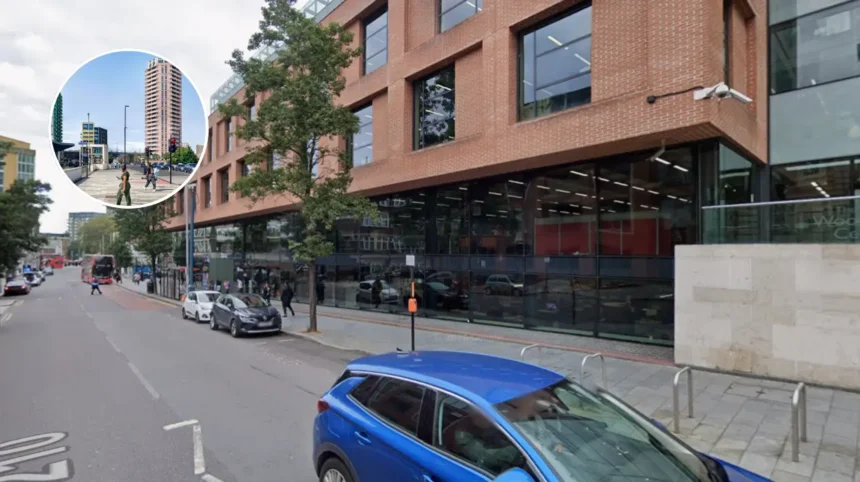
Abbey Wood (South London News) March 11, 2026 – Developers have slashed the number of affordable family homes in a controversial 25-storey tower block near Abbey Wood Elizabeth Line station, prompting outrage from locals just months after London Mayor Sadiq Khan approved the initial scheme. Greenwich Council granted permission for the revisions on 5 March 2026, reducing three-bedroom affordable units from 132 to 50 amid claims of poor sales and escalating costs. The changes affect Gallions Reach South, a 444-flat development that promised significant family housing but now prioritises smaller units and private sales.
- Key Points
- What Triggered the Reduction in Affordable Family Homes?
- Why Was the Original Scheme Approved by the Mayor?
- Who Are the Key Players Involved?
- What Facilities Will the Tower Include?
- Why Are Locals and Campaigners Upset?
- What Happens Next for the Development?
- Is This Part of a Broader London Housing Trend?
What Triggered the Reduction in Affordable Family Homes?
The revisions stem from challenges faced by developers Galliard Homes and Dandara, who took over after Peabody New London pulled out. As reported by Phoebe Fuller of MyLondon, Peabody cited “challenging market conditions” for withdrawing as the affordable housing provider in late 2025, forcing a rethink of the scheme’s viability. Galliard Homes stated in planning documents submitted to Greenwich Council that “poor sales of affordable homes” and a 20% rise in construction costs due to inflation necessitated fewer larger units.
Councillor Sarah Merrill, Greenwich Council’s cabinet member for housing, defended the approval, noting the project still delivers 151 affordable homes, meeting the 40% habitable room target set by policy.
“This development will provide much-needed homes in a growth area,”
she said in a council statement quoted by MyLondon. However, local housing group Abbey Wood Community Association labelled the cuts
“a betrayal of families waiting for decent homes near transport links.”
Why Was the Original Scheme Approved by the Mayor?
London Mayor Sadiq Khan’s office gave strategic approval to the initial plans in November 2025 under the Stage 2 referral process, as detailed in Greenwich Council planning documents covered by MyLondon. The original design promised 211 affordable homes out of 444, including 132 three-bedroom family units designed for larger households. This aligned with Greater London Authority (GLA) policies emphasising family housing in high-density schemes near transport hubs like Abbey Wood station, part of the Elizabeth Line.
As reported by Phoebe Fuller of MyLondon, the Mayor’s approval hinged on the scheme’s contribution to housing delivery in an Opportunity Area, where Abbey Wood is designated for significant growth under the London Plan.
“The Mayor welcomes high-quality developments that boost housing supply,”
a GLA spokesperson said at the time, according to planning referral reports. Critics now question whether the revisions undermine this endorsement, with housing charity Shelter South London calling it
“a classic case of developer-led dilution.”
Who Are the Key Players Involved?
Galliard Homes and Dandara lead the development, with Galliard handling sales of private units. In a statement to MyLondon, a Galliard spokesperson explained:
“We’ve worked closely with the council to maintain affordability levels while ensuring the scheme is deliverable. Larger family homes simply aren’t selling as projected.”
Dandara, focused on the affordable portion, echoed this, citing Build UK data on a 15-20% cost inflation since 2024.
Greenwich Council’s planning committee unanimously approved the changes on 5 March 2026. Chair Councillor Callum Reiss stated:
“While we pushed for more family homes, the evidence showed the original numbers were unviable without public subsidy, which isn’t available.”
Opposition came from Labour councillor Brenda Dacres, who warned:
“This reduces options for families in Abbey Wood, where space is already tight.”
Residents like Maria Gonzalez, a mother of three from nearby Sharman Dyer Close, told MyLondon:
“We were promised family homes near the station. Now it’s just more shoebox flats for singles.”
The Abbey Wood Neighbourhood Forum submitted objections, arguing the tower would overwhelm local infrastructure.
What Facilities Will the Tower Include?
Despite the housing cuts, Gallions Reach South boasts amenities to attract buyers. Plans feature a residents’ gym, cinema room, co-working spaces, and podium gardens across three levels with play areas. As per architectural visuals in the planning application, the ground floor includes cycle storage for 600 bikes but no car parking, aligning with the car-free policy near Elizabeth Line.
MyLondon’s Phoebe Fuller noted:
“The communal spaces aim to foster community, but campaigners question if they compensate for lost family housing.”
Developers promise 10% of private homes for shared ownership, targeting first-time buyers priced out of market sales.
Why Are Locals and Campaigners Upset?
The reductions hit hard in Abbey Wood, a deprived area undergoing rapid change via Crossrail. Housing for Women charity highlighted that three-bedroom homes are vital for single mothers and larger families fleeing temporary accommodation.
“London’s family housing shortage is acute; this scheme was meant to help,”
said director Claire Imih in comments to MyLondon.
Petitions on Change.org garnered over 500 signatures by mid-March 2026, calling for a judicial review. Local MP Abena Oppong-Asare (Labour) raised concerns in Parliament, stating:
“Constituents feel misled after the Mayor’s green light.”
Galliard countered that without changes, the entire project risked stalling, delivering zero affordable homes.
What Happens Next for the Development?
Construction is slated to start in summer 2026, with completion by 2029, per council timelines. Greenwich Council imposed conditions for a section 106 agreement securing affordable units and £4.2 million in community infrastructure levies. Monitoring will ensure compliance, with potential clawbacks if sales targets falter.
As reported by South London Press in a follow-up piece by journalist Tom Bull, Peabody’s exit opened doors for Dandara, but viability assessments were key.
“The council balanced delivery against policy,”
Bull quoted planning officer Rachel Henson as saying. Campaigners plan further appeals, while developers market private flats starting at £450,000.
Is This Part of a Broader London Housing Trend?
Similar dilutions occur across the capital. In nearby Thamesmead, a Berkeley Homes scheme saw family units cut by 30% last year, per Inside Housing reports. GLA data shows only 22% of new-build affordable homes in 2025 were family-sized, below targets. Critics blame Registered Provider funding gaps and private developer influence.
Housing Secretary Angela Rayner addressed this in a March 2026 speech, promising incentives for family housing but no immediate bailouts.
“Local authorities must hold firm,”
she urged, as quoted by The Guardian’s local government correspondent.