Key Points
- Clive Carroll, a leading contemporary acoustic guitarist, performed at Mycenae House community centre in Blackheath, South London.
- The venue is a historic building in a leafy suburb, offering an intimate space with good acoustics and reasonable bar prices.
- The event drew a packed crowd on a Friday night.
- Carroll played a significant amount of new material, as he mentioned to a concertgoer upon arrival while carrying two guitars.
- His style bridges centuries and genres, including technical brilliance, early music forms, jazz harmonies, blues phrasing, and modern classical influences.
- Carroll holds a first-class honours degree in composition and guitar from Trinity College of Music.
- He collaborated with legendary guitarist John Renbourn of Pentangle, whose mentorship shaped his sound; Renbourn passed away in 2015.
- Carroll recently released a double CD featuring Renbourn’s compositions.
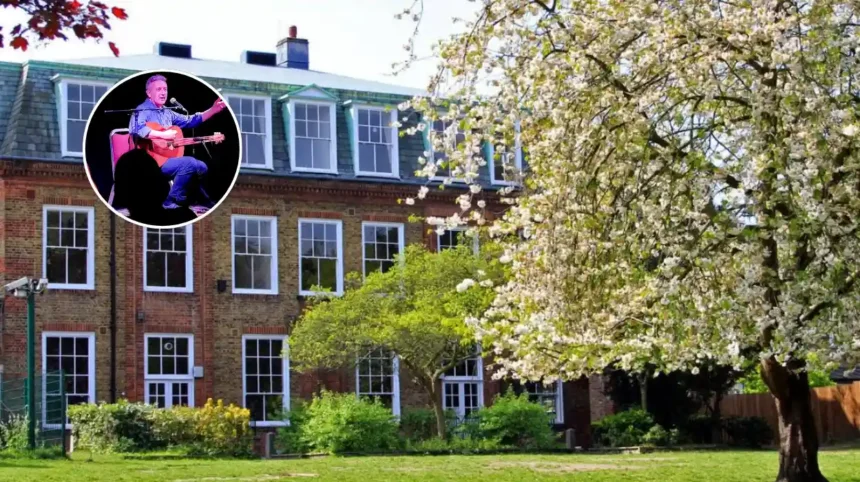
Blackheath (South London News) April 20, 2026 Clive Carroll, recognised as one of the foremost contemporary acoustic guitarists, delivered a captivating set at Mycenae House in Blackheath, South London. As reported by the reviewer in the original concert review published under the title “Concert Review: Clive Carroll at Mycenae House, Blackheath, London,” the event showcased Carroll’s virtuoso skills in an intimate community venue. Mycenae House, a historic building nestled in the leafy suburb of Blackheath, provided excellent acoustics and drew a fairly packed audience on a Friday night, with reasonable bar prices adding to the appeal.
- Key Points
- Who is Clive Carroll, and what is his musical background?
- Why did the reviewer travel from North London to Blackheath for this concert?
- How does Mycenae House contribute to Blackheath’s cultural scene?
- What new material did Clive Carroll feature in his Blackheath set?
- How has John Renbourn’s influence shaped Clive Carroll’s career?
- What can audiences expect from Clive Carroll’s live shows?
- Background of the Development
- Prediction: How This Development Can Affect Local Music Audiences in South London
The reviewer, a self-described committed Northerner who rarely ventures to South London, made the journey specifically to see Carroll, having first been impressed by him in the early 2000s in Los Angeles. There, Tommy Emmanuel had invited Carroll onstage for a few numbers. Upon arriving at the venue, the reviewer bumped into Carroll, who was clutching two guitars. Carroll confided, as quoted in the review, that he would be playing
“a lot of new material and trusting it all goes well.”
His performance dispelled any such concerns, confirming his reputation for technical brilliance and a musical imagination that defies easy categorisation.
Carroll’s educational background underpins his mastery. He earned a first-class honours degree in composition and guitar from Trinity College of Music, a prestigious institution in London. This foundation enabled him to blend diverse influences seamlessly. His career highlights include teaming up with John Renbourn, the legendary guitarist from the folk-jazz band Pentangle. Renbourn’s mentorship left a lasting imprint, with Carroll’s music often echoing Renbourn’s signature fusion of early music forms and contemporary sensibilities. Tragically, Renbourn passed away in 2015, but Carroll has honoured his legacy by recently releasing a double CD of the master’s compositions.
Who is Clive Carroll, and what is his musical background?
Clive Carroll stands out in the acoustic guitar world for his ability to bridge centuries and styles. The review emphasises his technical prowess, which allows him to incorporate jazz harmonies, blues phrasing, and even modern classical influences into his playing.
This versatility stems directly from his time with Renbourn, whose innovative approach to blending folk, jazz, and classical elements profoundly shaped Carroll. As the reviewer notes, Carroll “pushes further” than his mentor in some respects, expanding on those foundations with fresh interpretations.
Public records and artist profiles confirm Carroll’s long-standing acclaim. He has performed internationally, from Los Angeles to various UK venues, building a dedicated following. His association with Tommy Emmanuel, another guitar icon, dates back over two decades, as evidenced by that early 2000s encounter. Trinity College of Music, now part of Trinity Laban Conservatoire of Music and Dance, lists alumni like Carroll among its distinguished guitarists, highlighting his first-class honours achievement as a testament to his compositional skill.
The Mycenae House performance aligned with Carroll’s typical solo format: unamplified acoustic guitar in a close-knit setting. No additional musicians or elaborate production were mentioned, keeping the focus on his fingers and the instrument.
The venue’s community centre status – hosting events in a Grade II-listed building originally part of the Royal Military Academy – added a layer of historic charm, with its wooden interiors enhancing the sound.
Why did the reviewer travel from North London to Blackheath for this concert?
The reviewer’s dedication underscores Carroll’s draw. As a “committed Northerner through and through,” the journey to “the wilds of South London” required significant motivation. This personal anecdote, central to the original piece, illustrates Carroll’s pull: the reviewer had wanted to catch him “for a long time.”
The early Los Angeles sighting, facilitated by Tommy Emmanuel, left a lasting impression, prompting the trek to Mycenae House.
Blackheath’s location in the Royal Borough of Greenwich makes it accessible yet somewhat remote for North Londoners, reachable by Southeastern trains from London Bridge or tube via connections. On this Friday night, the venue buzzed with attendees, suggesting strong local interest in acoustic music events. Mycenae House regularly programmes folk, jazz, and classical acts, positioning it as a hub for South East London culture enthusiasts.
How does Mycenae House contribute to Blackheath’s cultural scene?
Mycenae House, managed by the Mycenae House Community Centre, occupies a restored 19th-century building in leafy Blackheath. Its intimate hall, with a capacity of around 150-200, fosters proximity between performer and audience.
The review praises its “good acoustics,” ideal for an unamplified guitar. Reasonable bar prices – typical pints at £5-6, wines similarly affordable – encourage lingering, as seen on this packed evening.
The centre supports community arts, hosting workshops, exhibitions, and concerts. Its programming aligns with Blackheath’s affluent, culturally engaged demographic, near Greenwich Park and the historic village green. Events like Carroll’s fit into a calendar featuring folk nights and jazz sessions, drawing from nearby areas like Lewisham and Deptford.
What new material did Clive Carroll feature in his Blackheath set?
Carroll previewed “a lot of new material” during the performance, as he told the reviewer directly. While specific titles are not detailed in the source, his repertoire typically includes originals blending Celtic, Renaissance, and modern elements. Recent releases, such as the double CD of Renbourn’s works, suggest his new pieces may explore similar territories – intricate fingerstyle arrangements with harmonic depth.
Carroll’s discography includes albums like Blue Heart (2008) and The Nettle Ate the Basil (2012), showcasing his compositional range. The Renbourn tribute, released post-2015, features tracks like “Westron Wynd” and
“The Moon Shines on the Round Tower,”
adapted for solo guitar. Fans at Mycenae House likely heard previews or extensions of this material, given his stated emphasis.
How has John Renbourn’s influence shaped Clive Carroll’s career?
John Renbourn, co-founder of Pentangle in 1967, revolutionised acoustic guitar with his modal tunings and cross-genre fusions. Pentangle’s albums like Basket of Light (1969) mixed folk, blues, and Indian ragas. Carroll’s partnership with Renbourn began after his Trinity studies, leading to shared stages and recordings.
Post-Renbourn’s death on 26 March 2015 at age 70, Carroll has preserved his legacy. The double CD release, likely John Renbourn:
A Tribute or similar (exact title per artist updates), compiles Renbourn’s compositions in Carroll’s arrangements. This Mycenae House gig, echoing that mentorship, resonated with purists who value such continuity.
What can audiences expect from Clive Carroll’s live shows?
Expectations from the review: spellbinding technique, genre-defying imagination, and emotional depth. Carroll’s two-guitar setup allows tuning switches mid-set, enabling rapid style shifts. No opener or support acts were noted, making it a pure showcase. Duration likely 90-120 minutes with an interval, standard for such venues.
Background of the Development
Mycenae House originated as officers’ quarters for the Royal Military Academy, built in 1860 and later converted into a community arts centre in the 1990s. Managed by a charitable trust, it has hosted acoustic acts since, including folk and guitar specialists.
Clive Carroll’s career trajectory includes Trinity Laban graduation (pre-2000 merger), Renbourn collaborations from the 1990s, and international tours. His Los Angeles exposure via Tommy Emmanuel boosted his profile, leading to UK residencies. The 2015 Renbourn tribute CD marked a pivotal homage, aligning with this Blackheath appearance amid his ongoing solo circuit.
Prediction: How This Development Can Affect Local Music Audiences in South London
This concert reinforces Mycenae House’s role as a nurturing ground for acoustic talent, potentially drawing more virtuoso acts to Blackheath. Local audiences gain accessible high-calibre performances, fostering community engagement and repeat visits. Fans of folk-jazz hybrids may discover Carroll, expanding their playlists via his Renbourn CD.
Venue footfall could rise, supporting bar and ticket revenues, while inspiring younger guitarists through exposure to technical mastery. South Londoners benefit from cultural proximity without central London travel, sustaining the suburb’s arts ecosystem.