Key Points
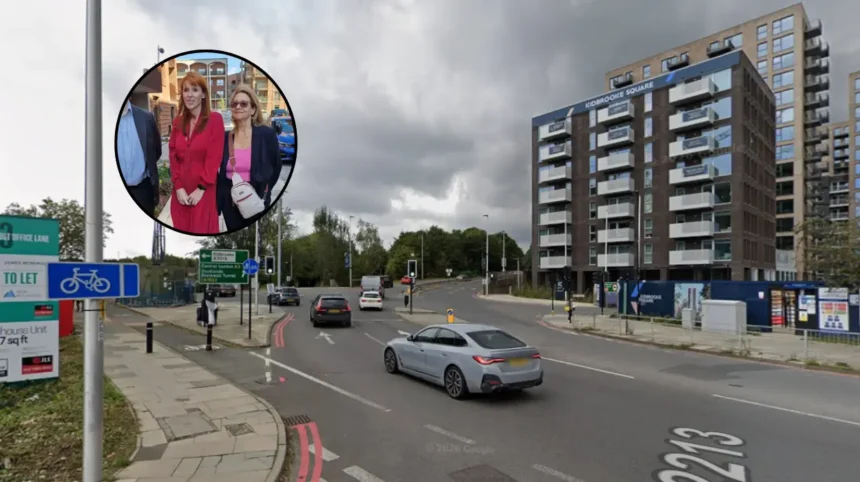
- Housing Secretary Angela Rayner and Mayor of London Sadiq Khan launched a £39 billion Social and Affordable Homes Programme at Kidbrooke Park Road in Greenwich on Wednesday, 26 August.
- The government plans to deliver over 70,000 new homes across England in the first phase of the funding drive.
- The Kidbrooke Park Road scheme has 452 homes, making it the largest 100 per cent social housing project in London.
- Greenwich Council has completed 780 homes so far under its Greenwich Builds programme, which aims to construct 1,750 council homes for people on the housing register.
- The low-to-zero carbon Kidbrooke site received funding from the Greater London Authority and includes 169 trees, landscaped gardens, play areas, a nursery, and retail space.
- Three-bedroom flats make up 26 per cent of the Kidbrooke development, and 10 per cent of the homes are wheelchair accessible.
- The national package includes £46 million over three years to help English councils hire staff and build technical skills for housing delivery.
Greenwich (South London News) August 28, 2026 – As reported by Senior Reporter Poppy Huggett of London Now (with additional coverage by Newsquest Media Group), Housing Secretary Angela Rayner and Mayor of London Sadiq Khan gathered in South East London on Wednesday, 26 August 2026, to launch the Government’s multi-billion-pound initiative aimed at revitalising local authority housebuilding across the United Kingdom.
- Key Points
- Why Was Kidbrooke Chosen for the Government’s Major Housing Drive?
- What Features Characterise the Kidbrooke Housing Infrastructure?
- How Have Local Civic Leaders Reacted to the Announcement?
- Background of Municipal Housing and the Greenwich Builds Programme
- Future Impact: How This Development Affects Local Residents, Waiting List Applicants, and Municipalities
The landmark announcement places the Royal Borough of Greenwich at the core of national housing strategy following the launch of the £39 billion Social and Affordable Homes Programme. Characterised as the most significant council housebuilding investment in decades, the initial wave of funding is projected to finance the construction of more than 70,000 new homes across England. According to official statements from central Government, the initiative is designed to enable families currently residing in temporary accommodation or enduring long waiting lists to transition into secure, high-quality, permanent housing.
Why Was Kidbrooke Chosen for the Government’s Major Housing Drive?
Senior government ministers selected Kidbrooke Park Road as the backdrop for the unveiling to showcase council-led developments as model solutions for national housing provision.
The Kidbrooke Park Road scheme consists of 452 residential units and holds the status of being the largest 100 per cent social housing development currently operating in London. The site forms a key component of the local municipal framework known as “Greenwich Builds,” a local initiative targeting the delivery of 1,750 new municipal homes for residents on the local housing register. To date, 780 units have been completed under the local municipal scheme.
What Features Characterise the Kidbrooke Housing Infrastructure?
Partially funded via the Greater London Authority (GLA), the Kidbrooke Park Road project has been structured as a low-to-zero carbon residential model. The architectural master plan centres around communal green spaces, including landscaped gardens and central recreation zones. A second development phase is scheduled to introduce an on-site nursery, supplementary play facilities, and commercial retail space.
Environmental and accessibility parameters integrated into the development include:
- Urban Forestry Integration: A total of 169 trees planted across both development phases.
- Family Accommodation: 26 per cent of total dwellings engineered as three-bedroom units.
- Inclusive Design: 10 per cent of all properties fully adapted for wheelchair users.
- Industry Recognition: Prior recipient of the Inside Housing Development Award for Best Affordable Housing Development (Over £20m) and a Housing Design Award, along with a Royal Institute of British Architects (RIBA) award shortlisting.
How Have Local Civic Leaders Reacted to the Announcement?
As reported by Poppy Huggett of London Now, local authority representatives emphasized the direct operational impact of the new capital allocation.
Councillor Jackie Smith, Deputy Leader and Cabinet Member for Housing, Greenwich Builds and Estate Regeneration, stated that the Government’s funding injection would be “life-changing” for individuals and families remaining in temporary accommodation or on waiting lists. Councillor Smith further noted that selecting Kidbrooke Park Road for the national launch served as official recognition of the structural works executed by the borough.
Concurrently, Councillor Tom Creswell, Cabinet Member for Planning and Development, observed that the financial package would allow the authority to “continue to invest and build more transformative housing developments like Kidbrooke Park Road”. The borough’s wider long-term planning framework seeks to deliver 50,000 new homes across all housing tenures by 2040.
Alongside direct capital expenditure for infrastructure, the national strategy incorporates £46 million distributed over a three-year window. This secondary fund is designated to assist municipal authorities across England in expanding internal technical skills, operational capacity, and administrative expertise necessary to deliver large-scale housing projects.
Explore More Greenwich News
GLI Proposes Massive Charlton Data Centre Development in Greenwich 2026
Woolwich Works Unveils Autumn Comedy Lineup Featuring The Comedy Store Woolwich 2026
Background of Municipal Housing and the Greenwich Builds Programme
The launch of the £39 billion Social and Affordable Homes Programme occurs against a backdrop of prolonged pressure on social housing inventory and temporary accommodation budgets across London local authorities.
The Royal Borough of Greenwich established the “Greenwich Builds” framework to directly counter severe shortages in local affordable housing stock. Prior to the national announcement, local councils across England frequently highlighted capacity constraints, land availability issues, and historic underinvestment as primary bottlenecks restricting direct municipal housebuilding.
Developments such as Kidbrooke Park Road demonstrate a shift towards higher environmental efficiency standards within public sector building, utilizing zero-carbon technologies and Greater London Authority grant co-funding to offset long-term operational costs for both local councils and tenants. The addition of £46 million in capacity-building funds reflects central government recognition that local authorities require internal expertise to manage complex, multi-million-pound construction pipelines alongside private contractors and regional authorities.
Future Impact: How This Development Affects Local Residents, Waiting List Applicants, and Municipalities
The rollout of the £39 billion funding framework and the expansion of models like Kidbrooke Park Road stand to impact multiple key stakeholders:
- Applicants on Housing Registers and Families in Temporary Accommodation: For residents on housing waiting lists, the funding expansion provides direct access to permanent, secure tenures. The provision of family-sized units (26 per cent three-bedroom layout) and accessible units (10 per cent wheelchair-adapted) targets specific shortages in municipal inventory, offering modern housing conditions designed to lower domestic energy burdens via sustainable construction methods.
- Local Authorities and Planning Departments: Municipalities across England gain access to dedicated funding tranches to rebuild internal urban planning, architectural, and procurement expertise. With £46 million allocated specifically to technical capacity, local councils will be better equipped to directly manage construction operations, reducing reliance on external developers to deliver required affordable percentages.
- The Wider Regional Community: Local residents in Greenwich and surrounding regions stand to benefit from community infrastructure integrated into major social housing sites, including nursery facilities, public green spaces, retail spaces, and urban canopy additions. Furthermore, establishing council-led building programs aids local authorities in meeting broader regional housing targets, such as Greenwich’s wider target of 50,000 homes by 2040.