Key Points
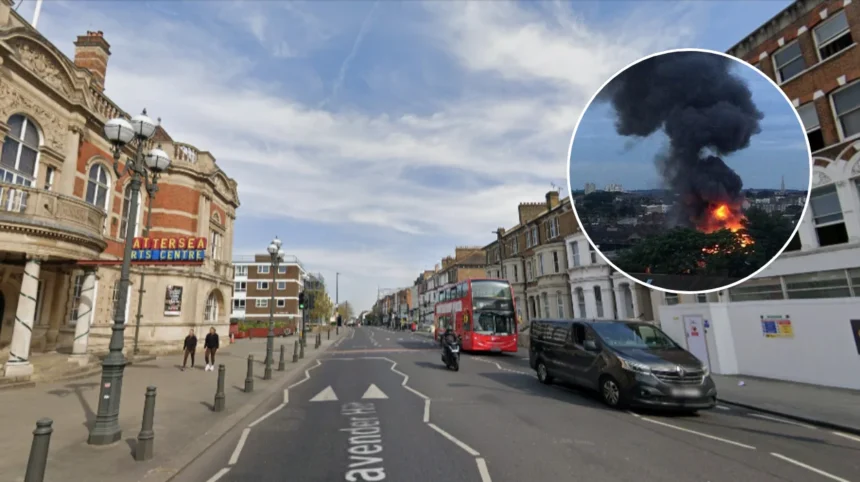
- An investigation has been launched following a huge fire in a three-storey building on Battersea Park Road, Battersea, South London.
- Eight fire engines and approximately 60 firefighters from the London Fire Brigade (LFB) attended the scene.
- The incident occurred on February 15, 2026, at around 2.28pm.
- The fire affected a mixed-use building with commercial units on the ground floor and residential flats above, with the second floor fully alight.
- Battersea Park Road was closed between Queenstown Road and Havelock Terrace during the response, leading to significant traffic disruption.
- Firefighters successfully tackled the blaze, bringing it under control after several hours.
- No information has been released on casualties, injuries, or the cause of the fire at this stage.
- The LFB has confirmed an investigation is underway to determine the origin and circumstances of the fire.
Battersea (South London News) February 16, 2026 – Firefighters from the London Fire Brigade battled a massive blaze in a three-storey building on Battersea Park Road today, prompting the launch of a formal investigation into the cause. Eight fire engines and around 60 firefighters were mobilised to the scene at approximately 2.28pm, where the second floor of the structure—a mixed-use property with commercial units below and flats above—was fully engulfed in flames. The road closure between Queenstown Road and Havelock Terrace caused widespread disruption in the local area as crews worked to contain the fire.
- Key Points
- What Happened During the Fire Incident?
- Why Was an Investigation Launched?
- How Did the Fire Impact Local Traffic and Residents?
- What Is Known About the Building Involved?
- Who Responded to the Emergency?
- When Did Firefighters Arrive and How Long Did It Take?
- Where Exactly Did the Fire Occur?
- What Are the Next Steps in the Investigation?
- Potential Causes: What Are Investigators Looking At?
- Community Reaction and Safety Concerns?
- Broader Context of Fires in South London
What Happened During the Fire Incident?
The London Fire Brigade was alerted to the emergency shortly after 2.28pm on February 15, 2026, dispatching a substantial response to Battersea Park Road. As reported by LFB officials in their initial statement,
“Eight fire engines and around 60 firefighters”
were deployed to tackle the “huge fire” in the three-storey building. The fire primarily affected the second floor, which was alight upon arrival, with flames visible from commercial units on the ground floor and residential flats overhead.
Crews faced challenging conditions due to the building’s structure, but they managed to bring the blaze under control after several hours of intense effort. Battersea Park Road, a busy thoroughfare in South London, was immediately closed between Queenstown Road and Havelock Terrace to allow safe access for emergency vehicles and to protect the public.
This closure led to significant traffic delays, affecting commuters and local residents during the afternoon rush.
No immediate reports of casualties or injuries have been confirmed by authorities, though the LFB has prioritised resident welfare.
The mixed-use nature of the building heightened concerns, as ground-floor commercial operations could have been operational at the time, alongside upstairs flats potentially housing families.
Why Was an Investigation Launched?
Following the extinguishment of the fire, the London Fire Brigade announced that a full investigation has been initiated to establish the cause. LFB spokespersons stated that such probes are standard procedure for significant incidents involving commercial and residential properties, aiming to identify any fire safety breaches or accidental triggers.
“An investigation has been launched after firefighters tackled a huge fire,”
confirmed the brigade in their official release, underscoring the scale of the event.
The probe will examine factors such as the building’s fire alarms, escape routes, and compliance with regulations under the Regulatory Reform (Fire Safety) Order 2005.
Early indications suggest the fire may have originated on the second floor, but forensic teams will analyse debris and witness accounts to confirm this. As reported across multiple outlets covering the story, the LFB emphasised public safety as paramount, with no further details released pending the inquiry’s progress.
Local authorities, including Wandsworth Council, have been notified and are supporting the effort. The investigation could involve collaboration with the Metropolitan Police if arson is suspected, though no such claims have been made at this juncture.
How Did the Fire Impact Local Traffic and Residents?
The road closure on Battersea Park Road between Queenstown Road and Havelock Terrace created substantial disruption throughout the afternoon and evening of February 15.
“Battersea Park Road was closed… causing significant disruption in the area,”
noted the LFB in their update, highlighting the knock-on effects on one of South London’s key arterial routes. Drivers reported delays stretching back to nearby Battersea Park, with diversions pushing traffic onto alternative paths like Silverthorne Road and Parkgate Road.
Residents in the vicinity described hearing sirens and seeing thick smoke billowing from the building. Flats above the commercial units were evacuated as a precaution, though exact numbers of displaced individuals remain unconfirmed. Nearby businesses, including shops and cafes along the road, temporarily halted operations due to the chaos. Wandsworth Council has urged locals to avoid the area and promised updates on when full access would resume.
By late evening, partial reopening allowed some traffic flow, but full clearance awaited the removal of firefighting equipment and initial scene preservation for investigators.
What Is Known About the Building Involved?
The affected property on Battersea Park Road is a typical South London mixed-use structure: commercial units occupy the ground floor, potentially including retail or office spaces, while upper levels house residential flats.
The second floor, where the fire was concentrated, sustained the most damage, with reports indicating it was “alight” upon firefighters’ arrival. This configuration raises questions about fire separation measures between commercial and domestic areas.
No specific details on the building’s ownership or recent inspections have been disclosed, but the incident underscores ongoing concerns about fire safety in older urban properties. Battersea’s ongoing regeneration, with luxury developments nearby, contrasts with such legacy buildings, prompting local scrutiny.
Who Responded to the Emergency?
The London Fire Brigade led the response, committing significant resources: eight fire engines carrying around 60 firefighters from stations likely including those in Battersea, Clapham, and Wandsworth. LFB crews used specialist equipment such as turntable ladders and hose reels to combat the flames from multiple angles.
Their swift action prevented the fire from spreading to adjacent properties, a testament to their training and coordination.
Ambulance services from the London Ambulance Service stood by, though no major hospitalisations were reported. The Metropolitan Police assisted with traffic management and securing the perimeter.
When Did Firefighters Arrive and How Long Did It Take?
The call came in at around 2.28pm on February 15, 2026, with the first engines arriving within minutes due to proximate stations. Firefighters were on scene for several hours, methodically damping down hotspots to ensure no re-ignition. By evening, the majority of apparatus had withdrawn, leaving a smaller crew for monitoring.
This rapid deployment aligns with LFB protocols for high-rise or multi-storey blazes in densely populated areas like Battersea.
Where Exactly Did the Fire Occur?
Battersea Park Road, in the heart of Battersea, South London, is a vibrant commercial strip near Battersea Park and the River Thames. The closure spanned from Queenstown Road to Havelock Terrace, cordoning off a key section frequented by locals and visitors. Proximity to Battersea Power Station developments adds context to the area’s evolution.
What Are the Next Steps in the Investigation?
The LFB’s probe will involve fire investigators combing the site, interviewing witnesses, and reviewing CCTV footage. A report will determine if safety orders were breached, potentially leading to enforcement actions. Residents may receive support from council housing teams if displacements prove long-term.
Local MP routes and community forums will likely demand transparency, especially given Battersea’s profile.
Potential Causes: What Are Investigators Looking At?
While the cause remains undetermined, possibilities include electrical faults in commercial wiring, cooking appliances in flats, or discarded smoking materials. Arson cannot be ruled out, though no evidence suggests foul play. Investigators prioritise these leads methodically.
Community Reaction and Safety Concerns?
South London residents expressed relief at the contained blaze but voiced worries over fire risks in similar buildings. Community leaders called for rigorous checks borough-wide. “Significant disruption” from the closure amplified frustrations, per eyewitness accounts.
Broader Context of Fires in South London
This incident follows a pattern of urban blazes in the capital, with LFB attending over 20,000 structure fires annually. Recent Grenfell inquiries continue to influence protocols, ensuring thorough post-incident scrutiny.