Key Points
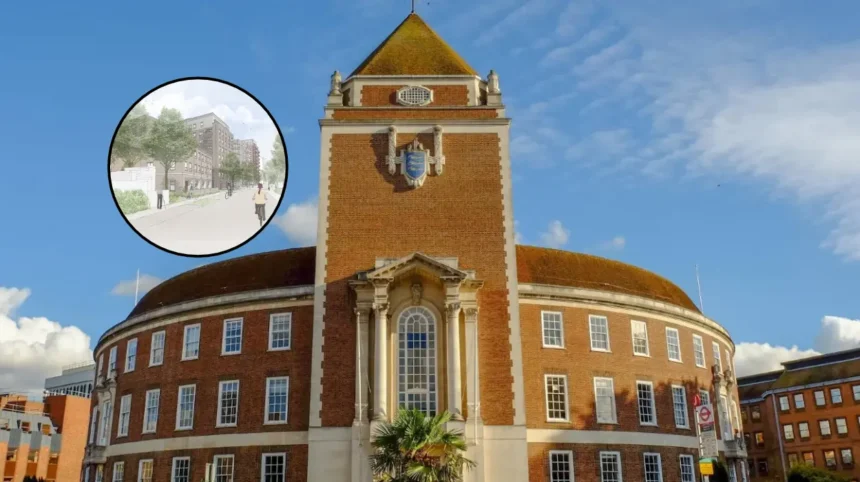
- Vistry Group and Kingston Council have secured detailed planning approval for Phase 2 of the Cambridge Road Estate scheme, which will deliver 383 new homes.
- The design, created by architecture firm BPTW, forms part of a wider masterplan delivering 2,170 homes to replace ageing housing stock with modern, higher-density residential units.
- The development requires civil and infrastructure engineering teams to carry out extensive groundworks, utility upgrades, and multi-stage phasing across the brownfield site.
- The approval reinforces a strategic shift towards mixed-tenure, partnership-led housing schemes, as seen in similar initiatives such as the 226-home Kings Brook project delivered alongside Doncaster Council.
- This project contributes to a expanding portfolio across the South East of England, alongside Phase 2 in Bromley and the 1,500-home Fordham project utilizing recycled runway concrete, despite recent financial challenges reported in interim financial results.
Kingston upon Thames (South London News) October 20, 2026 – Vistry Group and the Royal Borough of Kingston upon Thames have formally secured planning permission for Phase 2 of the Cambridge Road Estate regeneration project. The approval allows for the construction of 383 new homes within the overall masterplan, which is designed to bring a total of 2,170 residential units to the area. Designed by architecture practice BPTW, the scheme replaces old housing stock with modern, high-density residential buildings. The project introduces key technical and operational requirements for engineering contractors, particularly in relation to ground conditions, infrastructure capacity, and phased construction timelines.
- Key Points
- What Does the Phase 2 Approval Mean for Civil and Infrastructure Engineers?
- How Does This Approval Reflect Broader Housebuilding Trends and Corporate Delivery Models?
- What Strategic Regional Footprint Is Vistry Consolidating Across the South East?
- What Is the Background to the Cambridge Road Estate Regeneration?
- What Is the Future Outlook and Impact for Civil Engineers and Infrastructure Contractors?
What Does the Phase 2 Approval Mean for Civil and Infrastructure Engineers?
For civil engineering and infrastructure delivery partners, the planning consent for Phase 2 marks the continuation of large-scale brownfield renewal in outer London. The construction schedule requires technical coordination across several specialized engineering fields:
- Staged Groundworks: Clearing existing structures while carrying out targeted earthworks, foundation construction, and ground remediation without disturbing ongoing residential use in surrounding blocks.
- Utilities and Infrastructure Upgrades: Updating legacy sub-surface services, including mains water distribution, high-voltage electrical networks, gas pipelines, and digital telecommunications capacity to serve a higher density population.
- Estate-Wide Phasing Strategies: Managing traffic flow, plant movement, structural load capacities, and environmental impact controls across multiple overlapping construction stages.
The masterplan replaces low-density, ageing structures with efficient multi-storey developments. This transition requires early-stage civil engineering assessments to verify local drainage networks, manage surface water run-off through Sustainable Drainage Systems (SuDS), and integrate low-carbon district heating pipework.
How Does This Approval Reflect Broader Housebuilding Trends and Corporate Delivery Models?
The partnership between Vistry Group and Kingston Council illustrates a broader structural shift within the United Kingdom housebuilding sector. Development models have increasingly pivoted toward joint-venture partnerships, mixed-tenure housing provision, and long-term public-sector collaboration, moving away from high-risk speculative housebuilding for private sale.
Partnership-Led Model Comparisons
A comparison of current joint-venture projects demonstrates how this strategic delivery model is being implemented nationwide:
| Project Location | Public Sector Partner | Home Output Volume | Core Strategic Objective |
| Cambridge Road Estate (Phase 2) | Royal Borough of Kingston upon Thames | 383 homes (2,170 masterplan total) | High-density urban regeneration, council housing replacement, and infrastructure modernising. |
| Kings Brook | Doncaster Council | 226 homes | Regional mixed-tenure delivery, affordable housing provision, and local authority land utilization. |
| Bromley Regeneration | London Borough of Bromley | Phase 2 multi-unit build | London suburban density enhancement and public land optimization. |
| Fordham Masterplan | Regional Authority Partners | 1,500 homes | Large-scale brownfield recycling, circular economy material integration (recycled runway concrete). |
This joint partnership strategy allows housebuilders to mitigate market volatility by pre-selling units to housing associations and local councils, securing steady cash flow during broader macroeconomic uncertainty.
What Strategic Regional Footprint Is Vistry Consolidating Across the South East?
The approval in Kingston upon Thames adds to a growing cluster of major residential and infrastructure projects across London and the South East. By building a critical mass of active construction sites within specified regions, prime contractors can optimize material supply chains, reallocate specialized engineering personnel, and streamline subcontractor procurement.
In Fordham, the group’s 1,500-home development gained attention by incorporating recycled aggregate derived from former airfield runway concrete into its primary infrastructure works. The technical lessons, material specifications, and supply chain channels established in such projects provide operational templates for urban brownfield works, such as the Cambridge Road Estate.
This operational consolidation in the South East comes during a period of financial adjustment for the builder, following recently flagged interim losses. Maintaining steady output across high-density municipal partnerships forms a key element of the company’s financial stabilization strategy.
What Is the Background to the Cambridge Road Estate Regeneration?
The Cambridge Road Estate, originally constructed in the mid-to-late 20th century, long required comprehensive structural and environmental renewal. Located in the Royal Borough of Kingston upon Thames, the estate originally comprised prefabricated and low-density housing blocks that suffered from thermal inefficiency, ageing service utility connections, and layout designs that no longer met modern municipal urban planning standards.
In response to growing population pressure and housing waiting lists, Kingston Council initiated plans for a total overhaul of the estate. Following extensive public consultation and a ballot of estate residents, approval was granted to proceed with a multi-phase masterplan delivering 2,170 homes across high-density modern blocks. BPTW was appointed to lead the architectural design, creating a framework focused on public green spaces, energy-efficient building envelopes, integrated community facilities, and updated civil infrastructure.
Phase 1 established the initial structural foundations and delivered the first wave of replacement homes for existing residents. The securing of planning permission for Phase 2 marks the transition into the next primary phase of brownfield clearance, deep utility routing, and structural super-structure execution.
What Is the Future Outlook and Impact for Civil Engineers and Infrastructure Contractors?
The approval of Phase 2 at Cambridge Road Estate directly impacts civil, structural, and infrastructure engineering teams operating in the urban development sector. Over the medium and long term, this project will influence civil engineering workflows and sector demand across several key areas:
Technical and Operational Demands on Civil Engineering Works
- Sub-Surface Utility Integration: Engineering teams will need to design, divert, and connect complex utility grids underneath tight urban corridors without disrupting existing surrounding service connections.
- Advanced Foundation Solutions: High-density, multi-storey structures demand deep pile foundations, ground stabilization techniques, and continuous structural monitoring adjacent to live residential zones and municipal roadways.
- Sustainable Material Logistics: Requirements to lower embedded carbon will force contractors to adopt recycled aggregates, low-carbon concrete mixes, and off-site modular pre-fabrication techniques, building on methods deployed on regional sites like Fordham.
- Phased Site Logistics Management: Coordinating heavy plant access, earthworks excavation, crane movements, and material drop-offs within a active residential masterplan demands digital scheduling tools and structural safety controls.
Ultimately, this development provides long-term contracting opportunities for specialized infrastructure teams, civil engineering firms, groundworks sub-contractors, and utility network operators. It establishes a benchmark for how local authorities and private builders navigate complex, multi-stage urban renewal projects amid changing economic conditions.