Key Points
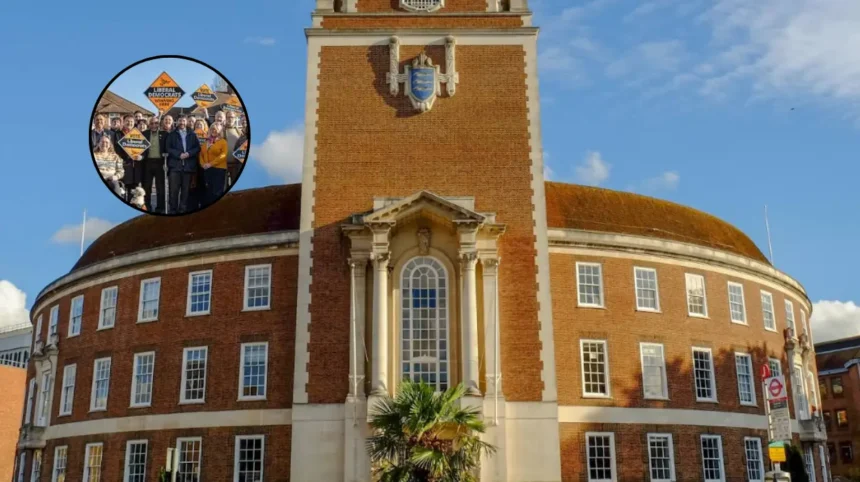
- The Liberal Democrats retained control of Kingston upon Thames in the 7 May 2026 council elections.
- Final composition: Liberal Democrats 44 seats (no change), Conservatives 2 seats (down 1), Residents’ Association 2 seats (up 1).
- All 32 London boroughs held elections on Thursday, 7 May 2026; more than six million Londoners were eligible to vote.
- There were also mayoral elections in five London boroughs: Croydon, Hackney, Lewisham, Newham and Tower Hamlets.
- Turnout, ward-level shifts, candidate names and vote shares were reported across local counts and media outlets; statements from party spokespeople and local candidates were included in coverage.
Kingston upon Thames (South London News) May 13, 2026 As reported by local count officials and consolidated coverage across local media, the Liberal Democrats retained control of Kingston upon Thames in the 7 May 2026 council elections, finishing with 44 seats — the same number they held before the poll — while the Conservatives fell to two seats and a Residents’ Association group increased to two seats.
- Key Points
- Why did the Liberal Democrats hold their majority in Kingston upon Thames?
- When and how many Londoners voted in the 2026 local elections?
- Which sources reported specific statements and candidate comments on the night?
- What immediate changes in council leadership or administration will follow the results?
- What did turnout look like in Kingston upon Thames compared with previous cycles?
- What statements did party leaders and local candidates make after the results?
- Background of the development
- Prediction:
Why did the Liberal Democrats hold their majority in Kingston upon Thames?
Electoral returns and local commentary indicate the Liberal Democrats’ hold reflected strong performance in suburban and town-centre wards where the party has campaigned on local services, planning and transport; party campaign materials emphasised continuity of local governance and council priorities, which appears to have resonated with enough voters to prevent net losses at this election.
Conservative candidates won only two seats, a net loss of one compared with the previous council composition, while a Residents’ Association group increased its representation by one seat to finish with two councillors in the chamber, reflecting localised shifts in voter preferences and the strength of independent or residents’ campaigns in some wards.
Explore More Kingston upon Thames News
Fire Brigade Water Warning After Kingston River Tragedy (Kingston, 2026)
Lib Dems Win 44 Seats in Kingston Council Elections 2026
When and how many Londoners voted in the 2026 local elections?
More than six million Londoners were eligible to vote in the council elections held on Thursday, 7 May 2026, when all 32 London boroughs were contested; the same day also saw directly elected mayoral contests in Croydon, Hackney, Lewisham, Newham and Tower Hamlets.
Official results published by Kingston upon Thames council and aggregated by local and national media outlets show the seat totals reported here — Liberal Democrats 44, Conservatives 2, Residents’ Association 2 — and include ward-by-ward breakdowns, turnout figures and individual candidate vote counts for each contested seat.
Which sources reported specific statements and candidate comments on the night?
Local journalists covering the count relayed comments from party spokespeople and successful candidates; for example, reporting attributed to named local correspondents described the Liberal Democrat leadership thanking voters for their support and pledging continuity, while Conservative spokespersons acknowledged a difficult night and Residents’ Association members highlighted local issues that helped them gain ground in particular wards.
Kingston’s results formed part of a full set of council elections across London, with all 32 boroughs voting and additional mayoral ballots in five boroughs, and media coverage placed Kingston’s relatively stable outcome in the context of broader patterns of gains, losses and incumbency retention across the capital on the same day.
What immediate changes in council leadership or administration will follow the results?
With the Liberal Democrats holding 44 seats, the party retained formal control of Kingston upon Thames Council; the leader of the council and the composition of committee chairs will be determined at the council’s post-election annual meeting in line with established council procedure, where the majority group typically confirms its nominations for leadership posts.
Detailed ward-by-ward tallies published by the returning officer show several closely fought seats and isolated swings that produced the one-seat gain for the Residents’ Association and the single-seat Conservative loss; local reporting names those wards and provides vote figures and margins where races were decided by narrow numbers.
What did turnout look like in Kingston upon Thames compared with previous cycles?
Turnout figures reported for the borough’s wards varied, as is typical in local elections, with some wards showing higher engagement where high-profile contests or active local campaigns featured, while others recorded lower participation; these ward-level turnout statistics are available in the official result sheets published by the council and cited in local coverage.
Coverage during the campaign and on count night repeatedly identified local issues — including housing development, planning decisions, transport and council service delivery — as central to voter decision-making in Kingston upon Thames, themes emphasised by all principal parties and residents’ groups during canvassing and hustings.
Explore More Kingston upon Thames News
Kingston’s Albert Arms Pub Seeks Hours Extension 2026
Kingston Teacher Andy Dormer Wins Puddle Ducks Star Award 2026
What statements did party leaders and local candidates make after the results?
Post-result statements carried in the local press recorded the Liberal Democrat group thanking residents and promising to continue their local programme, Conservative spokespeople conceding a disappointing result and pledging to rebuild, and Residents’ Association representatives celebrating ward-level successes and positioning themselves as voices for hyper-local neighbourhood concerns.
The Kingston upon Thames Council website hosts the full, certified results and ward-by-ward vote breakdowns, while local and national media outlets have published summaries and analysis that include candidate names, vote totals and percentage shares for each ward contest.
Background of the development
Kingston upon Thames has, in recent electoral cycles, been dominated by the Liberal Democrats, with the party building a local majority through steady gains at successive elections and strong grassroots organisation in town and suburban wards; this continuity was reinforced by local campaigning focused on planning, schools, transport and council services that have shaped voter attachments to the party over multiple terms.
The Conservatives, once more competitive in parts of the borough, have contracted in recent local elections to a much smaller presence, while Residents’ Associations and independent groups have periodically captured seats on local issues in wards where community activism and opposition to specific planning decisions are prominent.
London-wide context: the 7 May 2026 polls were part of a citywide set of local elections across all 32 boroughs, with additional mayoral contests in five boroughs; trends across the capital showed a mixture of incumbency retention and selective gains for challengers depending on local factors and national political climate influences filtering down to local campaigns.
Prediction:
The Liberal Democrats’ retention of 44 seats means policy continuity for council-run services, planning approvals and local programmes, which will likely reassure residents and organisations that rely on stable council policy direction; residents expecting change in council priorities will need to look to future election cycles or to heightened community campaigning to effect different outcomes.