Key Points
- Lajos Mandrik, aged 37, died by suicide at Ellis Ward at Tolworth Hospital in Surbiton on September 13, 2023.
- Staff failed to check on Mr Mandrik for more than three hours, despite him being scheduled for observation four times per hour.
- The inquest jury concluded the death was a suicide contributed to by neglect.
- Assistant Coroner Richard Furniss for West London flagged that hourly general observations were often reduced to a “headcount” to confirm presence rather than meaningful engagement.
- Death occurred during a non-observation period due to human error and a faulty allocation system, which has since been changed.
- Evidence raised serious concerns over non-compliance with general and intermittent observation policies on Ellis Ward at South West London and St George’s Mental Health NHS Trust.
- A Regulation 28 Prevention of Future Deaths report was issued on January 4, 2026, to the Trust’s Chief Executive.
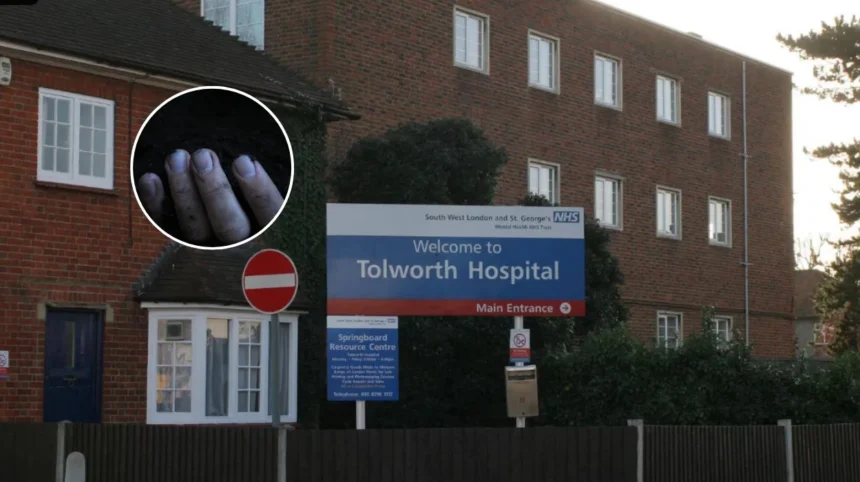
Surbiton (South London News) May 14, 2023 –A 37-year-old man took his own life after hospital staff on Ellis Ward at Tolworth Hospital in Surbiton failed to check on him for more than three hours, despite protocols requiring observations four times per hour, an inquest has found.
- Key Points
- What happened at Ellis Ward on September 13, 2023?
- Why Did the Inquest Conclude Neglect Contributed to the Death?
- What Is Known About Lajos Mandrik?
- How Has the Trust Responded to the Inquest Findings?
- What Are General Observations in Mental Health Wards?
- What Is a Regulation 28 Prevention of Future Deaths Report?
- Background of the Development
- Prediction for Patients and Families
The inquest into the death of Lajos Mandrik concluded on April 1, 2026, with a jury determining that his suicide was contributed to by neglect, as reported across multiple sources, including legal firms covering the proceedings. Assistant Coroner Richard Furniss highlighted systemic issues in observation practices during the hearing at West London Coroner’s Court.
What happened at Ellis Ward on September 13, 2023?
Mr Mandrik, who was under the care of South West London and St George’s Mental Health NHS Trust, died during a period when no staff observations took place due to human error combined with a malfunctioning staff allocation system.
This system, used to assign observation duties, failed to properly roster checks, leading to a gap exceeding three hours without any staff interaction or visual confirmation of his well-being.
As detailed in the inquest evidence, Mr Mandrik was meant to receive hourly general observations and more frequent intermittent checks as per Trust policy for patients at risk. However, these were not carried out in line with guidelines.
The coroner noted that general observations on the ward were frequently limited to a basic headcount—merely verifying patient presence—rather than involving any meaningful engagement or assessment of their condition.
The faulty allocation system has since been rectified by the Trust, according to findings presented at the inquest. Despite this change, the coroner expressed ongoing concerns about broader compliance issues on Ellis Ward.
Why Did the Inquest Conclude Neglect Contributed to the Death?
The jury at the inquest, held in West London, returned a conclusion of suicide contributed to by neglect after reviewing evidence from staff, records, and Trust procedures.
Mr Mandrik had been admitted to the acute psychiatric ward and was considered acutely vulnerable, with a diagnosis of paranoid schizophrenia.
Assistant Coroner Richard Furniss, in his remarks, stated that the evidence raised “serious concerns” for the South West London and St George’s Mental Health NHS Trust regarding the failure to conduct general and intermittent observations in accordance with policy. He specifically flagged that hourly checks were
“often reduced to ‘nothing more than a headcount’ to ensure patients were present rather than attempting meaningful engagement.”
No direct quotes from Trust representatives during the inquest were detailed in available reports, but the proceedings underscored human error as a key factor in the non-observation period.
The Trust has not publicly responded in the sourced coverage, though a Prevention of Future Deaths report was sent to its Chief Executive.
Explore More South London Crime News
Teen Stabbed in Daylight Attack on Sutton High Street 2026
Two Injured in Five Oak Mews Bromley Stabbing, 2026
What Is Known About Lajos Mandrik?
Lajos Mandrik was 37 years old at the time of his death on September 13, 2023. He was a patient on Ellis Ward, an acute psychiatric unit at Tolworth Hospital in Surbiton, South London.
Reports describe him as acutely vulnerable with paranoid schizophrenia, placing him under heightened observation requirements.
Further personal details, such as admission circumstances or prior medical history beyond the diagnosis, were not elaborated in the inquest summaries from legal sources monitoring the case. The focus of coverage remained on procedural failings rather than individual background.
How Has the Trust Responded to the Inquest Findings?
Public statements from South West London and St George’s Mental Health NHS Trust specifically addressing Mr Mandrik’s inquest were not found in the reviewed sources.
However, the Trust received a formal Regulation 28 report dated January 4, 2026, from Assistant Coroner Richard Furniss, titled “2026-0219,” sent to the Chief Executive at the organisation’s Trinity Building in Springfield University Hospital, London SW17 0YF.
Under coronial procedure, recipients of such reports are required to respond within 56 days outlining actions taken or proposed to prevent future deaths.
The report pertains to risks identified in the circumstances of Mr Mandrik’s death. The Trust’s general complaints process, including a dedicated PALS line (0203 513 6150) and email (complaints@swlstg.nhs.uk), remains available for concerns.
No evidence of a published Trust response to this specific report appears in current searches as of May 2026.
What Are General Observations in Mental Health Wards?
In NHS mental health settings like Ellis Ward, general observations involve hourly checks on all patients to ensure safety and welfare, as per Trust policies.
Intermittent observations are more frequent for higher-risk individuals, such as four times per hour in Mr Mandrik’s case.
The coroner criticised the practice of reducing these to a “headcount,” where staff merely confirm a patient is in their room without further interaction.
This falls short of policy requiring engagement to assess mental state or immediate risks. Such protocols aim to mitigate suicide risks in vulnerable patients, particularly those detained under the Mental Health Act, though Mr Mandrik’s exact legal status was not specified in reports.
What Is a Regulation 28 Prevention of Future Deaths Report?
A Regulation 28 report, under the Coroners (Investigations) Regulations 2013, is issued when an inquest reveals circumstances giving rise to a risk of future deaths that could be prevented. Assistant Coroner Richard Furniss sent such a report to the South West London and St George’s Mental Health NHS Trust on January 4, 2026, following Mr Mandrik’s inquest.
These reports are not punitive but prompt organisational action; recipients must reply within 56 days detailing steps to address identified risks. The Chief Coroner oversees them, and they may be shared with bodies like the Care Quality Commission (CQC). In this case, the report references concerns from the inquest evidence on observation practices.
Background of the Development
Tolworth Hospital in Surbiton forms part of the South West London and St George’s Mental Health NHS Trust, which provides mental health services across south west London, including acute wards like Ellis Ward for patients with severe conditions such as schizophrenia. The Trust operates from sites including Springfield University Hospital and manages inpatient care under national NHS guidelines requiring rigorous observation protocols for at-risk patients.
Ellis Ward specifically handles acute psychiatric needs, where policies mandate hourly general observations and enhanced intermittent checks based on individual risk assessments. The inquest into Mr Mandrik’s death on September 13, 2023, exposed lapses in these systems, including reliance on a now-replaced allocation tool. This incident follows a pattern of coronial scrutiny on mental health trusts, with similar reports issued on observation and staffing issues elsewhere, though no direct prior incidents on this ward were linked in sources.
The Trust’s structure includes quality governance led by figures like Head of Quality and Governance Theresa Pardey, overseeing compliance. Post-inquest, the Regulation 28 report dated January 4, 2026, marks a formal escalation, archived by the Courts and Tribunals Judiciary.
Prediction for Patients and Families
This development, centred on observation failures at Tolworth Hospital’s Ellis Ward, can affect patients under South West London and St George’s Mental Health NHS Trust care by prompting potential reviews of allocation systems and observation training to align more closely with policy. For families of vulnerable individuals with conditions like paranoid schizophrenia, it may lead to increased transparency in ward protocols and faster implementation of system fixes already underway.
Patients on acute wards could experience stricter enforcement of meaningful engagement over basic headcounts, reducing non-observation gaps from human error. Families might gain from mandatory responses to Prevention of Future Deaths reports, providing updates on preventive measures within 56 days. Overall, heightened coronial oversight could influence resource allocation for staffing and technology on similar wards, directly impacting safety for those requiring frequent monitoring.