Key Points
- Three additional Sussex cows were released into Tolworth Court Farm Fields on April 2, 2026, joining the initial three released in February 2026.
- The site spans 42-43 hectares in southwest London, marking the first large-scale urban rewilding project in the capital.
- The Wild Tolworth project involves Citizen Zoo, Kingston Council, and The Community Brain, aiming to boost biodiversity through natural grazing.
- Cows wear GPS-enabled NoFence collars for virtual boundaries and a physical stock fence for safety; managed by ‘Wild Guardians’ volunteers.
- Grazing expected to create habitat mosaics, increase plant/insect diversity, support wildflowers, dung beetles, and carbon sequestration.
- Wetlands restored with 4,187 native plants, wheelchair-accessible boardwalk added; helps flood prevention and wildlife like birds/amphibians.
- First cattle in over 50 years; site historically supported skylarks, lapwings, bullfinches.
- Public access maintained; dogs on leads requested near livestock for safety.
- Initial February release by Deputy Mayor Mete Çoban MBE; quotes from officials praise biodiversity and community benefits.
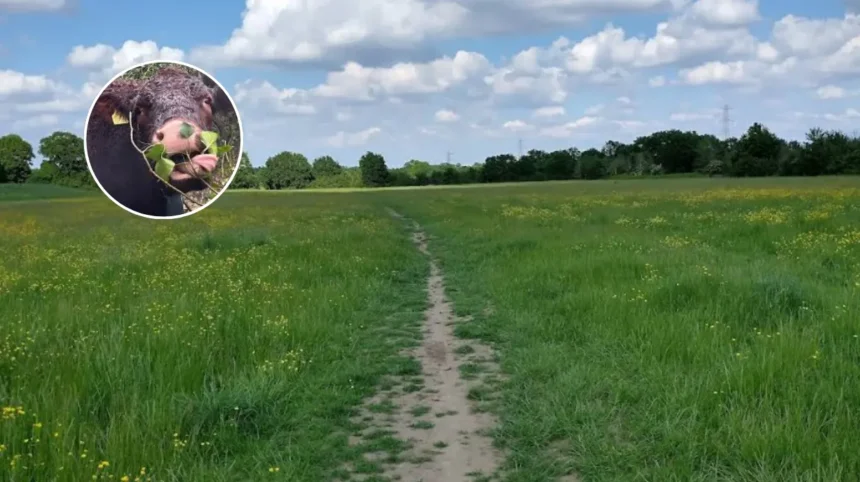
Tolworth (South London News) April 9, 2026 –Three Sussex cattle joined the existing herd at Tolworth Court Farm Fields last Thursday, April 2, doubling the number of free-roaming cows on this 42-hectare site owned by Kingston Council. The release forms part of the Wild Tolworth initiative, a collaboration between Citizen Zoo, The Community Brain, and Kingston Council, transforming the area into London’s first large-scale urban rewilding project. This marks the return of grazing animals to the reserve for the first time in more than 50 years.
- Key Points
- Why Were More Sussex Cows Released in Tolworth?
- What Safety Measures Protect Visitors and Cows?
- Who Partners on the Wild Tolworth Project?
- When Did the First Cows Arrive and Who Released Them?
- What Other Changes Have Occurred at the Site?
- Where Exactly Can People See the Cows?
- Background of the Development
- Prediction: Effects on Local Communities
Why Were More Sussex Cows Released in Tolworth?
The additional cows were introduced to enhance ecological processes, as reported by Wendy Harurl of BBC London in a video segment aired around April 3, 2026. Elliot Newton from Citizen Zoo explained during the coverage: “Last week, three new cattle joined the herd that was released here in February. It was actually a beautiful thing to witness. We saw them sort of had the original three cows over here, then the free ones came in and they sort of ran together, merged.” He added that the cows act as “stewards of the landscape,” enabling wildflowers to establish and supporting insects like dung beetles through their manure.
Citizen Zoo’s statement, cited in multiple reports, notes:
“It’s about building resilience to a changing climate, reconnecting people with the living world, and creating something local communities can feel proud of every time they pass by.”
The animals’ natural trampling, grazing, and browsing behaviours are projected to build a “mosaic of habitats,” increase plant and insect diversity, and help sequester carbon in the soil.
The site, along the Hogsmill River green corridor, had degraded plant communities despite prior management, with baseline surveys showing potential for more than 1,000 insects and 40+ bird species.
What Safety Measures Protect Visitors and Cows?
Safety features include NoFence GPS collars that play sounds to train cows away from boundaries, set one metre inside a physical stock fence. Volunteers known as ‘Wild Guardians’ monitor welfare daily, conducting checks twice a day.
The Citizen Zoo website FAQ states:
“We have recruited a dedicated team of ‘Wild Tolworth Guardians’ to conduct checks on the livestock and their welfare twice a day, every day. If there are any issues flagged with the individuals or regarding their safety on site, we will respond immediately.”
Dog walkers are asked to keep pets on leads within the enclosure, as Sussex cattle are selected for docile traits and trained around humans and dogs. The FAQ adds:
“With the presence of cattle, it will be increasingly important to keep dogs on leads to prevent any possible incidents.”
Public paths remain open, with improved accessibility including wheelchair-friendly gateways and reduced inclines. Wendy Harurl of BBC London reported reduced antisocial behaviour since the cattle arrived.
Who Partners on the Wild Tolworth Project?
Kingston Council owns the land, partnering with Citizen Zoo and The Community Brain. The project has involved ecological surveys with experts from the Field Studies Council, Biological Recording Company, Surbiton District Bird Watching Society, and Butterfly Conservation. Community engagement includes Nature-Friendly Dog Walks and over 15 volunteer recording days.
Funding comes from sources like the Greater London Authority and National Lottery Heritage Fund. Dr Robin Hutchinson MBE, Director of The Community Brain, said as quoted on Citizen Zoo’s site:
“What was just a dream five years ago is now becoming a reality with the new wetlands already demonstrating their massive impact and now cattle coming onto the site.”
When Did the First Cows Arrive and Who Released Them?
The initial three Sussex cattle were released on February 10, 2026, from a holding pen by Deputy Mayor of London for Environment and Energy, Mete Çoban MBE. Mete Çoban stated:
“The Wild Tolworth team have done a great job rewilding this site, creating new habitats and increasing the plant biodiversity. This restoration complements the important work we are doing to improve green and blue spaces across the city as we build a better, greener London for everyone.”
Elliot Newton, Director of Rewilding at Citizen Zoo, remarked:
“Wild Tolworth can change what we believe a suburban landscape is capable of… showing you don’t need to travel far to experience nature-rich places.”
Councillor Ian Manders, Portfolio Holder for Climate Action, Biodiversity and Planning Policy at Kingston Council, said:
“It’s great to see how far the Wild Tolworth project has come over the last year… it goes to show that we all want more of the natural world in our neighbourhood.”
What Other Changes Have Occurred at the Site?
Wetland restoration in the Great Meadow mimics historical Hogsmill River floodplain, with 4,187 native plants planted. A boardwalk provides public access, aiding flood prevention by storing runoff. Stock fencing was installed in 2025 to prepare for grazing.
The site, a 43.3-hectare Local Nature Reserve designated in 2004, features ancient hedgerows and brown hairstreak butterflies. Past species included skylarks, lapwings, and bullfinches. Community art includes murals and walking routes by local creatives.
Where Exactly Can People See the Cows?
Tolworth Court Farm Fields lies in Tolworth, Royal Borough of Kingston, coordinates 51°22′16″N 0°16′44″W. Visitors access via public paths; cows roam within fenced areas, tracked live via GPS collars as shown by project staff to BBC’s Wendy Harurl:
“They’ve got these amazing little GPS collars… live movement.”
Encounters are unlikely outside the fields unless near boundaries, but the site remains open.
Background of the Development
Tolworth Court Farm Fields became a Local Nature Reserve in 2004 due to its historical and ecological value, spanning seven meadows along the Hogsmill River. Prior management involved annual hay cuts, but surveys since 2003 showed degrading plant diversity. Rewilding efforts built on 2024 plans, with initial cattle trials that year by Elliot Newton, then Kingston Council’s Biodiversity Officer.
The Wild Tolworth project launched with partnerships in place by 2025, including fence installation and wetland work. February 2026 saw the first permanent releases, followed by April additions, aligning with broader UK rewilding trends. Surveys continue to monitor impacts.
Prediction: Effects on Local Communities
This development can enhance biodiversity for residents through increased habitats supporting insects, birds, and plants, providing nearby nature access without travel. It may reduce flood risks via wetlands, benefiting Tolworth and downstream areas. Communities gain engagement via volunteer roles and events, fostering pride and education on urban ecology.
Dog walkers and families retain green space use with safety protocols, potentially lowering antisocial behaviour as observed post-February. The project supports climate resilience by sequestering carbon and building ecosystem health, indirectly aiding local environmental stability. Kingston residents experience a dynamic landscape evolving visibly from their neighbourhoods.