Key Points
- Prime Minister Andy Burnham’s Labour administration has announced a major £343 million national NHS mental health expansion, featuring 11 new mental health sites across South London.
- The rollout forms part of a nationwide programme delivering 100 community mental health centres and 59 dedicated mental health emergency departments.
- South London and Maudsley NHS Foundation Trust (SLaM) and South West London and St George’s Mental Health NHS Trust will host the new sites across multiple South London boroughs.
- Dedicated Mental Health Emergency Departments (MHEDs) will open at Maudsley Hospital in Denmark Hill, Queen Mary’s Hospital in Bexley, and St George’s Hospital in Tooting.
- Community-based walk-in centres will be established in existing SLaM facilities in Southwark and Lambeth, with additional sites earmarked for Croydon, Wandsworth, Kingston upon Thames, Merton, Richmond upon Thames, and Sutton.
- The initial wave of facilities is scheduled to open in autumn 2026, with further sites expected to be operational by March 2027.
London (South London News) August 10, 2026 – Prime Minister Andy Burnham’s Labour government has unveiled plans to open 11 new mental health facilities across South London as part of a £343 million national package aimed at overhauling community mental health support. The initiative includes new community-based walk-in hubs and specialized mental health emergency departments across Southwark, Lambeth, Croydon, Wandsworth, Bexley, Kingston upon Thames, Merton, Richmond upon Thames, and Sutton. Designed to relieve pressure on overwhelmed hospital accident and emergency (A&E) wards, the first wave of facilities will open this autumn, with remaining sites scheduled to be up and running by March 2027.
- Key Points
- Which South London Boroughs Will Receive New NHS Mental Health Facilities?
- What Have Government Ministers and Health Officials Said About the Rollout?
- How Will the Community Hubs and Emergency Departments Function in Practice?
- How Will Walk-in Community Centres Work?
- How Will Specialized Mental Health Emergency Departments (MHEDs) Operate?
- What Is the Background to This Mental Health Development?
- What Is the Prediction for How This Development Will Affect South Londoners?
Which South London Boroughs Will Receive New NHS Mental Health Facilities?
The government’s expansion strategy targets key locations across both South East and South West London, utilizing a combination of existing NHS trust infrastructure and newly converted high-street locations. Under the plans, Southwark and Lambeth will see existing facilities run by the South London and Maudsley NHS Foundation Trust (SLaM) converted into open-access community mental health hubs.
In addition, community-based centres will be established on new sites across Croydon and Wandsworth. A further four facilities have been designated for the South West London and St George’s Mental Health NHS Trust, extending new community coverage across Kingston upon Thames, Merton, Richmond upon Thames, Sutton, and Wandsworth.
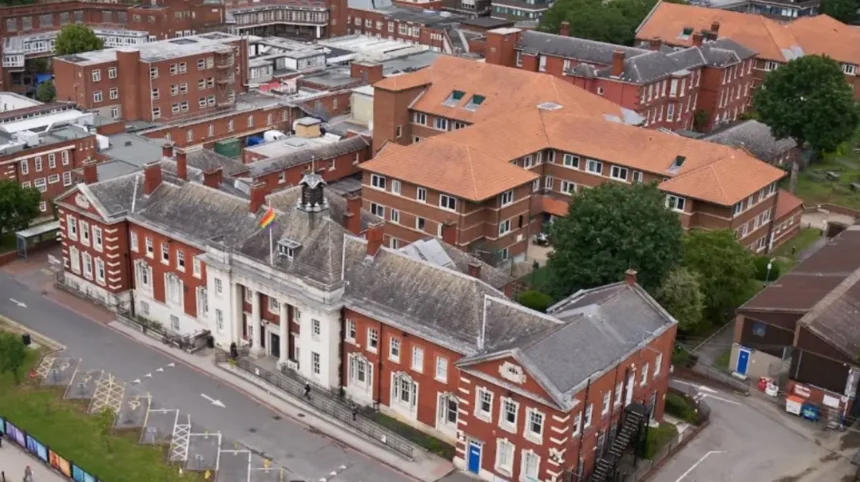
Alongside community-level care, the government is expanding urgent crisis capacity by establishing dedicated Mental Health Emergency Departments (MHEDs). These specialized emergency sites will be located at Maudsley Hospital in Denmark Hill, Camberwell, and Queen Mary’s Hospital in Bexley, alongside an emergency installation at St George’s Hospital in Tooting.
What Have Government Ministers and Health Officials Said About the Rollout?
As reported by political correspondent James Speakman of Sinar Daily, Prime Minister Andy Burnham stated that
“Nobody should be left to struggle with their mental health alone. But every day, thousands of people are waiting months for help, then finding the only door open to them is a busy A&E”.
Burnham emphasized that the new facilities would serve as a “lifeline for so many,” bringing NHS services closer to local neighborhoods and ensuring that patients in crisis receive care in therapeutic environments rather than congested general emergency rooms.
Addressing the national strategy, Health and Social Care Secretary Yvette Cooper highlighted the preventive shift envisioned by the Labour administration. As reported by health reporter Annabelle Collins of Pulse Today, Health Secretary Yvette Cooper stated that
“Too many people are only getting mental health support when they reach crisis point, after struggling for far too long to get the help they need”.
Cooper explained that the integration of walk-in community centres alongside dedicated emergency departments aims to “turn the tide on mental ill health” by delivering care before patients reach acute breakdown.
Regional healthcare authorities in the capital have also welcomed the designated funding. As reported by the NHS England London media team in an official briefing, NHS London leaders stated that the 23 Mental Health Neighbourhood Centres and 10 Mental Health Emergency Departments planned for the capital represent “the most significant overhaul of neighbourhood mental health services in a generation”.
How Will the Community Hubs and Emergency Departments Function in Practice?
The new infrastructure operates on a two-tier operational framework designed to decouple mental health treatment from traditional hospital settings.
How Will Walk-in Community Centres Work?
The community mental health centres will provide walk-in access without requiring a prior GP referral. Located in easily accessible locations—including repurposed bank branches, public libraries, and established health hubs—these facilities are designed with a non-clinical environment. They will co-locate multidisciplinary specialist teams alongside local council social care workers, housing advisers, employment support officers, and voluntary sector partners. The objective is to address underlying socio-economic triggers alongside psychological needs.
How Will Specialized Mental Health Emergency Departments (MHEDs) Operate?
The Mental Health Emergency Departments will operate as dedicated, same-day crisis facilities for individuals experiencing acute psychological distress who are medically fit and do not require physical surgical or medical treatment. Rather than waiting in standard A&E waiting rooms, patients will be assessed by psychiatric nurses, clinical psychologists, and psychiatrists in calm, low-stimulation environments specifically configured for psychiatric stabilization.
Explore More Local South London News
Bus Bursts into Flames on Residential Street in Sutton 2026
Bexley Bin Collection Dates and Summer Schedule Revealed: Bexley 2026
What Is the Background to This Mental Health Development?
The announcement comes against the backdrop of rising mental health demand across England and growing strain on acute hospital trusts. Recent health data indicates that 2.36 million people in England had an open referral with mental health services at the end of May 2026, up from 2.10 million in May 2025 and 1.95 million in May 2024.
In South London, local NHS trusts—including South London and Maudsley NHS Foundation Trust and South West London and St George’s Mental Health NHS Trust—have faced sustained emergency caseloads. Historically, patients presenting with mental health crises at major trauma centres such as King’s College Hospital or St George’s Hospital have endured extended waiting times in busy emergency departments, which clinical experts widely acknowledge can exacerbate acute distress.
The £343 million package fulfills commitments outlined in the government’s 10-Year Health Plan, shifting the structural balance of the NHS away from hospital-centric acute care toward neighborhood-based prevention and early intervention.
What Is the Prediction for How This Development Will Affect South Londoners?
For residents, healthcare staff, and local authorities across South London, this infrastructural rollout is predicted to alter how psychiatric care is accessed and delivered.
For patients and families in Southwark, Lambeth, Croydon, Wandsworth, Bexley, Kingston, Merton, Richmond, and Sutton, the introduction of non-referral walk-in hubs is expected to reduce wait times for initial assessments. Early intervention at the high-street level is predicted to catch mild to moderate conditions before they deteriorate into severe acute episodes.
For general hospital A&E departments—such as those at St George’s and King’s College Hospital—the establishment of dedicated MHEDs is projected to divert hundreds of psychiatric presentations away from acute emergency rooms each month. This diversion is expected to alleviate pressure on emergency medical staff, reduce overall A&E waiting times, and allow emergency medical doctors to concentrate on physical traumas while mental health specialists handle psychiatric crises.