Key Points
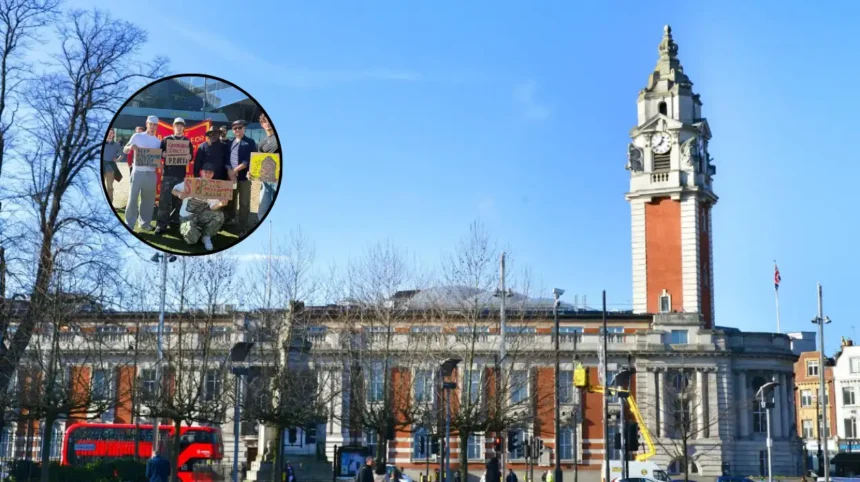
- Protesters, residents and local independent business owners staged a rally outside City Hall on Monday, 5 October 2026, demanding an immediate halt to plans for the redevelopment of International House and Pop Brixton.
- Campaigners urged the Mayor of London, Sadiq Khan, to intervene and listen directly to local inhabitants and service providers before granting final planning determination on the site.
- Community groups warn that the proposed major redevelopment could displace approximately 100 community organisations, social enterprises, and independent traders operating within the vibrant Brixton hub.
- Local campaigners expressed deep fears that the loss of International House and Pop Brixton will irreparably damage the cultural identity, heritage, and socio-economic ecosystem of Lambeth.
- Protesters issued a direct plea to London officials, declaring: “Please, hear us and support the future of London.”
Brixton (South London News) October 5, 2026 — Protesters, residents and local business owners gathered outside City Hall on Monday, October 5, 2026, urging key decision-makers to consider the destructive impact of plans to redevelop International House and Pop Brixton. Campaigners called on the Mayor of London, Sadiq Khan, to listen directly to the people who live, work and provide services in the area before making his final planning decision.
As reported by local campaign groups including Save Nour, Save Brixton, demonstrators gathered at the Greater London Authority headquarters to make a direct appeal regarding the fate of the iconic community hubs. Campaigners issued an impassioned plea to City Hall officials: “Please, hear us and support the future of London.” The central message from the Brixton activists warned that the approved major redevelopment scheme could displace around 100 community organisations, charities, and small business owners who rely on these affordable spaces to serve the borough of Lambeth.
How will the proposed demolition impact local community organisations and independent businesses?
As reported by Alex Orr of Southwark News, Lambeth Council previously approved the comprehensive redevelopment of the council-owned land covering 49 Brixton Station Road and 6 Canterbury Crescent, which encompasses the International House office building and the adjacent Pop Brixton shipping-container complex. While council officials maintain that International House and Pop Brixton were always designated for temporary use with limited-time leases, campaigners argue that replacing these structures with high-density housing blocks will permanently strip the area of vital social infrastructure.
As highlighted by Lucy Giles of South West Londoner, the approval of the scheme by Lambeth Council’s planning committee triggered widespread dismay among local users. The scheme proposes the clearing of the existing site to pave the way for multi-storey residential and commercial blocks. Community representatives emphasize that none of the designated affordable housing units are planned to be situated within the refurbished footprint of International House itself, fueling concerns that the development caters primarily to speculative financial interests rather than long-standing residents.
As noted by representatives of the Brixton Rec Users Group and local campaign coalitions, the loss of International House—widely recognised as the UK’s first building dedicated entirely to social enterprise and charities—would remove an irreplaceable nursery for grassroots talent. The adjoining Pop Brixton site currently houses dozens of independent street food traders, micro-retailers, and creative studios. Campaigners argue that displacing these 100 organisations will sever crucial community networks, remove essential youth services, and priced out small Black and minority ethnic-owned businesses that form the cultural bedrock of Brixton town centre.
What is the background of the International House and Pop Brixton development?
The site currently comprising Pop Brixton and International House has long been central to debates surrounding urban regeneration, gentrification, and community heritage in south London. Pop Brixton was initially established in 2015 as a temporary community initiative, turning a disused council plot into a vibrant temporary workspace constructed from recycled shipping containers. International House, an 11-storey former council office tower adjacent to the site, was subsequently repurposed to provide low-cost flexible desk space and offices for local charities, social enterprises, and creative startups.
Over the past decade, Lambeth Council formulated long-term strategy plans to redevelop its central Brixton property assets to build permanent housing and updated employment spaces. In late 2020 and throughout subsequent planning cycles, proposals were submitted for the total redevelopment of the Canterbury Crescent and Brixton Station Road sites. Despite petitions gathering thousands of signatures from local residents and business owners objecting to the scale of the proposed build, Lambeth Council’s planning sub-committee granted approval for the scheme, citing the pressing need for new housing delivery on council-owned land.
Because the redevelopment constitutes a major strategic scheme within Greater London, the planning application was referred to the Mayor of London, Sadiq Khan, for final stage review. Local groups have spent recent months launching crowdfunding campaigns, legal challenges, and public appeals to persuade the Greater London Authority to overturn the council’s decision or call in the application for further public inquiry.
How will this development affect local residents, small businesses, and community groups?
The outcome of the Mayor of London’s decision on the redevelopment of International House and Pop Brixton carries profound long-term implications for the local community in Brixton, as well as the broader ecosystem of small enterprises across Lambeth.
- For Local Independent Traders and Micro-Businesses: If the demolition and site clearance proceed as planned, approximately 100 small businesses, pop-up vendors, and creative entrepreneurs face immediate displacement. Many micro-enterprises operate on narrow margins made viable only by the subsidized, affordable rents at Pop Brixton and International House. Moving to commercial market-rate units in central London is financially unviable for most of these traders, threatening total operational closure and job losses for local employees.
- For Charities and Community Service Providers: International House accommodates scores of non-profit organisations delivering essential services, ranging from youth mentoring and digital skills training to food poverty alleviation and legal aid. The loss of affordable office space within central Brixton threatens to force these charities out of the borough, reducing support services for vulnerable residents and severing longstanding grassroots networks.
- For Local Residents and Cultural Identity: For residents of Brixton, the demolition of these community hubs represents a further acceleration of urban gentrification. The replacement of low-cost social space with new residential blocks raises widespread concerns regarding the erosion of Brixton’s unique cultural heritage, particularly its historic identity as a diverse center for Black British culture and independent trade.
- For Future Urban Development Precedents: A final approval by City Hall could set a wider precedent for council-owned land across London, signalling that temporary social enterprises and community workspaces can be systematically replaced by high-density commercial redevelopments once initial lease terms expire. Conversely, an intervention by the Mayor would signal a policy shift toward prioritizing community asset retention within major urban regeneration strategies.