Key Points
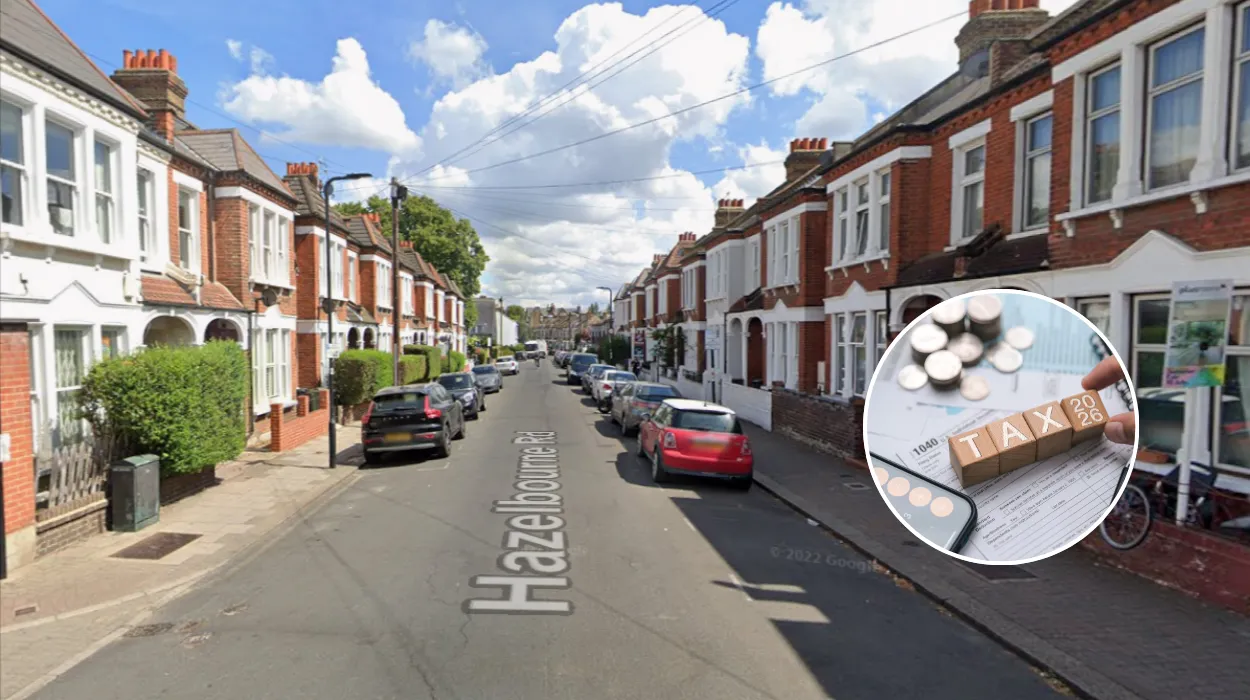
- Hazelbourne Road in Clapham, south-west London, features terraced red-brick houses behind trimmed green hedges, appearing ordinary at first glance.
- Households on one side of the street pay almost £1,000 more in council tax than neighbours mere metres away on the opposite side.
- The disparity arises because one side falls under Wandsworth Borough Council’s jurisdiction, while the other lies within Lambeth Borough Council.
- Band D properties on the Wandsworth side pay an average of £998 annually, compared to nearly double at £1,954 on the Lambeth side.
- This street exemplifies the “lottery” of council services and varying perceptions of value for money among households.
- Local authorities manage visible services like bins, roads, parks, libraries, and leisure centres, alongside pressured areas such as housing, adult social care, and special educational needs and disabilities (SEND).
- Wandsworth has a slightly larger population (337,655) than Lambeth (316,920), per Statista research.
- Lambeth’s spending this financial year totals £443.5m, 54% more than Wandsworth’s £288m.
- Lambeth faces higher costs in housing, adult social care (£112m vs Wandsworth’s £105m), and children’s services (each £10m higher than Wandsworth).
- Lambeth ranks as the 104th most deprived council out of 296 in England (ONS data), while Wandsworth is 197th, contributing to greater service demands and higher taxes.
- Lambeth does not have London’s highest council tax; Kingston leads at £2,489 for Band D in 2025-26, followed by Croydon at £2,480.
- Of London’s 33 local authorities, 23 charge more than Lambeth, which aligns closely with the London average; Wandsworth remains the outlier with lower rates.
Clapham (South London News) January 24, 2026 – Residents on Hazelbourne Road in Clapham, south-west London, face a stark council tax divide, with one side of the street paying almost twice as much as the other due to differing borough boundaries. As reported by Maya Wilson-Autzen of The Telegraph, households in Band D properties on the Wandsworth side pay £998 annually, while those across the road in Lambeth pay £1,954. This disparity highlights the “lottery” of council services and what households perceive as value for money, with identical homes receiving services from neighbouring authorities.
- Key Points
- What Makes Hazelbourne Road a Council Tax Lottery?
- Which Boroughs Govern Each Side of the Street?
- How Do Council Tax Rates Compare Exactly?
- What Services Do Local Councils Provide?
- Why Do Wandsworth and Lambeth Show No Obvious Differences on Paper?
- How Does Lambeth’s Budget Differ from Wandsworth’s?
- What Explains Lambeth’s Higher Spending?
- Does Lambeth Charge London’s Highest Council Tax?
- How Do Residents Perceive Value for Money?
- What Broader Pressures Face These Councils?
- Are There Similar Council Tax Disparities Elsewhere?
- What Do These Differences Mean for Clapham Residents?
What Makes Hazelbourne Road a Council Tax Lottery?
Hazelbourne Road appears as an ordinary street lined with terraced red-brick houses neatly positioned behind trimmed green hedges. Yet, as detailed by Maya Wilson-Autzen of The Telegraph, the invisible line separating Wandsworth and Lambeth boroughs creates a significant financial chasm. Households mere metres apart face council tax bills differing by nearly £1,000, underscoring how postcode determines fiscal burdens.
The Wandsworth side benefits from lower rates, averaging £998 for a Band D property, while Lambeth’s equivalent reaches £1,954. This encapsulates broader questions about equity in local government funding. Maya Wilson-Autzen notes that such divisions prompt residents to question whether higher payments yield superior services.
Which Boroughs Govern Each Side of the Street?
One side of Hazelbourne Road falls under Wandsworth Borough Council, known for its historically low council tax rates. The opposite side belongs to Lambeth Borough Council, where bills are substantially higher. As reported by Maya Wilson-Autzen of The Telegraph, this jurisdictional split directly causes the price difference, with no physical boundary marker visible to the untrained eye.
Wandsworth’s approach has long positioned it as a low-tax outlier in London. Lambeth, conversely, grapples with elevated demands, influencing its levy. The street’s layout, with uniform terraced homes, amplifies the perceived unfairness.
How Do Council Tax Rates Compare Exactly?
For a standard Band D property, Wandsworth residents pay £998 per year. Crossing to Lambeth doubles this to £1,954, a gap of £956. Maya Wilson-Autzen of The Telegraph highlights this as a prime example of council tax’s complicated landscape.
These figures stem from 2025-26 assessments, reflecting annual adjustments. Residents on the higher-tax side often scrutinise whether the premium justifies the cost. The Telegraph’s analysis questions if “an identical home paying twice as much in tax gets more for the money.”
What Services Do Local Councils Provide?
Local authorities oversee tangible services residents encounter daily, including bin collections, road maintenance, parks, libraries, and leisure centres. As outlined by Maya Wilson-Autzen of The Telegraph, these visible duties form the backbone of council operations.
Less obvious responsibilities exert immense pressure, such as housing provision, adult social care, and special educational needs and disabilities (SEND). These “often-overlooked” areas strain reserves, influencing tax levels. Councils balance these amid dwindling funds, with public scrutiny focusing on outcomes.
Why Do Wandsworth and Lambeth Show No Obvious Differences on Paper?
On demographics, Wandsworth edges Lambeth with 337,655 residents versus 316,920, according to Statista data cited by Maya Wilson-Autzen of The Telegraph. Population size alone does not explain fiscal gaps.
Both councils manage similar urban challenges in south-west London. Yet spending patterns diverge sharply, with Lambeth allocating £443.5m this financial year—54% more than Wandsworth’s £288m. This reveals deeper budgetary pressures beyond basic metrics.
How Does Lambeth’s Budget Differ from Wandsworth’s?
Lambeth’s adult social care budget stands at £112m, slightly above Wandsworth’s £105m. Housing and children’s services each exceed Wandsworth’s by £10m. As reported by Maya Wilson-Autzen of The Telegraph, these elevated outlays contribute to Lambeth’s higher debt and tax rates.
Such allocations reflect service demands, not inefficiency. The disparity underscores how local needs shape finances. Residents question if these investments translate to tangible benefits.
What Explains Lambeth’s Higher Spending?
Lambeth’s deprivation index ranks it 104th most deprived out of England’s 296 councils, per Office for National Statistics (ONS) data. Wandsworth fares better at 197th. Maya Wilson-Autzen of The Telegraph attributes Lambeth’s higher taxes partly to this, as greater deprivation drives demand for housing, social care, and children’s services.
Deprived areas require intensified interventions, inflating costs. This cycle pressures budgets, leading to elevated levies. Nonetheless, Lambeth’s rates remain mid-table in London.
Does Lambeth Charge London’s Highest Council Tax?
No, Lambeth does not lead; Kingston holds that position with a Band D bill of £2,489 in 2025-26. Croydon follows closely at £2,480. As noted by Maya Wilson-Autzen of The Telegraph, 23 of London’s 33 authorities exceed Lambeth’s charges, placing it near the average.
Wandsworth stands out as the low-tax anomaly. This context tempers perceptions of Lambeth’s bills. Comparative analysis shows wide variation across the capital.
How Do Residents Perceive Value for Money?
The Hazelbourne Road divide prompts debate on service quality versus cost. Do Lambeth payers receive double the value? Maya Wilson-Autzen of The Telegraph poses this, noting identical homes side-by-side.
Public sentiment often views low-tax Wandsworth favourably, associating it with efficiency. Lambeth residents cite deprivation-driven needs as justification. Surveys and anecdotes reveal polarised views on “bang for buck.”
What Broader Pressures Face These Councils?
Dwindling reserves challenge both boroughs amid rising demands in social care and education. Adult social care alone consumes vast portions—£112m in Lambeth, £105m in Wandsworth. As per The Telegraph’s reporting by Maya Wilson-Autzen, SEND and housing exacerbate strains.
National funding shortfalls amplify local taxes. Councils navigate these without material demographic excuses. The Clapham example illustrates postcode-driven inequities.
Are There Similar Council Tax Disparities Elsewhere?
Hazelbourne Road is not unique; boundary streets nationwide mirror this “lottery.” The Telegraph’s piece by Maya Wilson-Autzen frames it as emblematic. Comparable divides occur where affluent, low-tax boroughs adjoin deprived ones.
London’s patchwork of 33 authorities fosters such anomalies. Residents elsewhere report identical frustrations. This fuels calls for tax equalisation, though politically contentious.
What Do These Differences Mean for Clapham Residents?
For Hazelbourne Road dwellers, the split means budgeting variances of nearly £1,000 yearly. Families weigh relocation for savings, per implied resident concerns in The Telegraph. Property values may reflect tax perceptions.
Long-term, it shapes community ties across the divide. Equity debates persist, with no quick fix. The street remains a microcosm of local government complexities.