Key Points
- Lewisham and Greenwich NHS Trust (LGT) is transferring elective outpatient urology services from Queen Elizabeth Hospital (QEH) in Woolwich to University Hospital Lewisham (UHL).
- Planned procedures and diagnoses will move to a new, purpose-designed £3.4 million Urology Investigation Unit at University Hospital Lewisham, operating as a dedicated one-stop investigation facility.
- Emergency urology treatment and admissions will remain at Queen Elizabeth Hospital in Woolwich.
- The trust warned that Greenwich residents may face longer journey times to Lewisham, though eligible patients will retain access to hospital transport and patients overall will require fewer hospital visits.
- A national shortage of urologists was cited as a primary driver for the restructuring, as only one of five funded consultant posts across both hospitals is currently filled.
- LGT stated that maintaining its existing split-site structure risked the complete closure of the urology service.
- Existing patients could experience delays to their care during the transition period, while the trust predicts an overall net growth in general outpatient capacity at Queen Elizabeth Hospital.
South London (South London News) November 27, 2026 – Lewisham and Greenwich NHS Trust (LGT) has announced plans to transfer all elective outpatient urology activity from Queen Elizabeth Hospital (QEH) in Woolwich to a new, purpose-designed £3.4 million Urology Investigation Unit at University Hospital Lewisham (UHL), warning patients of longer travel times alongside fewer required hospital appointments.
- Key Points
- What is changing under the Lewisham and Greenwich NHS Trust urology shakeup?
- Why is the NHS trust moving outpatient urology services from Woolwich to Lewisham?
- How will the service relocation affect patients in Greenwich and Lewisham?
- What is the background behind NHS urology staffing and waiting times in South East London?
- How could this development affect South East London urology patients in the future?
What is changing under the Lewisham and Greenwich NHS Trust urology shakeup?
As reported by Cameron Blackshaw of MyLondon, Lewisham and Greenwich NHS Trust has confirmed that planned urology procedures and diagnostic appointments will be consolidated at University Hospital Lewisham. The new £3.4 million facility at UHL is designed to operate as a dedicated one-stop investigation unit, allowing patients to undergo multiple diagnostic tests and consultations during a single visit rather than attending separate appointments across different dates.
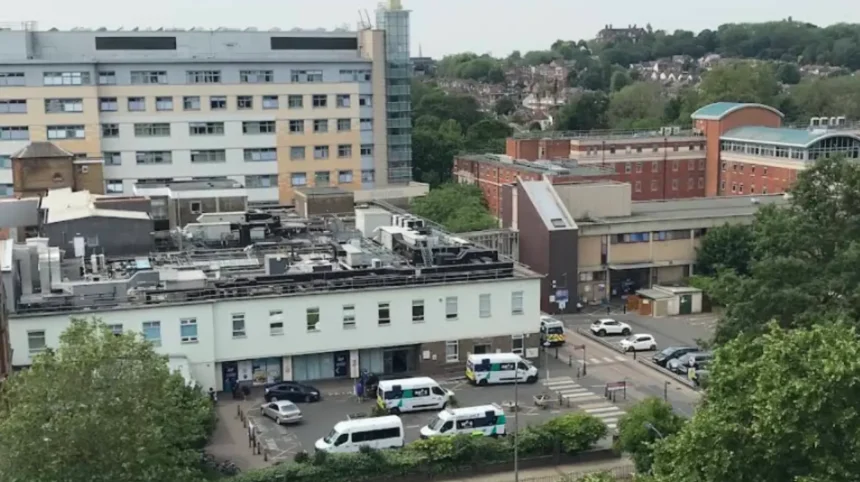
Emergency urology care will not be affected by the relocation. According to the trust’s plans, emergency urology admissions and urgent treatments will remain stationed at Queen Elizabeth Hospital in Woolwich, ensuring acute services continue to operate at the Greenwich site.
Why is the NHS trust moving outpatient urology services from Woolwich to Lewisham?
As reported by Cameron Blackshaw of MyLondon, Lewisham and Greenwich NHS Trust explained that a severe national shortage of specialist urologists is partly responsible for the decision to centralise outpatient services. The trust revealed that across both hospital sites, only one of its five funded consultant urologist posts is currently filled.
Trust officials stated that continuing to operate elective outpatient clinics under a split-site model with such limited consultant staffing was unsustainable. According to the trust, failing to alter the current two-site structure would have placed the entire urology service at risk of closure. By consolidating planned outpatient care into a single hub at University Hospital Lewisham, the trust aims to pool its clinical workforce and stabilise service delivery.
How will the service relocation affect patients in Greenwich and Lewisham?
The restructuring carries mixed operational impacts for patients across South East London. As reported by Cameron Blackshaw of MyLondon, the NHS trust acknowledged that some Greenwich residents requiring elective urology care will experience increased journey times when travelling to University Hospital Lewisham instead of Queen Elizabeth Hospital in Woolwich. To mitigate the impact of the additional travel distance, the trust confirmed that eligible patients will continue to have access to NHS hospital transport services.
Despite the longer commute for patients living closer to Woolwich, LGT stated that the new one-stop investigation model at UHL will reduce the total number of times patients need to visit a hospital. Furthermore, the trust cautioned that existing urology patients could face temporary delays to their care while the service transitions to the new operating model.
At Queen Elizabeth Hospital, the space vacated by the outpatient urology clinics is expected to be reallocated. As reported by Cameron Blackshaw of MyLondon, LGT predicts that the restructuring will ultimately result in a net growth in overall outpatient capacity at the Woolwich hospital.
What is the background behind NHS urology staffing and waiting times in South East London?
Lewisham and Greenwich NHS Trust provides acute and community healthcare services primarily for residents across the London boroughs of Lewisham and Royal Greenwich, operating University Hospital Lewisham and Queen Elizabeth Hospital as its two main acute hospital sites. Historically, delivering specialist outpatient care across dual sites has required duplicating clinical rotas and equipment, placing strain on departments facing national recruitment deficits.
Across England, urology services have faced sustained pressure due to rising patient demand for diagnostic investigations—such as cystoscopies, flow tests, and prostate biopsies—combined with a limited pool of accredited consultant urologists. Published NHS England referral-to-treatment figures for September 2026 recorded 2,548 patients waiting for consultant-led urology treatment at Lewisham and Greenwich NHS Trust, with 42.2 per cent seen within the 18-week target compared with the England average of 66 per cent, and a median waiting time of 22 weeks.
In parallel with acute service consolidations, health authorities in Lewisham and Greenwich have been restructuring local healthcare delivery under broader South East London Integrated Care System initiatives, including neighbourhood health integration and virtual ward programmes aimed at streamlining hospital visits and managing clinical capacity across boroughs.
How could this development affect South East London urology patients in the future?
For patients in Greenwich and Lewisham, the consolidation of elective urology into a single £3.4 million facility at University Hospital Lewisham is likely to reshape both access and appointment pathways over the coming months. In the short term, patients currently on the trust’s waiting list or undergoing ongoing monitoring may experience administrative rescheduling and transitional delays as clinics, equipment, and staff are transferred from Woolwich to Lewisham.
Over the longer term, the one-stop diagnostic structure at UHL is designed to shorten the time between initial referral and diagnosis by reducing repeat outpatient attendances. If the single-site model successfully attracts new consultant applicants to fill the four vacant funded posts, waiting times for planned urology procedures could stabilise or decrease. Conversely, elderly, disabled, or low-income patients residing in the eastern parts of the Royal Borough of Greenwich who do not meet strict eligibility criteria for non-emergency patient transport may face higher travel costs and longer public transport journeys when accessing routine urological care.