Key Points
- South Eastern Railway and British Transport Police (BTP) joined forces at Lewisham station for a targeted joint Day of Action to tackle trespass, anti-social behaviour, and protect vulnerable individuals.
- High-visibility and plain-clothes patrols were deployed alongside high-tech equipment, including a surveillance drone, to monitor key railway areas and improve spatial awareness.
- Recent station upgrades at Lewisham include measures designed to reduce platform crowding and the installation of enhanced, high-definition closed-circuit television (CCTV) systems.
- Modern technology is playing an expanded role across the network, with line-of-sight and beyond-visual-line-of-sight “Drone in a Box” technology being deployed to deter offenders and minimise journey disruptions.
- Upwards of 1,800 frontline staff have undergone specialised suicide prevention and safeguarding training in partnership with Samaritans and local health networks to offer timely assistance to vulnerable people.
Lewisham (South London News) November 11, 2026 — Railway staff and British Transport Police officers have stepped up visible patrols and preventative measures to protect the public at Lewisham station, supported by improved monitoring systems that allow operational teams to identify and respond to safety incidents with greater efficiency.
- Key Points
- Why Are Railway Staff and Transport Police Enhancing Security Operations at Lewisham Station?
- How Are Frontline Personnel Being Trained to Assist Vulnerable Individuals?
- Background to the Security and Infrastructure Upgrades at Lewisham
- Future Impact and Predictions for Passengers and Local Communities
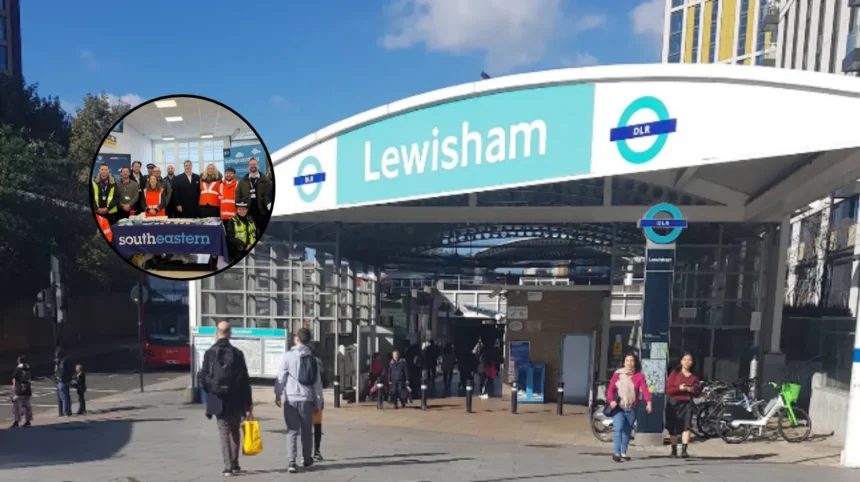
On Friday 6 November, multi-agency teams from both organisations established a significant presence at the major South East London transport hub. The primary objectives of the deployment were to maintain a high-visibility deterrent against criminality, patrol active railway lines to prevent dangerous trespassing, and engage directly with passengers regarding security concerns. To assist officers on the ground, a specialized unmanned aerial vehicle (drone) was launched into the skies above the station, providing command teams with a comprehensive overhead perspective of the surrounding tracks and station perimeter.
This targeted Day of Action represents the latest phase of a wider, sustained initiative spearheaded by South Eastern Railway and the British Transport Police to combat railway crime and dangerous track intrusions. A central pillar of this ongoing strategy is the “Crime with Consequences” campaign, which runs alongside increasingly integrated joint operational models between transport staff and law enforcement officers.
Advanced security technology is taking on a crucial function in safeguarding network infrastructure. At Lewisham station, new CCTV cameras are being systematically installed, while both line-of-sight and state-of-the-art beyond-visual-line-of-sight drones are being rolled out across the wider rail network to help identify offenders, prevent operational downtime, and ensure passenger services remain uninterrupted.
Why Are Railway Staff and Transport Police Enhancing Security Operations at Lewisham Station?
Addressing the operational motives behind the joint initiative, Scott Brightwell, the Safety, Planning and Performance Director at South Eastern Railway, outlined the rail operator’s commitment to continuous safety improvements across its network.
As reported by official statements released by South Eastern Railway, Scott Brightwell stated that:
“We’re continually looking at how we can make journeys safer and more reliable for our passengers, particularly at busy stations like Lewisham.”
Highlighting the collaborative nature of the safety drive, Scott Brightwell added that:
“Working closely with British Transport Police and Samaritans is an important part of that. Better monitoring, visible patrols and technology help us identify when support is needed and respond quickly, helping passengers travel safely and with confidence.”
Echoing these operational priorities, law enforcement leaders highlighted the multi-layered approach being taken on the ground to deter anti-social conduct and intercept criminal activity before it impacts rail services.
As reported in statements from the transport police unit, British Transport Police Inspector Carolyne Butte stated that:
“Keeping passengers and railway staff safe is our top priority, and days like this provide a valuable opportunity for us to come together with partners and learn about the issues that matter most to rail passengers and staff.”
Elaborating on the tactical measures deployed during the operations, British Transport Police Inspector Carolyne Butte noted that:
“Through high visibility and plain-clothes patrols, targeted operations, innovative technology like our ‘Drone in a Box’ and more, we’re committed to deterring criminality, arresting offenders and helping ensure everyone can travel on the railway with confidence.”
How Are Frontline Personnel Being Trained to Assist Vulnerable Individuals?
Beyond physical security and crime prevention, the operational model at Lewisham station incorporates a dedicated focus on passenger safeguarding and mental health intervention.
South Eastern Railway collaborates closely with key third-sector welfare partners, including the Samaritans, through a dedicated internal safeguarding team. To date, more than 1,800 rail industry colleagues have received specialist training developed in conjunction with the Samaritans and the Kent and Medway Suicide Prevention Network. This joint training framework equips frontline station staff and train crews with the skills needed to recognize signs of acute distress, approach vulnerable individuals safely, and deliver life-saving interventions on platforms and around railway infrastructure.
Background to the Security and Infrastructure Upgrades at Lewisham
Lewisham station serves as one of the busiest interchange nodes in South East London, connecting suburban commuter rail lines operated by South Eastern Railway with the Docklands Light Railway (DLR) and local bus networks. Due to high daily passenger throughput, the station has historically faced operational challenges relating to platform overcrowding, anti-social behaviour, and unauthorized access to active track areas.
In response to these persistent challenges, transport authorities have invested in physical infrastructure enhancements alongside tactical policing. Recent station work has focused on spatial redesigns to alleviate bottleneck areas and manage passenger flow during peak commuting hours. Concurrently, traditional security measures have been bolstered by digital infrastructure, replacing older monitoring systems with high-definition CCTV arrays capable of feeding real-time images directly to central control rooms and mobile police units.
Future Impact and Predictions for Passengers and Local Communities
The escalation of visible joint operations, combined with advanced aerial surveillance and upgraded CCTV infrastructure, is expected to produce immediate and long-term effects for rail users, local residents, and station personnel.
For daily commuters and local passengers using Lewisham station, the increased presence of high-visibility officers alongside plain-clothes operations will likely result in a measurable drop in opportunist anti-social behaviour and petty crime. The integration of continuous drone surveillance provides rapid-response capabilities, meaning reports of trespass or suspicious activity on the tracks can be verified in minutes. In practice, this should reduce the length and frequency of track closures caused by safety alerts, leading to more punctual train services and fewer unexpected delays across the wider South Eastern Railway network.
For vulnerable individuals experiencing mental health crises around the railway, the combination of technological surveillance and extensive staff training creates a stronger safety net. With over 1,800 trained staff active across the network, early identification of distress on platforms is anticipated to lead to faster human interventions and higher rates of referral to professional support services.
For the local Lewisham community and retail vendors operating near the transit hub, heightened law enforcement engagement is projected to improve overall public perception of safety around the station precinct. However, the increased use of aerial surveillance drones and upgraded camera networks may also prompt heightened public scrutiny regarding privacy standards and data handling, requiring transport authorities and police units to maintain transparent communication regarding how surveillance data is stored and utilized.