Key Points
- Hither Green, a residential neighbourhood in Lewisham, south east London, was largely developed by Scottish MP Archibald Corbett who deliberately excluded public houses due to his religious beliefs.
- Corbett built over 3,000 houses, schools, churches, and libraries on land uninhabited since the Black Death of 1350, transforming farmland into a model Edwardian estate.
- The area, part of the Corbett Estate, was designed as an alcohol-free zone promoting respectability, with low-density well-built homes housing over 13,000 inhabitants by the early 20th century.
- Despite the original no-pubs policy on the core estate, Hither Green now has at least one prominent pub, The Station Hotel, a large 1906 establishment with a garden, dining area, and cask beers, located near the railway station.
- The neighbourhood features good transport links including Hither Green station to Charing Cross and London Bridge, parks like Manor House Gardens, and community events such as Hither Green Week.
- Modern Hither Green includes cafes like You Don’t Bring Me Flowers, Arlo & Moe, and Good Hope, a community cinema, and an annual festival, maintaining a family-friendly vibe.
- The estate’s development began around 1895, with a recreation ground opened in 1899 to provide healthy entertainment amid limited open spaces.
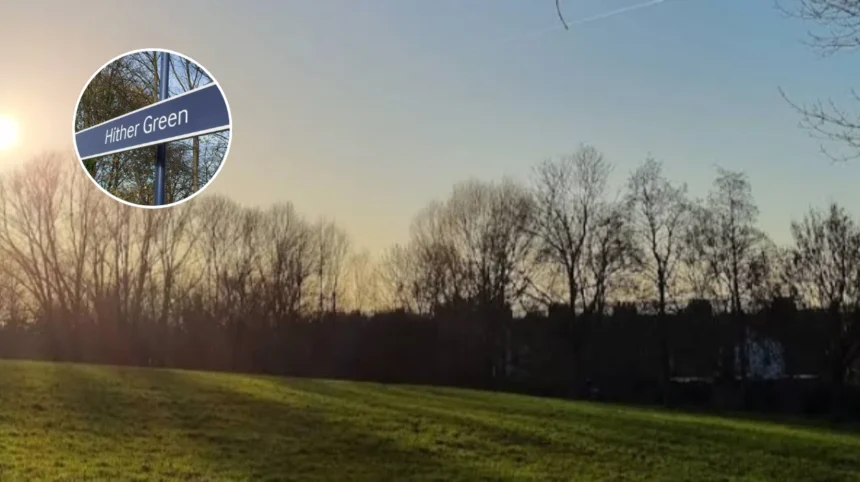
Hither Green (South London News) March 14, 2026 – Hither Green, a residential neighbourhood in the London Borough of Lewisham, stands out for its unusual history of being deliberately developed without public houses, a decision by its founder, Scottish MP Archibald Corbett, rooted in his religious convictions. This south east London area, nestled between Lewisham, Ladywell, Catford, and Lee, was transformed from desolate post-Black Death land into a thriving Edwardian estate of over 3,000 homes. Today, while the core Corbett Estate remains pub-free, the broader neighbourhood boasts at least one major pub, highlighting how the original vision endures amid modern changes.
- Key Points
- Why Was Hither Green Built Without Pubs?
- Who Was Archibald Corbett and What Did He Build?
- What Is the History of Hither Green Before Development?
- Does Hither Green Still Have No Pubs Today?
- What Amenities and Community Life Define Hither Green?
- How Has Hither Green Evolved Over Time?
- Why Is Hither Green’s No-Pubs Story Still Relevant?
Why Was Hither Green Built Without Pubs?
The absence of pubs in Hither Green traces directly to Archibald Corbett’s personal principles. As detailed on the Lewisham Council website,
“The Scottish MP Archibald Corbett transformed most of Hither Green, building more than 3,000 houses alongside schools, churches and libraries. He also deliberately included no public houses!”
This alcohol-free policy stemmed from Corbett’s religious beliefs, as noted by the Local History and Archives Centre, Lewisham:
“Due to Cameron Corbett’s religious beliefs there are no pubs on the Corbett Estate.”
(Note: References often interchangeably use Archibald and Cameron, his full name being Cameron Archibald Corbett.)
The Archibald Corbett Society elaborates on this vision, describing the estate as
“a thriving, alcohol-free estate of low-density, well-built houses with over thirteen thousand inhabitants that was a model of Edwardian respectability.”
Corbett, a Liberal MP, sought to create wholesome living spaces for working-class families escaping London’s pressures, avoiding the perceived ills of alcohol.
Who Was Archibald Corbett and What Did He Build?
Archibald Corbett, later Lord Rowallan, was a Scottish landowner and politician who spearheaded Hither Green’s development from 1895. According to the Archibald Corbett Society, prior to his involvement, the area was “mostly open fields and a few large houses,” bisected by a mid-1860s railway without a station. Corbett changed this by building quality homes, amenities, and infrastructure.
Lewisham Heritage records that by 1910, the estate included
“6 churches, 4 schools, 6 shopping parades, a railway station and a library.”
He opened a central Recreation Ground in 1899 for healthy leisure, compensating for limited open spaces. This philanthropy blended profit with social improvement, as Corbett
“really had improved the lives of people who wouldn’t otherwise have been able to afford a home of their own.”
What Is the History of Hither Green Before Development?
Hither Green’s origins are ancient and sombre. The Lewisham Council site explains:
“Although by the 18th century Hither Green had become a picturesque neighbourhood swathed in farmland and country manors, originally it was founded on land that had not been inhabited since the Black Death of 1350.”
It was one of several ‘greens’ in Lewisham, named Hither (nearer) Green near Romborough hamlet.
By the 18th century, it was rural, but industrial growth and rail links set the stage for Corbett’s vision. An air raid siren was installed on Torridon Road Library in 1935, reflecting later wartime history.
Does Hither Green Still Have No Pubs Today?
Contrary to the original design, Hither Green now has pubs, challenging the no-alcohol legacy. The standout is The Station Hotel, a
“large, much loved and well patronised 1906 pub and hotel”
with a railway-themed interior, suntrap garden, and separate dining area serving quality food. CAMRA notes it offers two regular cask beers and operates from noon daily, acquired by Young’s in 2019.
Deserter.co.uk observes:
“It might have only one pub, The Station Hotel, but it’s mahoosive… It’s 15 minutes from London Bridge and the combination of ten hand pumps and rooms upstairs is an alluring one.”
A Reddit discussion echoes this, with users surprised by “just one pub and a few restaurants” in parts like Leahurst Road. OpenTable lists 39 pubs nearby, indicating accessibility despite the estate’s core. The Station Hotel’s site promotes it as child-friendly in Hither Green’s heart, near Greenwich.
What Amenities and Community Life Define Hither Green?
Hither Green thrives as a family-oriented area. Lewisham Council lists parks like Manor House Gardens, Manor Park, and Mountsfield Park; children’s centres; and schools including Brindishe Green Primary and St Mary’s CE Primary. Transport shines with Hither Green station serving Charing Cross, Sevenoaks, and London Bridge, plus buses and cycle routes.
Community hubs include Hither Green Week, a cinema, and cafes:
“You Don’t Bring Me Flowers, which hosts a monthly wine club; Arlo & Moe… and Good Hope.”
The Hither Green Community Association, Forum, and SE23.Life support local engagement. It’s in Lewisham Central ward, with active councillors and assemblies.
How Has Hither Green Evolved Over Time?
From Corbett’s 1895 farmland transformation to a 13,000-resident estate by 1910, Hither Green grew steadily. The railway, added later, boosted connectivity without excessive commercialisation. Post-war, it retained respectability, with libraries like Torridon Road .
Today, it balances heritage and modernity: alcohol-free roots persist on the estate, but pubs like The Station Hotel cater to commuters. Cafes and festivals foster vibrancy, while greens and low density preserve charm. Recent discussions, like Reddit’s on housing, note its appeal with limited nightlife suiting families.
Why Is Hither Green’s No-Pubs Story Still Relevant?
This tale underscores early 20th-century urban planning’s moral dimensions. Corbett’s model influenced garden suburbs, prioritising temperance and community over vice. In 2026, amid pub closures borough-wide, Hither Green’s survival of one major venue highlights resilience. It attracts those valuing quiet residential life near central London, blending history with convenience.
As reported in News Shopper’s original piece highlighting the neighbourhood’s “unusual claim to fame,” the story captivates for its deliberate sobriety in a pub-loving city.[ from search snippet] Deserter.co.uk quips on its “one-horse town” feel positively, praising the pub’s scale. CAMRA celebrates The Station Hotel’s heritage, ensuring cask ale endures.
Hither Green’s narrative, drawn from council records, heritage sites, and society pages, reveals a founder’s vision shaping a neighbourhood 130 years on. Residents enjoy parks, schools, and rail links in a safe, green haven—proof that alcohol-free ideals can coexist with modern joys like a sunlit garden pint.